

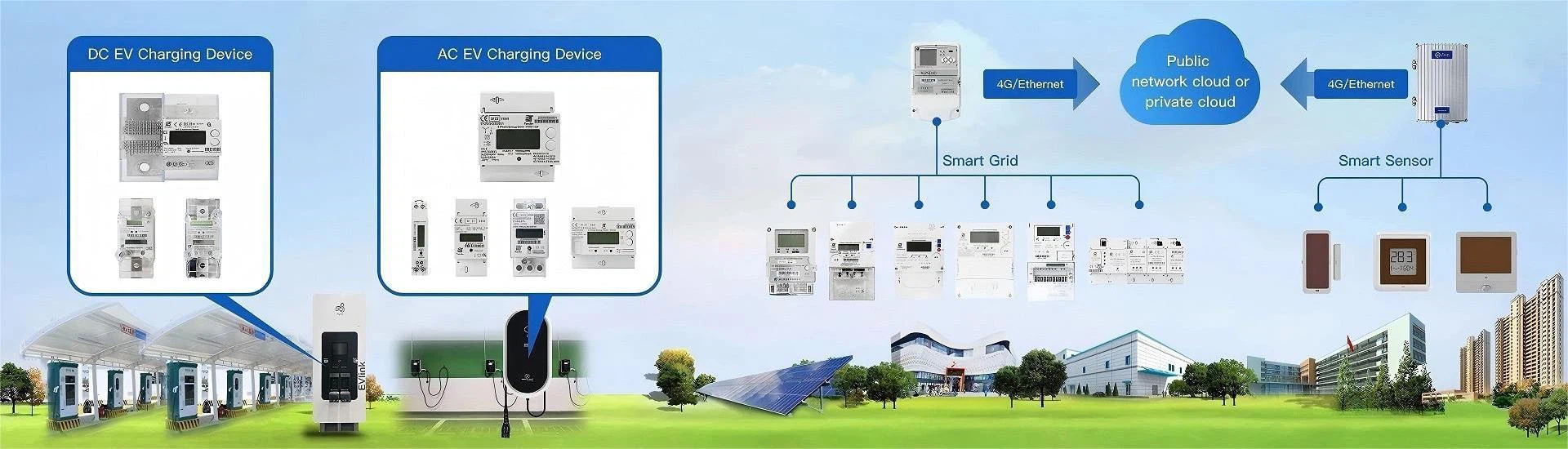
Our integrated DC energy meters all use a built-in shunt to sample the current. I believe many of our peers and customers, like myself, are relatively unfamiliar with TMR sensors. Today, based on information from the entire internet, I will explain two core questions in the simplest terms: What is TMR? Are there TMR sensor DC energy meters on the market?
I. Simple Explanation: What is a TMR Sensor?
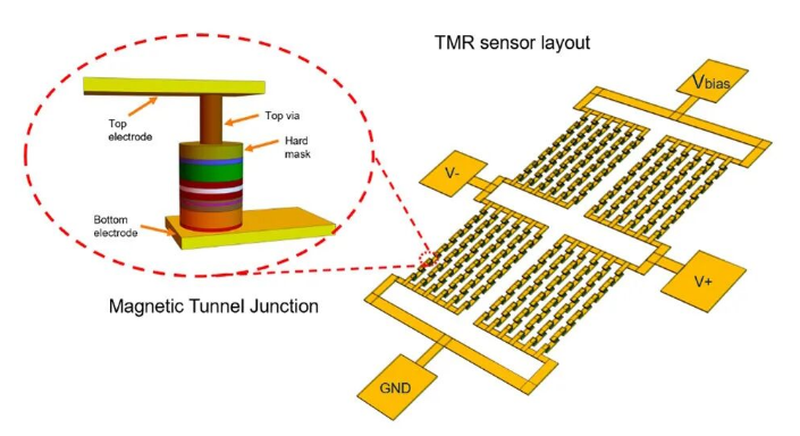
TMR stands for Tunnel Magnetoresistance. Simply put, it's a high-precision magnetic sensor based on magnetoelectronics. Its core technology utilizes a nanoscale sandwich structure of a ferromagnetic layer/non-magnetic insulating layer/ferromagnetic layer, achieving precise conversion of magnetic signals to electrical signals through electron spin.
Compared to traditional sensing technologies, the biggest advantages of TMR sensors are high sensitivity, low power consumption, small size, and stable performance. They require only a small external magnetic field to achieve significant changes in resistance, accurately capturing weak magnetic signals. Currently, they are gradually being applied in fields such as non-destructive testing, aerospace, and power metering.
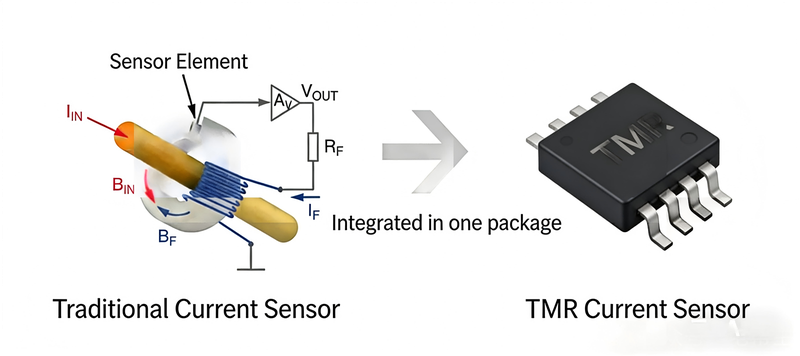
In the application scenarios of DC energy meters, TMR sensors can replace traditional shunts and Hall sensors to achieve high-precision sampling of DC current, making them particularly suitable for scenarios with high requirements for size, power consumption, and measurement accuracy.
II. Market Status: Are there TMR sensor DC energy meters on the market?
The answer is: perhaps, but it's a very niche market.
According to online research, currently only a very small number of companies in China have achieved industrial-scale application of TMR technology, including TMR current sensor modules, which can be used for current sampling in DC energy meters. In addition, some companies have also achieved TMR technology product coverage, providing core component support to relevant energy meter manufacturers.
However, from the overall market perspective, TMR sensor DC energy meters are still in a niche stage. Most manufacturers (including UBS Electronics) currently use built-in shunt current sampling in their mainstream DC energy meters-this method is technically mature, cost-controllable, and provides stable metering, meeting the needs of most industrial, photovoltaic, and energy storage scenarios.
III. Supplementary Explanation: Core Differences Between Shunt Units and TMR Sensors (Simplified Version)
Many customers wonder, since both are current sampling devices, what are the differences between them? A table can quickly distinguish them:
| Comparison Dimension | Built-in Flow Splitter (Mainstream) | TMR Sensor (Niche & High-end) |
|---|---|---|
| Core Advantages | Mature technology, low cost, stable metering | High sensitivity, low power consumption, small size |
| Application Scenarios | Ordinary industry, PV energy storage and other conventional scenarios | High-precision metering, miniaturized equipment, special environments |
| Market Penetration | Very high, adopted by the vast majority of manufacturers | Extremely low, no manufacturer has launched related products yet |
In conclusion
TMR sensors are a new type of high-precision, high-performance magnetic sensor. While there may be a few TMR sensor DC energy meters on the market, they are unlikely to become mainstream.
Furthermore, for current DC metering applications, DC energy meters with built-in shunts (such as our integrated DC energy meters from UBS Electronics, whose internal control accuracy is almost always within 0.2 class) can meet the requirements and offer better cost-effectiveness.