


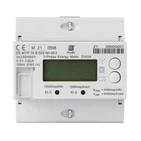
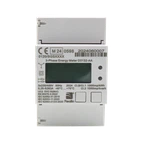
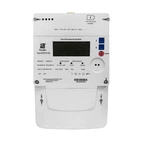
Previously, we explained the current marking method on AC energy meters:Interpretation Of The Current Marking On The Energy Meter: The Difference Between 5(60)A And 0.25-0.5(60)A And The Reasons
Basic concepts of starting current and calibration current
In the field of electric energy meter measurement, generally speaking, the starting current of an electric energy meter refers to the current value passing through the circuit when the electric energy meter starts measuring. This parameter directly affects the electric energy meter's ability to measure small currents, especially for monitoring the small power consumption of various standby appliances in modern households.
Another important parameter closely related to the starting current is the calibration current (also known as the basic current, symbol Ib). It is the reference current value for determining the relevant characteristics of the electric energy meter and serves as the basis for calculating the measurement characteristics of the electric energy meter. In the old standard, the electric energy meter usually marked a current value such as "5 (60) A", where the value before the bracket is the calibration current.
The ratio of starting current to breaking current under different accuracy levels

According to the national standard GB/T 17215.321-2021, the ratio of starting current to breaking current for electric energy meters of different accuracy levels is clearly specified.
Class 1.0 (i.e. Class B) AC electric energy meters adopt the new national standard marking method: 0.25-0.5(60)A, where 0.5 is Itr, representing "breaking current". It can be calculated that starting current = 0.04Itr = 0.04*0.5A = 0.02A
The practical application significance of starting current
The setting of starting current has an important impact on the actual use of electric energy meters. Take a typical household electricity usage scenario as an example: a Class 1 (Class B) single-phase energy meter with a specification of 5 (60) A has a starting current of 0.004×5A=0.02A, and the conversion rate is 0.02A×220V=4.4W (calculation formula: starting current=0.004*calibrated current). This means that when the total power of standby appliances in the household circuit exceeds 4.4W, the meter will start measuring. This is also why the meter will still move slowly even though the appliances in the home are not turned on - the sum of the standby power consumption of multiple appliances may have exceeded the starting current threshold of the energy meter. Therefore, understanding the concept of starting current has practical guiding significance for users to save electricity and reduce standby power consumption.
The proportional relationship between the minimum current and the breakover current under different accuracy levels
Also according to the national standard GB/T 17215.321-2021, the proportional relationship between the minimum current and the breakover current of the electric energy meter with different accuracy levels.
The 1.0 level (i.e., level B) three-phase AC electric energy meter adopts the new national standard marking method: 0.2-0.5(60)A, where 0.2 is the minimum current 0.2A, and 0.5 is Itr, which means "breakover current". It can be calculated that the minimum current = 0.4Itr = 0.4*0.5A = 0.2A

Evolution of national standards and changes in marking methods
With the advancement of technology, the marking method of current parameters of energy meters is also constantly improving. Early energy meters generally adopted the 5(60)A marking method, while new energy meters adopt the 0.25-0.5(60)A marking method.
5 (60) A is the old marking, 5 is the calibration current (or basic current, symbol Ib). According to the national standard GB/T 17215.321-2008 (old standard), the accuracy level of a direct-connected AC energy meter is level 1, starting current = 0.004Ib = 0.004*5A = 0.02A. The new marking method directly discloses the minimum current (0.25A) and the breakover current (0.5A), and uses the GB/T 17215.321-2021 (new standard) formula: starting current = 0.04Itr = 0.04*0.5A = 0.02A. The starting current of this AC energy meter is also calculated (careful users may find that the relationship between calibration current and breakover current is: calibration current Ib = breakover current Itr * 10). It can also improve parameter transparency and help users understand the meter's measurement accuracy in the light load section.

As mentioned in the review, according to the national standard GB/T 17215.321-2021, as long as the electricity meter is marked with the new national standard current, such as 0.25-0.5(60)A, we know that 0.5 is the turning current Itr, and we can calculate the minimum current and starting current.