

Is your electricity meter spinning incredibly fast, causing you anxiety about high electricity bills? This issue can be significant or minor, so don't rush to contact your landlord or the power company. First, try troubleshooting the problem yourself to figure out what's wrong.
Three Steps to Identify the "Electricity Thief"
Want to know if your electricity meter is working correctly? Try this simple method – no electrical knowledge required, and safety first!
Step 1: Power Off Test
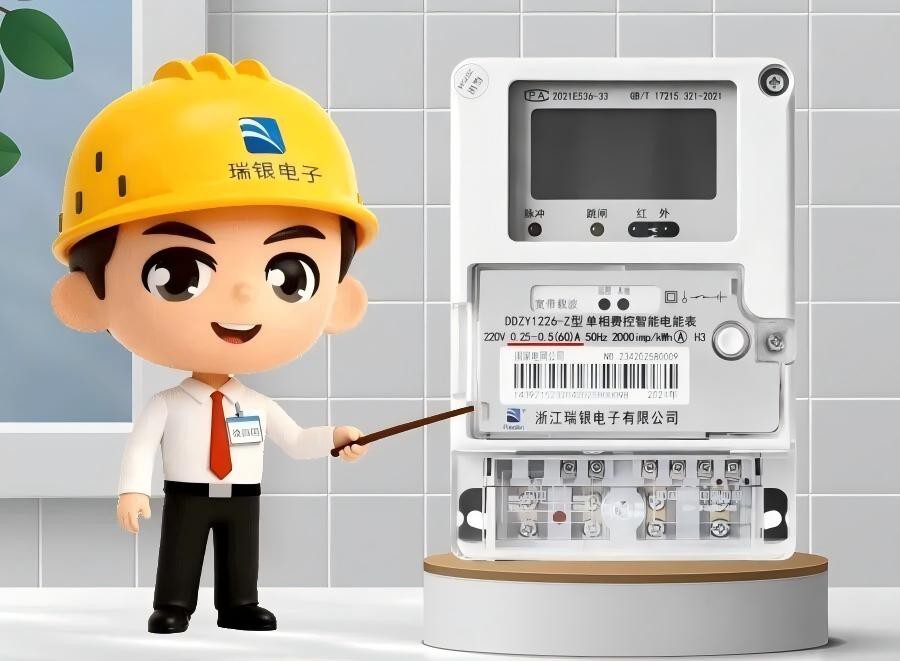
Operation: Turn off all electrical appliances in your home, preferably by switching off the main circuit breaker to ensure there is no power supply. Observation: Check the electricity meter. There's a red pulse indicator light on the meter. Under normal circumstances, this light should not be on when no electricity is being used. If the light is still flashing, there's a problem.
Step 2: Identifying the Problem
Light not flashing: This means there's no power leakage in your home, and no one is stealing electricity. The electricity consumption is simply due to your household appliances. Light flashing: Congratulations, you've found the root of the problem! This indicates either a power leak in the wiring or someone is using your electricity.
Where is the electricity going?
If the power-off test shows no problems, then you need to check if your "high-power appliances" are the culprits.
Appliance overload: Check your electricity meter specifications, usually written on the meter, for example, "0.25-0.5(60)A". The 60 in parentheses is the maximum current Imax, 0.25 outside the parentheses is the minimum current Imin, and 0.5 is the transition current (Itr). For a Class A meter, the starting current (Ist) = 0.05 x Itr, so the starting current is 0.025A. If you have several high-power appliances running simultaneously, such as air conditioners, electric water heaters, and induction cookers, the meter will spin rapidly, naturally resulting in high electricity bills.
Standby power consumption: Many appliances, even when turned off, still consume power in standby mode as long as they are plugged in, such as TVs, set-top boxes, and routers. The starting current of the above electricity meter is 0.025A. The minimum measurable power of this meter can be calculated as 220V x 0.025A = 5.5W. This means that if your household's standby power consumption exceeds 5.5 watts, the meter will start registering electricity consumption. Even calculating at the minimum 5.5 watts, the monthly 24-hour power consumption would be 3.96 kilowatt-hours (kWh). This adds up to a considerable expense over time. Appliance aging or malfunction: Especially for appliances that run for extended periods, such as refrigerators and air conditioners, aging or compressor malfunctions can cause them to operate at high power continuously, significantly increasing electricity consumption.

What to do? Consumer Rights Guide
If your self-check reveals no problems with your appliances, but the electricity meter is still running excessively, then you need to consider problems with the meter itself.
① Request meter calibration: The most direct method is to call the State Grid customer service hotline at 95598 and request meter calibration.
② Check the meter wiring: A normal electricity meter only has four wires. If you find a fifth or extra wire on your meter, it's highly likely that someone is stealing electricity. In this case, immediately take photos as evidence and report it to the power company or the police.
③ Be wary of "resale electricity": If you live in an older residential area or a shopping mall, your electricity bill may not be directly from the State Grid, but rather through a "resale electricity" meter managed by the property management.
In short, start by checking your own home, then gradually seek help from the power company or relevant departments, ensuring you have valid evidence rather than making baseless assumptions.