

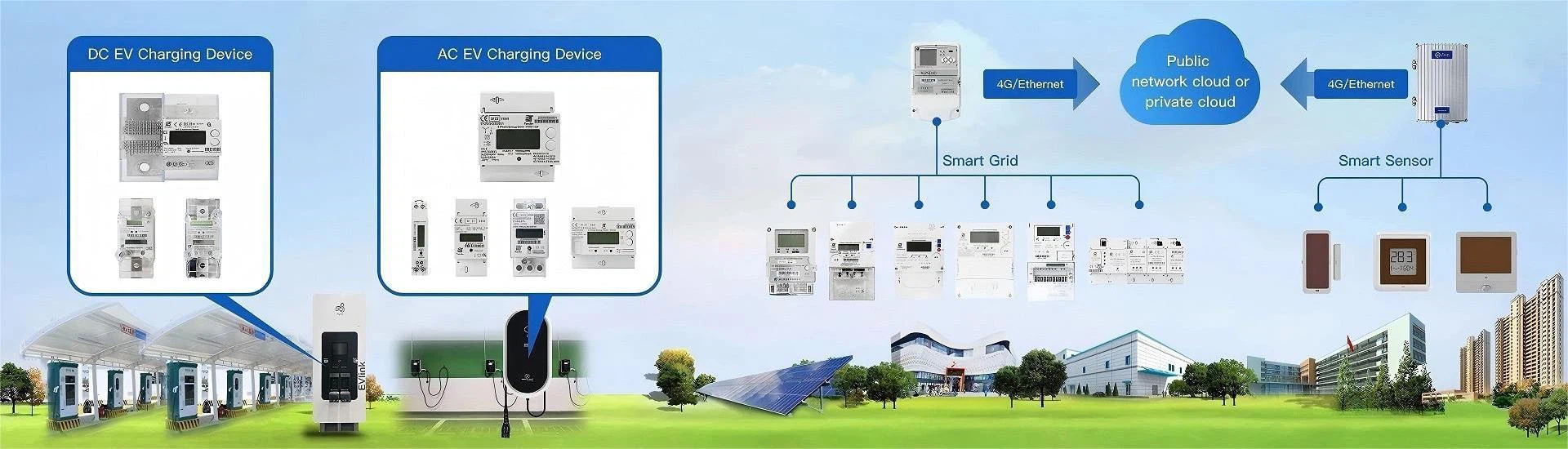
As the core device for electricity metering, the wiring of the electricity meter directly impacts the safety and stability of the entire power system.

However, in actual construction projects, users often choose substandard wires to save costs, or misuse copper and aluminum core wires, ultimately creating significant safety hazards such as fires and short circuits.
The core difference between copper and aluminum wires
Electricity meters must be wired with copper core conductors; the use of aluminum core conductors is strictly prohibited. This regulation stems from the significant differences in the performance characteristics of the two materials:

✅Copper Core Wires: Comprehensive Performance Advantages
● Superior Conductivity: Copper has significantly higher electrical conductivity than aluminum. For the same cross-sectional area and length, copper core wires exhibit lower resistance, resulting in reduced energy loss during transmission. At critical connection points like meter terminals, low resistance prevents localized overheating, thereby extending the service life of meters and electrical components.
● Strong Oxidation Resistance: When exposed to air, copper forms a dense protective layer of copper oxide, which inhibits further oxidation. This allows the wire to maintain stable conductivity even during long-term use.
● Excellent Mechanical Properties: Copper boasts superior ductility and tensile strength. It is resistant to breakage during bending and stretching (common during installation) and forms more secure connections. These properties make it well-suited for harsh environments with vibrations and temperature fluctuations.
❌Aluminum Core Wires: Severe Safety Hazards
● Prone to Oxidation: Aluminum readily oxidizes to form aluminum oxide, a substance with extremely high resistance that acts as an insulator. At meter connections, the accumulation of aluminum oxide causes a sharp increase in contact resistance, creating a vicious cycle of "heating → oxidation → increased resistance → more heating." This cycle can ultimately lead to terminal melting, short circuits, or even fires.
● Poor Mechanical Properties: Aluminum is brittle and prone to breakage. It frequently suffers from fractures and poor contact during installation and use, which further exacerbates safety risks.
⚠️ Important Reminder
Copper and aluminum wires must not be directly connected! Due to their different electrochemical properties, direct connection will form a galvanic cell, leading to joint corrosion, increased contact resistance, overheating, and even fire.
Wire Gauge and Power Rating Chart
The following table shows the safe current carrying capacity and corresponding power for common copper and aluminum wires at 220V:
Copper Conductor Safe Power Capacity Reference Table
| Conductor Cross-Section | Safe Current Capacity | Allowable Power | Typical Applications |
|---|---|---|---|
| 1.0 mm² | 6–8 A | 1320–1760 W | Small appliances, signal wiring |
| 1.5 mm² | 8–15 A | 1760–3300 W | General sockets, lighting circuits |
| 2.5 mm² | 16–25 A | 3520–5500 W | Air conditioners, water heaters, other medium-power appliances |
| 4.0 mm² | 25–32 A | 5500–7040 W | Kitchens, high-power appliance wiring |
| 6.0 mm² | 32–40 A | 7040–8800 W | Main incoming lines, central air conditioning |
| 10 mm² | 40–65 A | 8800–14300 W | High-power equipment, commercial electricity use |
Aluminum Conductor Safe Power Capacity Reference Table
| Conductor Cross-Section | Safe Current Capacity | Allowable Power | Typical Applications |
|---|---|---|---|
| 1.0 mm² | 3–5 A | 660–1100 W | Not recommended for residential use |
| 2.5 mm² | 13–20 A | 2860–4400 W | Temporary power supply, low-load projects |
| 4.0 mm² | 20–25 A | 4400–5500 W | Temporary power use |
| 6.0 mm² | 25–30 A | 5500–6600 W | Temporary power use |
| 10 mm² | 30–40 A | 6600–8800 W | Temporary power use |
⚠️Note: The current carrying capacity of aluminum wire is approximately 60%-70% of that of copper wire of the same specifications, and the risk of oxidation during long-term use must also be considered.

Summary and Recommendations
The choice of wires for electric energy meter connections is crucial to electrical safety and equipment lifespan. It is strongly recommended to use copper wires (meter terminals are primarily copper-based; to avoid electrochemical corrosion, aluminum wires should never be used-only copper wires are acceptable), with 2.5 square millimeters (mm²) as the minimum standard.
For applications with higher electrical loads, it is advisable to directly select 4 mm² or larger copper core wires to reserve sufficient capacity for future power demands.