

Household electricity is typically single-phase 220V, while industrial applications commonly use three-phase 380V. However, the voltage generated by a power plant generator is not either of these two. So, how many volts does a power plant generator actually produce?
1. How many volts of electricity does a generator actually produce?
The generator output voltage is determined by the unit capacity, insulation design, and grid compatibility. The rated output voltage of mainstream generators in China is classified into the following levels:
| Small and medium-sized generating units (hydropower, cogeneration) | 6.3kV,10.5kV |
| Large and medium-sized thermal power units (300MW class) | 13.8kV,18.5kV |
| 1 million kilowatt ultra-supercritical unit | 20kV,24kV |
The core reason why generators do not directly output 220V/380V is that low-voltage generation current is extremely high, causing coil and line losses to skyrocket and insulation costs to increase dramatically, making long-distance, efficient power transmission impossible. Therefore, a "medium-voltage generation, multi-stage transformation" mode must be adopted.

II. The Journey of Electricity: Four Levels of Voltage Transformation, From Power Plant to Socket
Electricity travels from generator to user through four key stages: voltage boosting and transmission, regional voltage reduction, distribution voltage reduction, and terminal voltage reduction. The entire process relies on transformers for voltage conversion, ultimately matching residential and industrial electricity needs.
Step 1: Voltage Boosting and Transmission – From "Medium Voltage" to "Ultra-High Voltage/Extra-High Voltage"
After the generator produces 6.3kV–24kV medium-voltage electricity, it is immediately connected to the main step-up transformer, which raises the voltage to 220kV, 500kV, and for inter-regional transmission, even to 1000kV AC and ±800kV DC ultra-high voltage levels.

Step Two: Regional Voltage Reduction – From "Ultra-High Voltage" to "High Voltage"
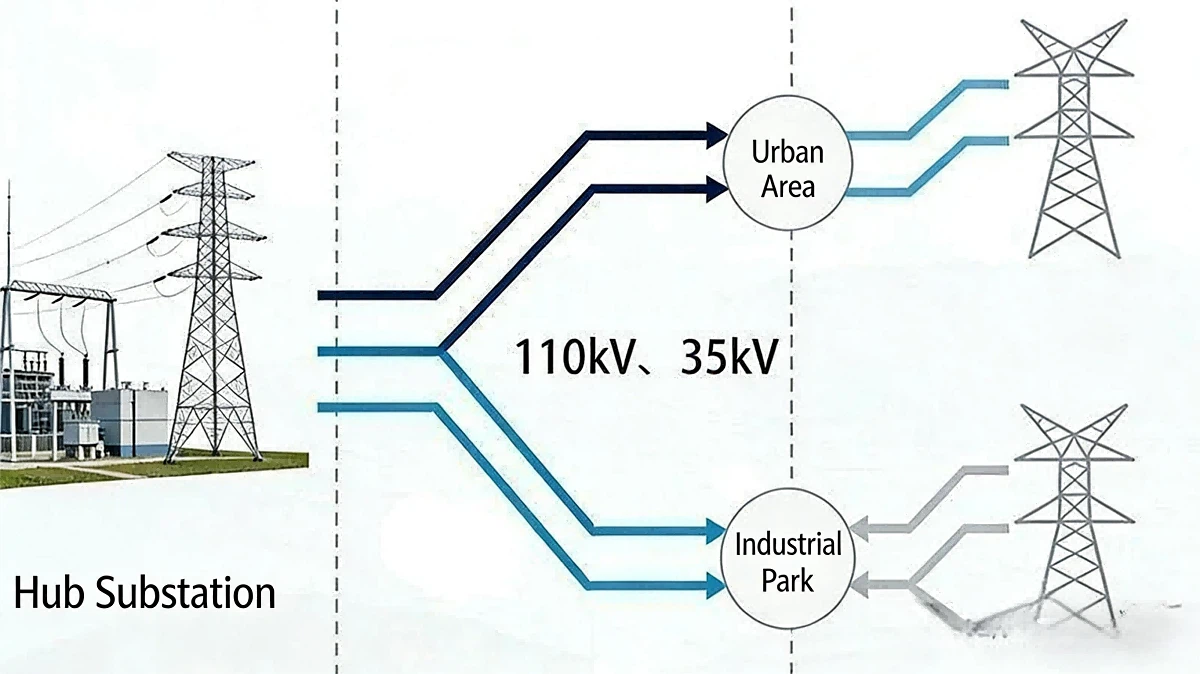
Ultra-high voltage electricity is transmitted to key substations around the city, where it is stepped down to 110kV and 35kV high voltage levels by step-down transformers, entering the urban area distribution network to prepare for high-voltage power supply to urban areas and industrial parks.
Step 3: Voltage Step-Down – From "High Voltage" to "Medium Voltage"
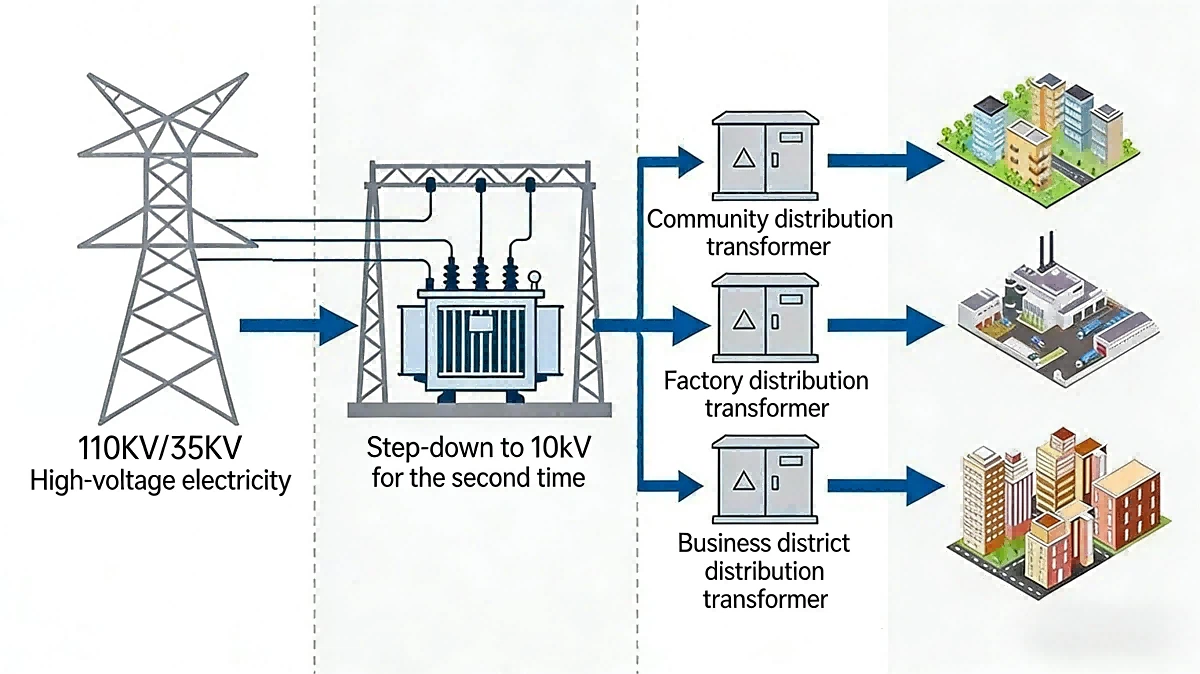
High-voltage electricity enters the urban distribution substation, where it is stepped down again to 10kV medium voltage. This voltage is then transmitted via underground cables or overhead lines to distribution transformers near residential areas, factories, and commercial districts. This is the most common voltage level in urban power distribution networks.
Step 4: Terminal Voltage Step-Down – From "Medium Voltage" to "Low Voltage (Residential/Industrial)"
This is the crucial step closest to the user. The 10kV medium-voltage electricity is converted to 380/220V three-phase four-wire low-voltage electricity via distribution transformers in residential areas and factories.
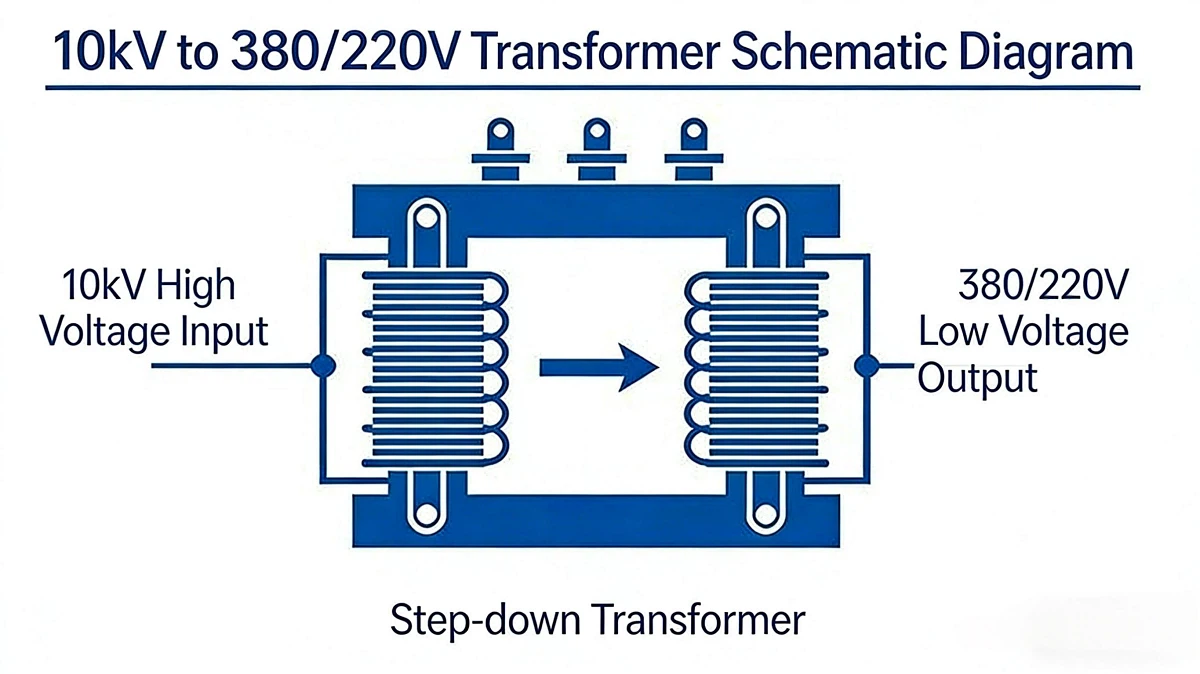
It uses three phase wires and one neutral wire to provide three-phase 380V power to factories, shopping malls, and large equipment, and is compatible with high-power equipment such as motors, machine tools, and central air conditioning.

III. Key Science Popularization: The Relationship Between 220V and 380V
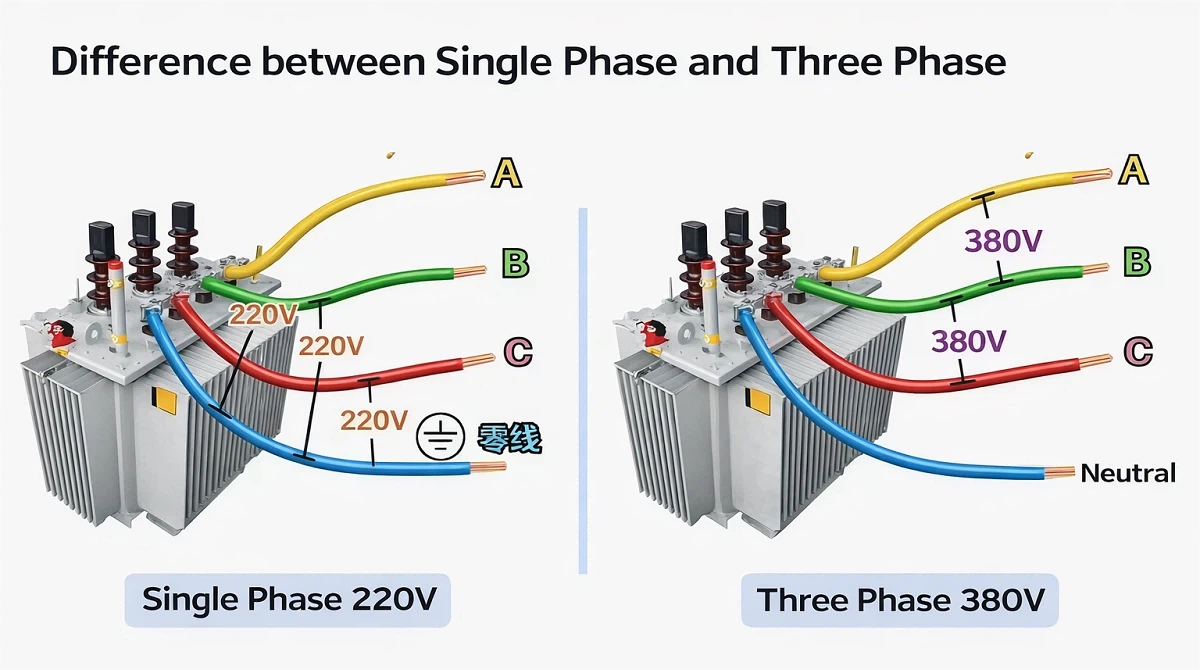
Household 220V and industrial 380V are not two independent power supply systems, but rather two output forms of the same three-phase four-wire power supply: In three-phase electricity, the voltage between phase lines is 380V (line voltage), and the voltage between a phase line and the neutral line is 220V (phase voltage). The two satisfy a mathematical relationship of "√3".
From the thousands of volts of medium-voltage electricity from generators to the 220V/380V low-voltage electricity after multiple transformations, each step of voltage conversion follows scientific principles and national standards. This ensures efficient long-distance power transmission and meets the safe power needs of different scenarios, which is the ingenuity of modern power systems.