

In electricity metering systems, a current transformer (CT) is an electrical device used to measure current. It converts large currents into proportionally smaller currents, facilitating applications such as current measurement, monitoring, protection, and control.
Currently, in mainstream solutions, split-core CTs and solid-core CTs each have clearly defined application boundaries. The selection of the current transformer directly affects metering accuracy, installation cost, and long-term reliability.
Structural Differences and Working Principles
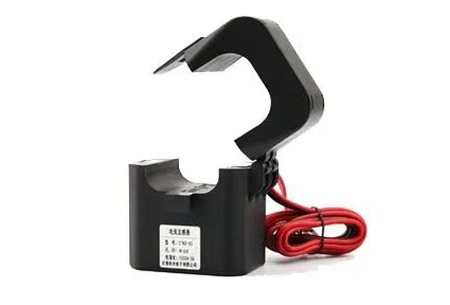
Open-type CT(Current Transformer)
- Structural Features
The core adopts a split design, with a hinge or snap-fit on one side, allowing it to be opened and closed to the conductor without disconnecting the circuit.
- Installation Features
Directly wraps around live conductors, supporting live operation, suitable for upgrading existing lines.
Closed-loop CT (Current Transformer)
- Structural Features
The core is a complete ring, and the conductor must pass through the core to form a closed magnetic circuit.
- Installation Characteristics
Requires power outage for installation and busbar removal; suitable for new construction projects or scenarios where power outages are permissible.
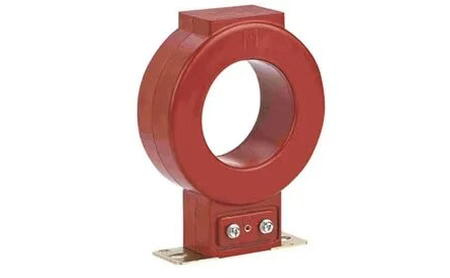
The core physical difference is that the open magnetic circuit has an air gap, which increases the magnetic reluctance; the closed magnetic circuit is continuous, and the magnetic reluctance is minimized.
Key Performance Comparison
Accuracy and Stability
| Index | Split-core CT | Solid-core CT |
|---|---|---|
| Typical Accuracy | 1%-2% (Some manufacturers can reach Class 0.5) | 0.2%-0.5% (Standard industrial grade) |
| Long-term Drift | ≤ ±1%/year (Affected by vibration and aging) | ≤ ±0.2%/year (Fully enclosed structure) |
| Anti-interference Capability | Weak (External magnetic fields easily penetrate the air gap) | Strong (Closed magnetic circuit shields interference) |
Conclusion: Closed-loop metering has an irreplaceable advantage in accuracy in metering scenarios (such as electricity billing).

Installation and Economy
| Dimension | Split-core CT | Solid-core CT |
|---|---|---|
| Installation Time | 5-10 minutes/unit (live-line operation) | ≥30 minutes/unit (power outage required) |
| Labor Cost | Reduced by 60% (no wiring disassembly, no power outage loss) | Higher (requires power outage coordination, complex threading) |
| Hardware Cost | Higher (structure complexity +20%~30%) |
Lower (standardized production) |
Safety and environmental adaptability
Risks associated with open-type systems:
Dust and moisture can easily accumulate in the air gap, typically resulting in an IP rating of ≤IP54 (risk of failure in humid environments);
Vibration can lead to poor contact, potentially causing localized overheating (measured temperature rise can reach over 30K).
Advantages of a closed-loop design:
IP65+ fully sealed (epoxy resin casting), resistant to dust and salt spray;
No moving parts, 25-year maintenance-free design.
Summary
- The selection of current transformers for electricity meters is essentially a three-dimensional balance of accuracy, cost, and risk.
- Under the trend of digital energy efficiency management, closed-loop current transformers (CTs) remain the "gold standard" for core metering scenarios, while open-loop CTs, with their revolutionary installation efficiency, are becoming a key enabling tool for incremental distribution networks and zero-carbon transformation.