

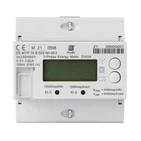
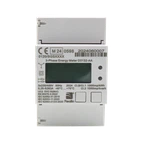
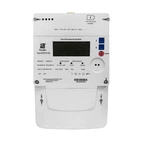
As the "measuring bridge" for three-phase AC energy meters, the selection of current transformers (CTs) directly determines the accuracy of energy metering. This article uses the Zhejiang Ruiyin Electronics 0.01-1(6)A, 0.5-class three-phase AC CT energy meter as an example to introduce the selection criteria for current transformers.
Key parameter matching
Current Specification Selection: Primary-side current is the core
The current specification of the transformer must meet two key requirements: "primary-side current covers the actual load" and "secondary-side current matches the electric energy meter".
● Secondary-side Current Fixed Matching:The rated secondary current of Ruiyin Electronics' D3034 (MID-certified) and DTSFU1226 (CPA-certified) electric energy meters is 6A. When selecting a transformer, ensure its secondary-side output current falls within this range. Typically, a 5A secondary-side transformer is used for matching.
● Primary-side Current Selection Formula:Transformer primary-side rated current = Actual maximum load current × 1.2~1.5.For example: If the actual maximum load current is 200A, select a transformer with a primary-side current of 250A (200×1.25) or 300A (200×1.5).If the load current fluctuates greatly (e.g., motor equipment), it is recommended to use a 1.5x factor to avoid metering distortion caused by overload.
Special Scenarios:When the actual load current is less than 30% of the transformer's primary-side rated current, metering accuracy will decrease (due to the transformer's error curve deviating from the optimal range). In this case, select a "wide-load transformer" or adjust the number of primary-side winding turns (closed transformers support multi-turn threading: e.g., a 300/5A transformer can be converted to 150/5A by threading 2 turns).
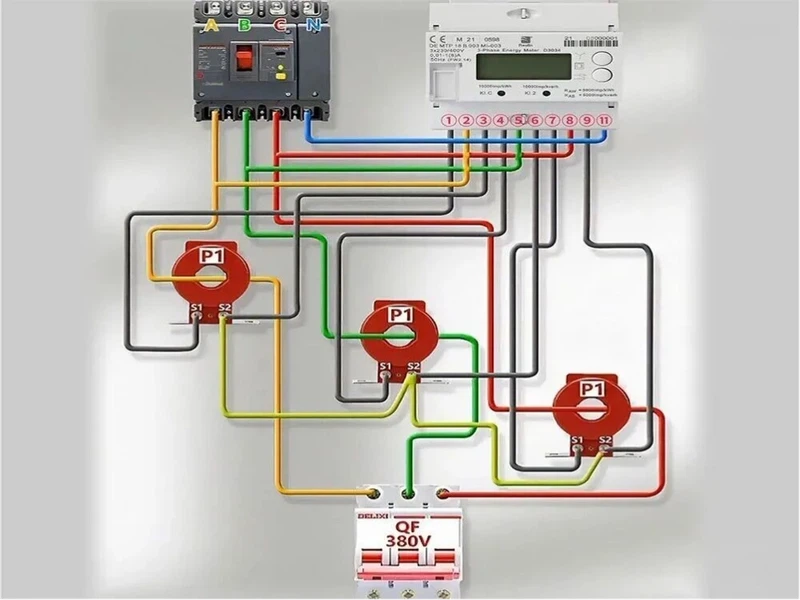
Accuracy Class
The accuracy class of the UBS electronic current transformer energy meter is typically 0.5 class. According to metering standards, the accuracy class of the current transformer must be better than or equal to the accuracy class of the energy meter, and must meet the requirement of "composite error ≤ 1.0 class":
● Recommended Selection:Choose 0.5 class or 0.2/0.2S class transformers. (The 0.2S class has smaller errors under light load (5% of rated current), making it more suitable for scenarios with large load fluctuations; the 0.2 class is applicable to industrial/commercial scenarios with stable loads.)
● Prohibited Selection:Try to avoid using transformers with an accuracy class of 1.0 or higher. Even if the error of a single device meets the standard, the combined error of the two may exceed the allowable range, leading to disputes over electricity bill settlement.

Current transformer type selection: Open-type vs. Closed-type
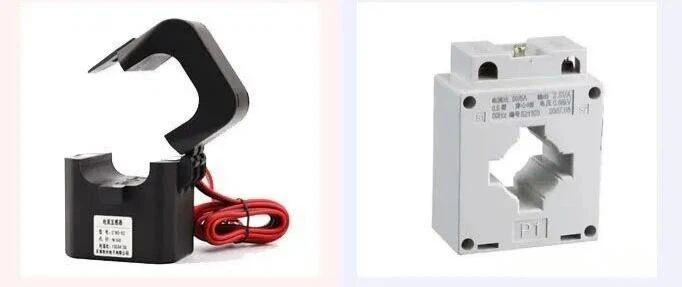
| Type | Core Features | Application Scenarios | Selection & Installation Notes |
|---|---|---|---|
| Closed Transformer | High accuracy (0.2 class & above common), good sealing, strong anti-interference | New projects, cable/busbar installable with power cut, stable load scenarios | Power off during installation; strictly follow nameplate requirements for primary-side winding turns (e.g., 1 turn, 2 turns) to avoid ratio errors caused by wrong winding. |
| Split-Core Transformer | Easy installation (no power cut required), detachable, compatible with in-service equipment | Renovation projects, cable/busbar non-detachable installation, emergency expansion scenarios | Most are 0.5 class & above; choose high-quality 0.2 class split-core products; ensure the iron core is tightly attached (gap ≤ 0.1mm) during installation, otherwise accuracy will drop significantly. |
Selection priority: Prioritize closed-type current transformers (which offer better accuracy); only choose high-accuracy open-type current transformers when it is impossible to de-energize the circuit for installation, and necessary error verification must be performed after installation.

Transformer Selection Practical Steps (4 Steps to Finalize)
● Choose 0.2 class for stable loads;
● Choose 0.2S class for large load fluctuations;
● 0.5 class is also an option; 1.0 class is not recommended.
● Choose closed transformers for new projects;
● Choose split-core transformers (must be better than 0.5 class) for renovation projects.
Must-see Pitfall Reminders
1. Consistency of Transformation Ratio: For three-phase transformers in the same circuit, the same transformation ratio and accuracy class must be selected to avoid three-phase measurement imbalance.
2. Nameplate Verification: When selecting a model, confirm the transformer's nameplate labels such as "primary side current / secondary side current" and "accuracy class".
3. Installation Distance: The length of the secondary circuit between the transformer and the electricity meter should not exceed 50 meters, and the wire cross-section should be no less than 2.5mm² (for 5A secondary side). In complex environments, shielded wires can be used to reduce interference.