

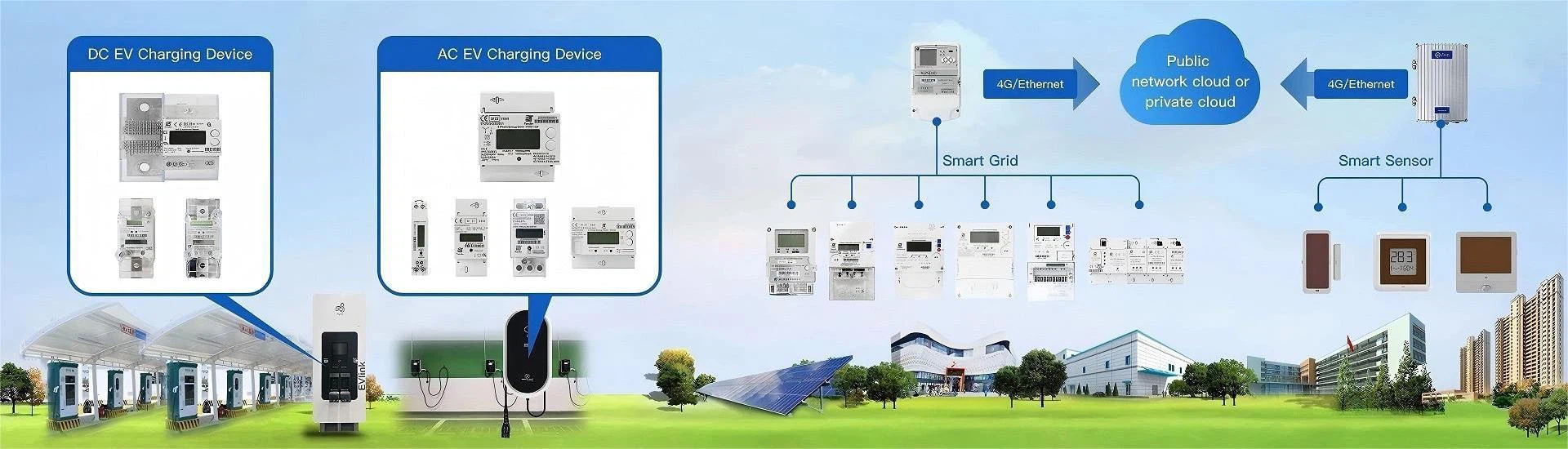

CE certification, short for "Conformité Européenne," is a certification mark issued by the European Union (EU) to indicate that a product complies with the relevant regulations and standards of the European internal market and demonstrates certain safety, quality, and environmental performance.
A CE mark on a product allows free circulation within the European Economic Area, eliminating the need to meet the specific technical standards of each member state. It also indicates that the manufacturer assumes full legal responsibility for product safety.
Thus, it's not surprising that electricity meters must at least have CE certification to enter the EU/European market. For electricity meters, CE certification primarily addresses electrical safety (such as protection against electric shock, overload, and short-circuit protection), electromagnetic compatibility (EMC) (ensuring the meter operates properly in an electromagnetic environment and does not interfere with other equipment), and environmental requirements (such as compliance with the RoHS Directive, which restricts the use of hazardous substances).
CE certification vs. CPA, CSA, MID, PTB, LNE certification:
| Certification Name | Full Name/Main Applicable Region | Certification Nature and Core Focus |
|---|---|---|
| CE Certification | Mandatory Safety Certification for the European Market | Mandatory market access requirement, focusing on product safety, health, environmental protection and other basic requirements. |
| CPA Certification | China Metrology Accreditation | Mandatory certification for measuring instruments used in trade settlement in the Chinese market, focusing on metrological accuracy. |
| CSA Certification | Canadian Standards Association Certification, mainly applicable to the Canadian and North American markets | A voluntary product safety certification with high recognition in the Canadian market, but regarded as a market access threshold, focusing on product safety. |
| MID Certification | Measuring Instruments Directive Certification of the European Union, applicable to the EU market | Mandatory certification for measuring instruments (such as electric energy meters) used in trade settlement within the EU, focusing on metrological accuracy and reliability. |
| PTB Certification | Physikalisch-Technische Bundesanstalt Certification of Germany, a specific requirement for the German market | Mandatory certification by Germany for measuring instruments (such as electric energy meters) used within its territory. It can be regarded as a supplement and concretization of MID certification in the German market, with usually stricter requirements, focusing on metrological precision and compliance. |
| LNE Certification | Laboratoire National de Métrologie et d'Essais Certification of France | Mandatory in the French market (especially in France), and as part of the EU CE certification, it is also recognized by other EU countries. |
Furthermore, certification generally requires significant investment. According to reports, CPA certification for an electricity meter costs around 40,000 yuan, CE certification around 100,000 yuan, CSA certification around 100,000 yuan, MID certification around 400,000 yuan, and PTB certification around 1 million yuan...
Zhejiang Reallin Electron Co.,Ltd has extensive experience in the electricity meter field, and its products have received numerous international certifications. Once you have a basic understanding of these certifications, you can take a look at the following electricity meters with CE and other certifications for a clearer understanding.
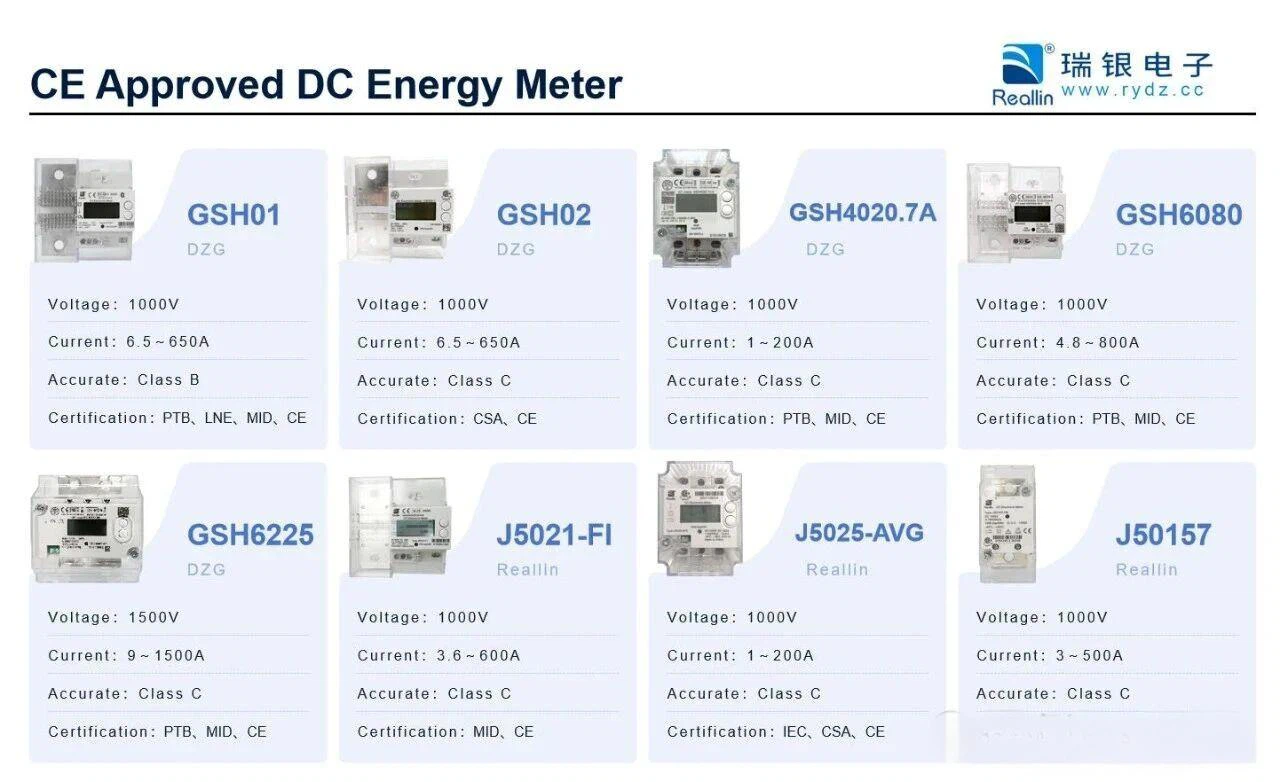
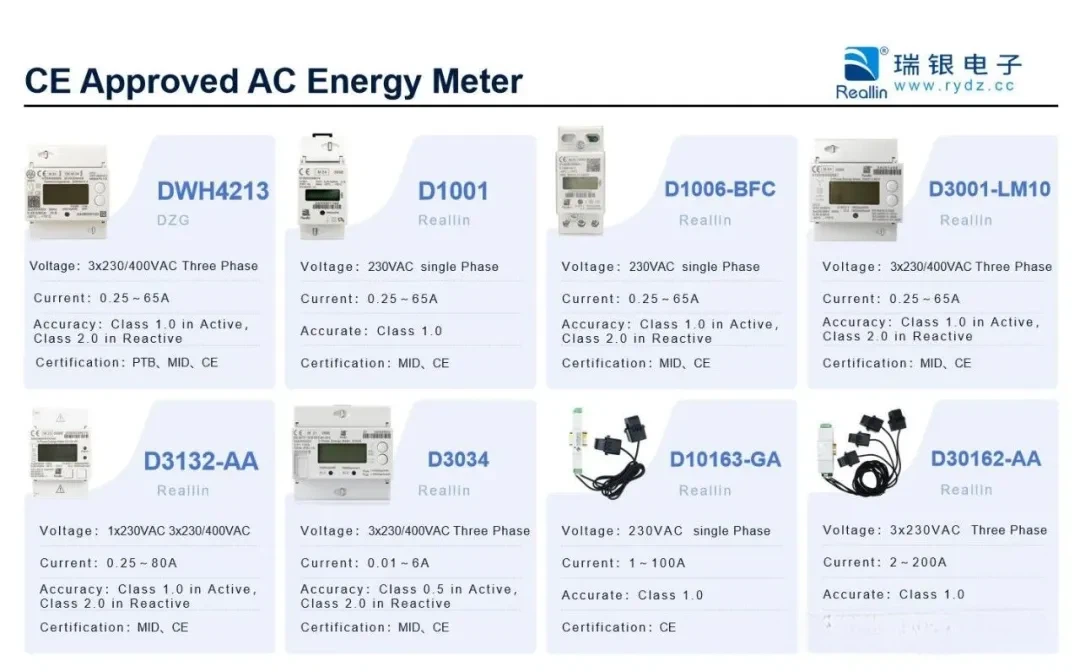
I hope this information helps you better understand CE and other related certifications and choose the right energy meter. If you have more specific application scenarios or target markets, I might be able to provide further analysis.