

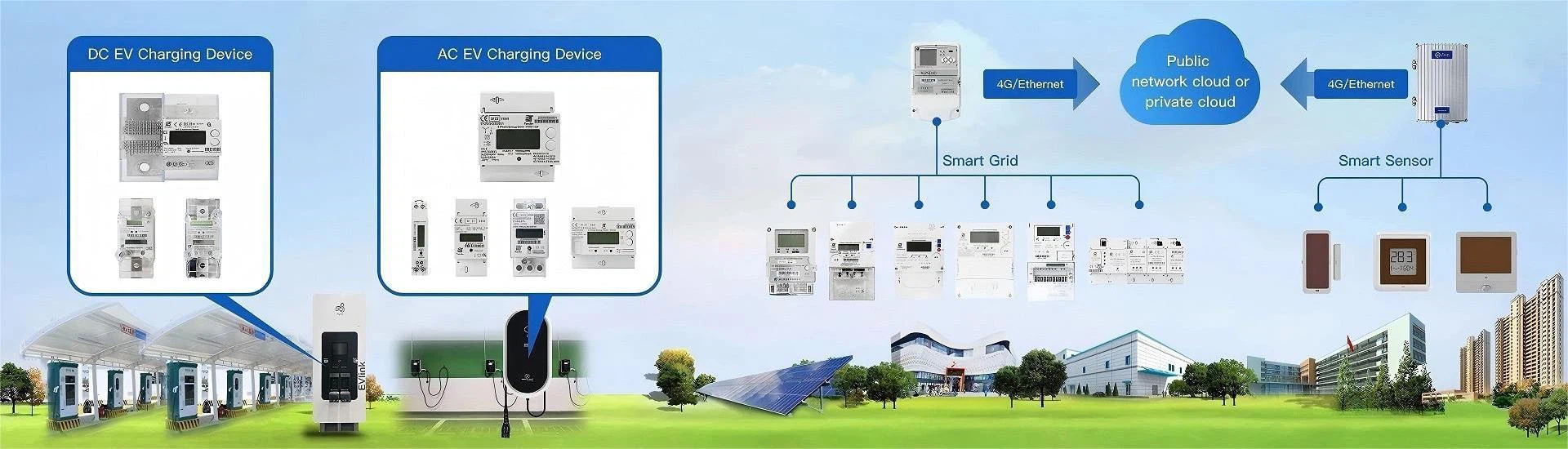
When expanding products internationally, global safety certifications are non-negotiable barriers-they determine whether goods can legally circulate, gain consumer trust, and compete in target markets. For enterprises (such as Zhejiang Reallin Electron Co.,Ltd, a leader in energy metering solutions), mastering regional certification requirements is critical to seamless cross-border expansion. Below is a breakdown of core certifications across major global markets:
European Union Market: CE, RoHS & GS Certifications
The EU's regulatory framework centers on three foundational certifications:
- CE Certification: A mandatory safety passport for over 30 product categories (including electronics, machinery, and toys). It verifies compliance with EU health, safety, and environmental directives; products bearing the CE mark can freely circulate in all EU member states. For firms like Reallin Electronics, CE certification is the baseline for supplying EV charger components to Europe.
- RoHS Certification: A sub-compliance requirement tied to CE, restricting 6 hazardous substances (e.g., lead, mercury) in electrical and electronic products (home appliances, IT devices). It is non-negotiable for entering the EU market.
- GS Certification: Issued by bodies like TÜV (authorized by Germany's Ministry of Labor), this mark signifies safety standards exceeding CE requirements. It requires factory audits and annual inspections, primarily applying to home appliances and office equipment. For brands, GS certification boosts consumer trust and enables premium pricing in the EU.
North American Market: UL, FCC & CSA Certifications
North America's key certifications focus on safety and electromagnetic compatibility:
- UL Certification: The U.S.'s most recognized (voluntary but widely adopted) safety standard, covering electronics, appliances, and building materials. While not legally mandatory, retailers and regulators heavily prioritize UL-listed products; some UL standards have even become U.S. national regulations. For Reallin's energy meter products, UL certification is critical to accessing U.S. charger markets.
- FCC Certification: Mandatory for electronic products to control electromagnetic interference (EMI), ensuring compatibility with communication devices (e.g., wireless equipment, computers). It is a prerequisite for selling electronics in the U.S.
- CSA Certification: Canada's largest safety certification body, whose marks are recognized in both the U.S. and Canada. It covers 8 sectors (machinery, electrical, etc.), simplifying cross-border sales in North America.


Asia-Pacific Market: CCC, PSE & KC Certifications
The Asia-Pacific region has market-specific mandatory certifications:
- CCC Certification (China Compulsory Certification): China's mandatory product certification, implemented to protect consumer safety, the environment, and national security. It applies to products like home appliances, automobiles, and IT devices-essential for domestic sales and exports to China.
- PSE Certification (Japan): Japan's electrical product approval system, divided into "diamond" (specified high-risk products, e.g., wires, power adapters) and "circle" (non-specified products). 165 high-risk categories require third-party testing to enter Japan.
- KC Certification (South Korea): A unified mandatory mark combining safety (Safety) and electromagnetic compatibility (EMC) certifications, applicable to electronics and communication devices.
Emerging & Specific Markets: EAC, SASO & IRAM Certifications
For niche markets, tailored certifications are required:
- EAC Certification: Mandatory for Russia and the Eurasian Customs Union (Russia, Belarus, Kazakhstan), covering machinery, electronics, and food. It requires local laboratory testing.
- SASO Certification (Saudi Arabia): Regulated by the Saudi Standards Organization, it enforces the ICAP program for imported goods (covering energy efficiency and chemical testing).
- IRAM Certification (Argentina): Based on IEC standards, products must bear the IRAM mark to enter Argentina.
Key Certification Comparison
The table below summarizes core certification attributes:
| Certification | Nature | Core Application Areas | Mandatory Region | Special Requirements |
|---|---|---|---|---|
| CE | Mandatory | Electronics, machinery | EU | Self-declaration or third-party testing |
| UL | Voluntary (de facto mandatory) | Electronics, building materials | U.S. | U.S. standard testing |
| CCC | Mandatory | Home appliances, cars | China | Designated laboratory inspection |
| PSE (Diamond) | Mandatory | Wires, power adapters | Japan | Authorized agency testing |
| EAC | Mandatory | Machinery, food | Eurasian Customs Union | Localized testing |
For enterprises like Reallin Electronics, mastering these certifications is not just about compliance-it's a strategic tool to expand global reach, enhance brand credibility, an d capture opportunities in high-growth markets (e.g., EV chargers in Europe and North America). By aligning products with regional certification standards, businesses can minimize market entry risks and accelerate their global expansion.