

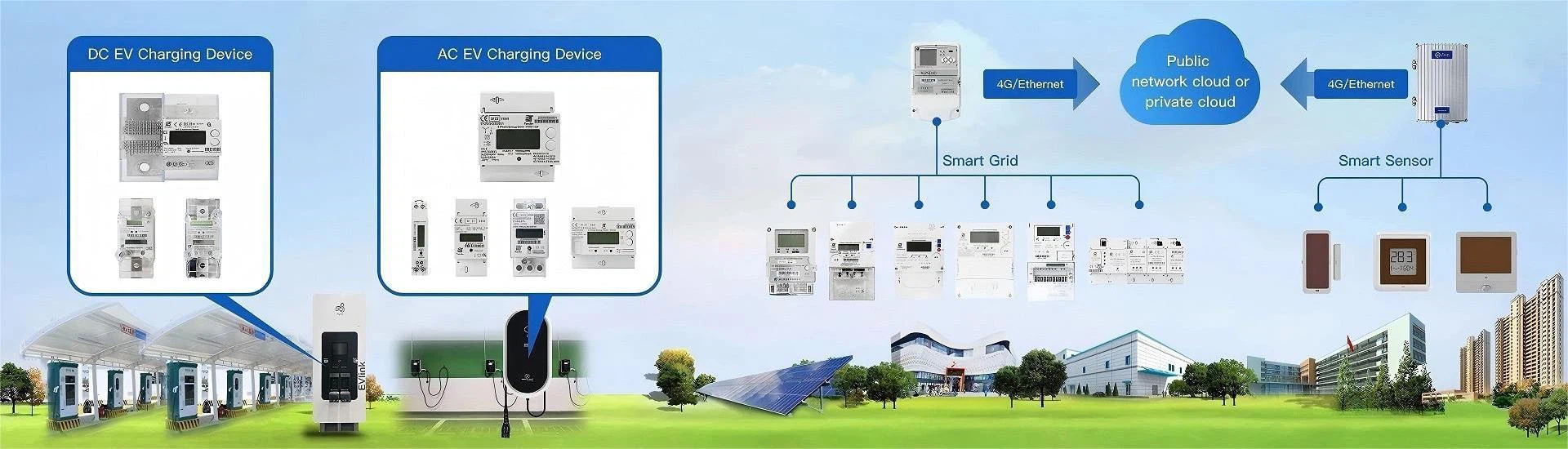
In the booming new energy vehicle industry, accurate metering of DC charging piles has become an essential need for the industry.

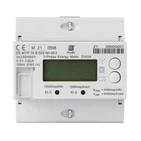
As a specialized and innovative enterprise in the field of electricity metering in China, Zhejiang Reallin Electron Co., Ltd. (hereinafter referred to as "Reallin") developed the DJZ1226G integrated DC smart energy meter in 2020 with the help of the State Grid Zhejiang charging pile project.

This product not only breaks the shackles of traditional split-type electricity meters, but also establishes UBS' pioneering position in integrated DC meters with its integrated design and intelligent functions.

1. Research and Development Background
Prior to 2020, DC charging piles generally used split-type energy meters (external shunts or Hall sensors), which had three major drawbacks:

1. Accuracy Attenuation: The excessively long current sampling signal line is susceptible to electromagnetic interference, leading to increased errors over long-term use;
2. Complex Installation: Requires an additional shunt connector, resulting in high labor costs and a high risk of errors;
3. Weak Security: The shunt connector lacks a lead seal, posing a risk of tampering.
After in-depth research, the Reallin R&D team officially launched the project in 2020, aiming to create an integrated DC energy meter with "higher accuracy, smaller size, and stronger anti-interference capabilities," codenamed DJZ1226.

2. Technological Breakthrough
The core innovation of the DJZ1226 lies in its "integrated shunt and base meter":
- Precision Leap: Built-in manganese-copper shunt achieves an overall accuracy of 0.5 class (national standard CL0.5), far exceeding the industry standard of less than 1.0 class;
- Anti-interference Upgrade: Current signal is directly connected to the metering chip, shortening the sampling distance to the millimeter level and avoiding electromagnetic interference;
- Power Consumption Optimization: Reduced shunt resistance reduces heat generation by 90%, making it suitable for extreme environments from -40°C to 70°C.

Functional Expansion Breakthroughs:
- Supports multiple communication protocols (DL/T 645-2007, DL/T 698.45, Modbus RTU) with speeds up to 115.2kbps;
- Integrated data storage function, capable of recording 100 charging events and faults such as overvoltage and overcurrent;
- Added electrical pulse output interface, supporting virtual load verification and simplifying the calibration process.
- Dual RS485 optional: one channel uploads data to the charging pile motherboard (TCU), and the other channel can upload data to the monitoring platform.

3. Quality Control
To ensure the reliability of the DJZ1226, Reallin has established a three-tiered quality control system:
R&D Verification:
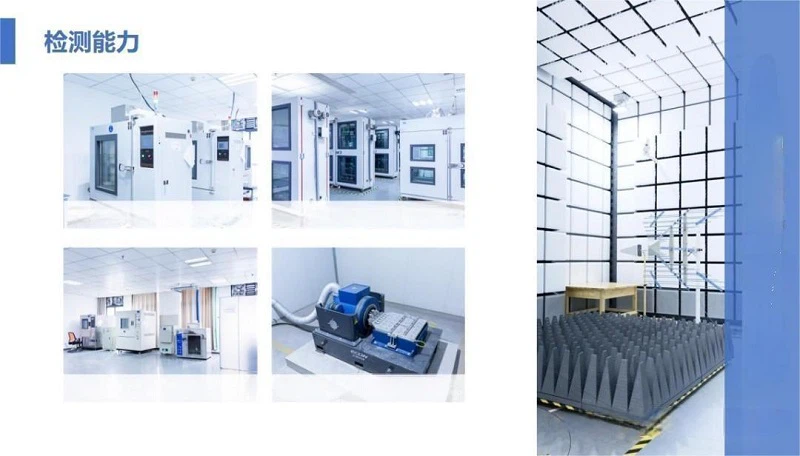
Numerous stringent tests were completed in a CNAS-certified laboratory (including EMC, environmental, and precision laboratories); a 3m half-wave anechoic chamber was used to simulate high-radiation scenarios and verify anti-interference capabilities.
Supply Chain Collaboration:
- A four-step management system is implemented for suppliers: qualification review, material certification, batch sampling inspection, and closed-loop improvement;
- Customized production of key components (such as manganese-copper shunts).
Smart manufacturing:
- The SMT (Surface Mount Technology) assembly, calibration, and final inspection processes are automated, achieving a high degree of automation;
- The MES (Manufacturing Execution System) provides full traceability of production data, eliminating human error.

4. Market validation
After mass production in 2022, the DJZ1226 quickly gained market recognition:
- Large-scale charging stations: Compatible with operators such as TELD, Star Charge, and Xiaoju Charging;
- Supercharging piles: The J50159-FD model supports 1000A high current, matching the needs of megawatt supercharging;
- Photovoltaic-storage systems: Applied to DC-side metering of photovoltaic systems, realizing integrated management of "generation-storage-use".

5. Intelligent Upgrade
In 2024, Reallin relocated to an advanced, intelligent, and green manufacturing base:
- Introducing industrial robots to complete component assembly, welding, and quality inspection, significantly improving product quality while reducing labor costs;
- After reaching full production capacity, the new base will have an annual production capacity exceeding 20 million single/three-phase electricity meters;
- Combining microgrid technology, a "zero-carbon production line" has been created, empowering the global carbon neutrality goal.
