

When people think of electricity meters, they usually picture the bulky, wall-mounted meter in their home. But those who have noticed charging stations will know that the meters there are small, uniquely designed, and quite different from household meters.
So, what exactly do charging station meters look like, since they also measure electricity? What are the mainstream charging station meter models in China, and how do they differ in overseas markets? Today, we'll take a comprehensive look and help you understand the ins and outs of charging station meters!
Domestic DC Charging Pile Electricity Meters
1. Electricity Meters of Fast Charging Piles from Many Years Ago
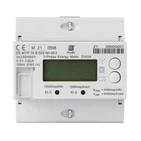
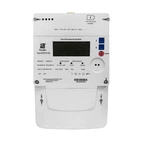
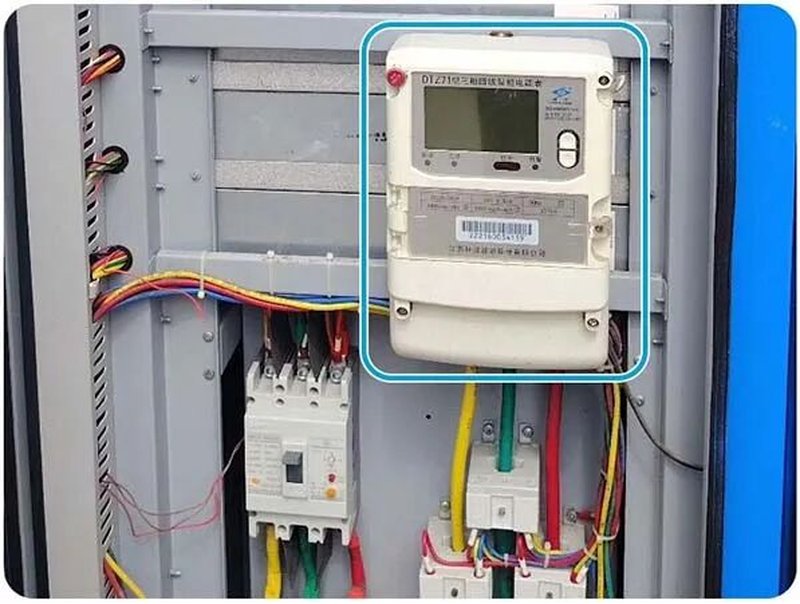
If you're in the used charging pile business, you might have noticed that the electricity meters in those early DC fast charging piles were surprisingly large three-phase AC energy meters.
These three-phase energy meters were used to measure electricity costs, including losses from the AC-to-DC conversion. If the meter read 100 kWh, the electric vehicle would likely only get 95 kWh charged-nearly 5% of the loss was absorbed internally by the charging pile, yet the user was still charged based on 100 kWh. This unfair metering method has led to the complete disappearance of three-phase AC meters in today's operating fast charging piles.
Using AC meters in DC fast charging piles is clearly inappropriate and relatively rare, except for those "antique" fast charging piles. In the past, most charging piles used DC energy meters very similar to household single-phase meters.
In order to quickly enter the DC metering market, early electricity meter manufacturers directly adopted the mature AC meter casing design, making only minor adaptation modifications to the internal metering chip and wiring terminals to achieve DC electricity metering. While this "new wine in old bottles" approach solved the problem of availability, there is still significant room for improvement in terms of installation convenience and space utilization.
2. Current Mainstream Electricity Meters for Fast Charging Stations
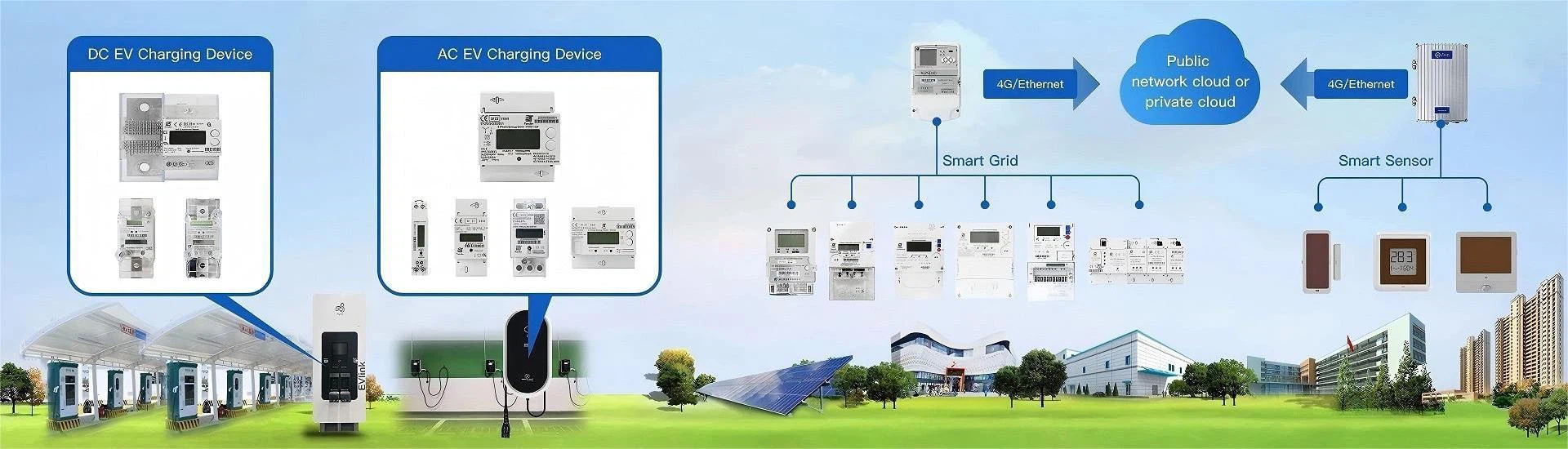
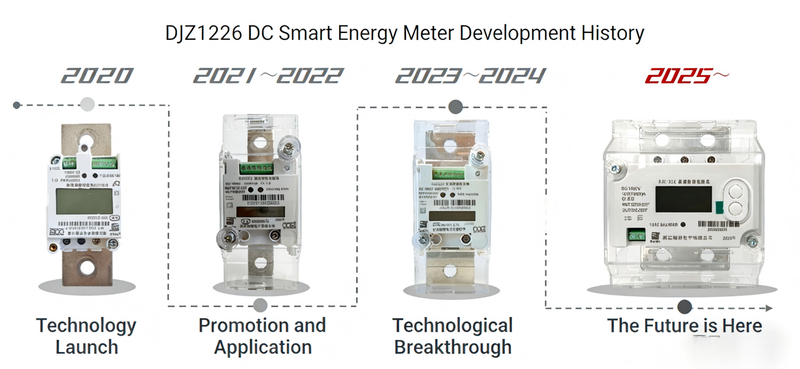
Subsequently, the market saw the emergence of smaller DIN rail-mounted DC energy meters, an "upgraded replacement" for wall-mounted meters, and the mainstream choice for DC charging stations from 2020-2025. Its biggest highlight is its dual-circuit design-connecting two external shunts (typically 75mV output) allows for independent energy metering of dual-gun charging stations simultaneously, eliminating the need for additional meters and perfectly adapting to scenarios such as dual-gun fast charging.
Compared to wall-mounted meters, DIN rail-mounted meters follow DIN standard rail installation (commonly 35mm rails), reducing size by nearly 40% and allowing direct embedding into the electrical control cabinet of the charging station, saving significant installation space. With its "compact + practical" advantages, it quickly replaced the market position of wall-mounted meters.
However, unbeknownst to many, as early as 2020, UBS Electronics quietly developed a DC energy meter with an integrated shunt. Today, this has become the core metering equipment for DC charging stations, and is the most technologically mature and reputable type.
It overturns the traditional separate design of "meter + external shunt," integrating the shunt (current sampling element) with the meter body into one unit, and also achieving overall sealing-fundamentally avoiding problems such as shunt-meter mismatch errors, loose wiring, and tampering inherent in separate designs. It fully complies with the anti-tampering requirements of the "Technical Management Regulations for Electricity Metering Devices." According to industry test data, the integrated design can reduce external fault points by 80%, and the annual failure rate can be controlled below 0.5‰.
Domestic AC Charging Station Electricity Meters
AC charging stations can be discussed in two parts. For home-installed AC slow charging stations, prices range from several hundred to several thousand yuan. These charging stations resemble large power strips and do not have or require an electricity meter. A household electricity meter can be installed by the State Grid or other power companies.
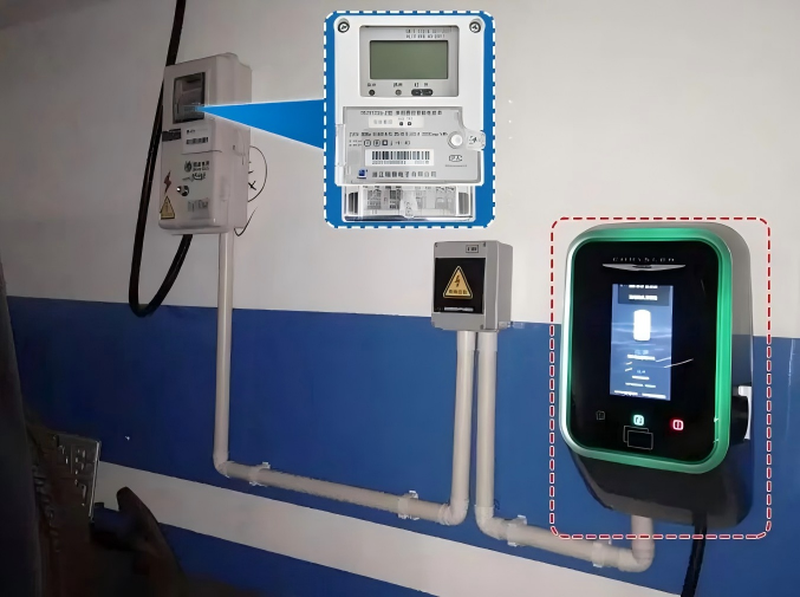
For commercially operated AC charging stations, a separate electricity meter needs to be installed inside. These meters are typically small and use a DIN rail mounting system. Its features include:
Compact size: Mounted on a DIN 35mm standard rail, its compact structure makes it suitable for integration into the internal control box of a charging station.
Reliable accuracy: Typically 0.5 or 1 grade accuracy, meeting commercial billing requirements.
Strong communication capabilities: Standard RS485 interface, supporting protocols such as Modbus-RTU and DL/T645.
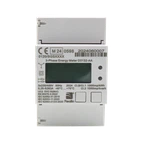
Commercially operated AC charging stations are common in residential parking lots, shopping mall underground garages, etc. They typically use AC three-phase energy meters, capable of measuring higher power (60A to 100A or higher), and can charge multiple electric vehicles simultaneously.
Overseas DC Charging Pile Meters
Different countries and regions have different standards for charging piles, resulting in differences between overseas and domestic charging piles, which are also reflected in the various differences in charging pile meters.
In the European market, especially in countries like Germany, exposed electricity meters have become a prominent feature of charging piles. From a technical perspective, exposed meters also reflect Europe's emphasis on the independence of metering equipment.
Although the MID Directive does not explicitly state that "electricity meters must be exposed," its requirements for metering transparency and tamper prevention have naturally evolved into industry practice, leading to exposed meters or independent displays.
More importantly, MID certification (EU Measuring Instrument Directive certification) is the "technical passport" for electricity meters to enter the European market. The requirements for MID certification include:
| Requirement Dimension | Specific Content |
|---|---|
| Measurement Accuracy | Provide accurate measurement results within an acceptable error range under expected usage conditions |
| Repeatability and Durability | Maintain stable performance under different environmental and usage conditions |
| Safety and Anti-interference Capability | Possess the ability of anti-interference and anti-tampering to prevent unauthorized alteration |
| Clear Indication | Measurement readings should be easy to read and free from misunderstanding |
MID certification is typically valid for 5 years, and technical documentation must be retained for at least 10 years in case of random checks by EU market regulators.
In 300kW-level supercharging station scenarios, DC energy meters with MID certification have become standard equipment for overseas markets, such as the J5021-FI model, which covers a range of 50-1000V and 3.6-600A, with an accuracy of Class C (equivalent to Class 0.5), far exceeding the error limit requirements of the EU MID Directive.
Overseas AC Charging Station Energy Meters
Overseas AC charging stations are characterized by high power, strong compliance, standardized interfaces, and intelligent communication. In the EU, they are compatible with MID AC energy meters and PTB certifications, while in North America, they are compatible with UL or CSA certified AC energy meters.
As shown in the image above, the AC energy meters of these charging stations are not significantly different in appearance from those of domestic charging stations. The main differences lie in electrical parameters, communication protocols, and certifications.
Summary of Certification Differences:
| Market | Voltage and Frequency | AC Charging Pile Meter Certification |
|---|---|---|
| China | AC 220V/380V 50Hz | CPA Type Approval for Measuring Instruments |
| EU | AC 230V/400V 50Hz | MID Certification / CE / RoHS |
| North America | AC 240V/480V 60Hz | UL or CSA Certification |
Summary
From the early "conversion of wall-mounted AC meters to DC" to today's mature integrated DC energy meters, charging pile meters have undergone a leap from "usable" to "easy to use" and then to "compliant overseas expansion." Whether in the domestic or overseas markets, the development of charging pile meters points to three directions: smaller size, higher accuracy, and more comprehensive certifications.
For charging pile operators, choosing the right meter is not only about choosing the right metering tool, but also about choosing the right compliance path and operational efficiency. Hopefully, this review of charging pile meters will help you avoid detours when purchasing!