

Introduction
A Canadian charging station manufacturer purchased UBS Electronics J50157-FB DC electricity meters: these are CSA-certified overseas DC meters. When reviewing the meter's CSA certification report, the customer discovered that key metrological information such as "accuracy class" and "error limits" was missing throughout the entire report.
In the field of electricity metering, electricity meters are both electrical devices and legally mandated measuring instruments. These dual identities dictate that they must simultaneously meet both electrical safety and metrological accuracy requirements.
This article will analyze why CSA certification for electricity meters does not involve metrological accuracy testing from three dimensions: standards system, certification scope, and report declarations.
I. The Essence of CSA Certification: Electrical Safety Certification
CSA (Canadian Standards Association) certification is a widely recognized electrical safety certification in the North American market. Its core purpose is to verify that a product will not pose a threat to personal safety or property during use, including risks such as electric shock, fire, and mechanical injury.
For example, the CSA certification report for the J50157-FB DC meter is based on the following standards:
| Standard Number | Standard Name | Nature |
|---|---|---|
| UL 61010-1 | Safety Requirements for Electrical Equipment in Measurement, Control and Laboratory - Part 1: General Requirements | Electrical Safety |
| CSA C22.2 No. 61010-1 | Same as Above (Canadian Version) | Electrical Safety |
| UL 61010-2-030 | Part 2-030: Special Requirements for Equipment Having Test or Measuring Circuits | Electrical Safety |
| CSA C22.2 No. 61010-2-030 | Same as Above (Canadian Version) | Electrical Safety |
These standards belong to the IEC 61010 series, and their scope is clearly defined as "safety requirements for electrical equipment." The testing content includes:
- Electric shock protection (insulation, withstand voltage, leakage current)
- Mechanical safety (shock, vibration, stability)
- Fire protection (material flame retardancy rating, temperature rise)
- Protection against electric shock (enclosure protection, creepage distance/clearance)
They do not include any requirements regarding metrological accuracy, error limits, or measurement precision.
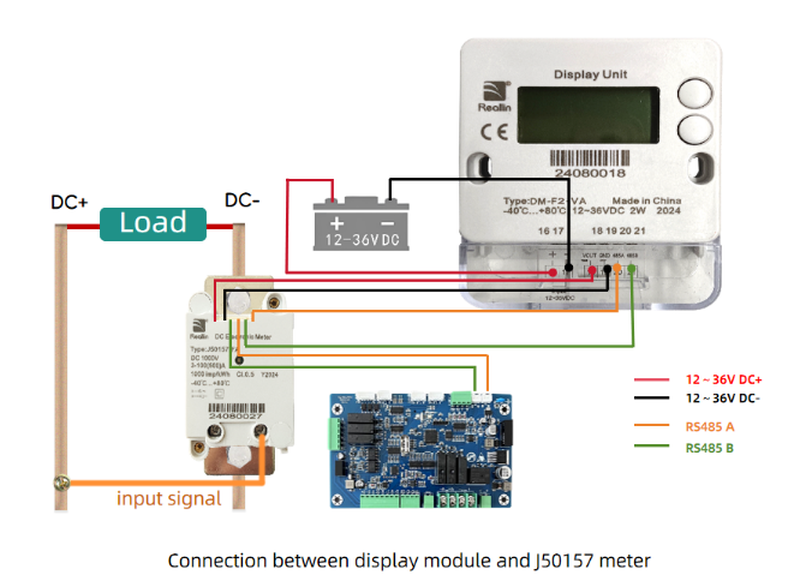
II. Direct Evidence in the Report: Explicit Statements
The CSA certificate and report for the UBS Electronics J50157-FB DC meter contain multiple explicit statements that directly demonstrate the boundaries of CSA certification:
- Certificate of Compliance, page 2:
"This report does not include the evaluation for performance or measurement accuracy."
- Report, page 2:
"This report does not include the evaluation for performance or measurement accuracy."
- Report, page 14, "Conditions of Acceptability":
"Equipment has only been tested for electrical safety. No evaluation of functional safety and performance characteristics has been conducted."
These statements clearly indicate that the CSA certification only concerns electrical safety and does not include any evaluation of measurement accuracy.
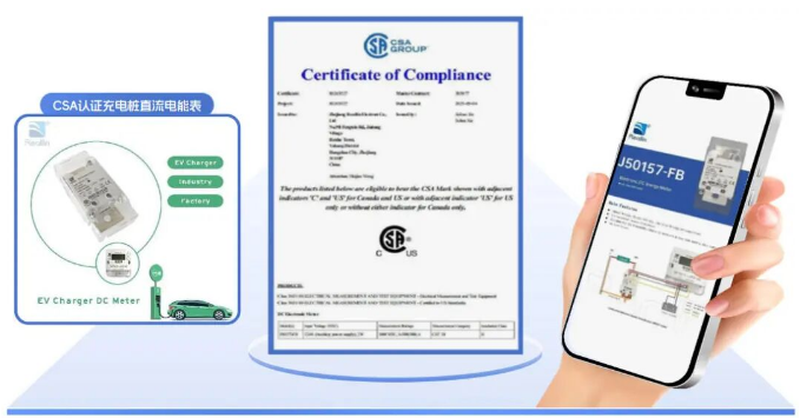
III. Why doesn't CSA certification involve metering accuracy?
1. Fundamental Differences in Standards Systems
Electricity meter certification is divided into two main systems:
| Certification Type | Focus Points | Applicable Standards | Certification Bodies |
|---|---|---|---|
| Electrical Safety Certification | Electric shock protection, fire prevention, mechanical safety | UL 61010 series, IEC 61010 series | CSA, UL, TÜV, etc. |
| Metrological Accuracy Certification | Error limits, linearity, repeatability | IEC 62052 series, IEC 62053 series, MID, CPA | Metrological authorities, notified bodies |
These two certifications serve different regulatory purposes. Electrical safety certification protects personal and property safety, while metrological certification protects the fairness of transactions. In the North American market, the former is implemented by organizations such as CSA and UL, while the latter is managed by Measurement Canada under the Electricity and Gas Testing Act.
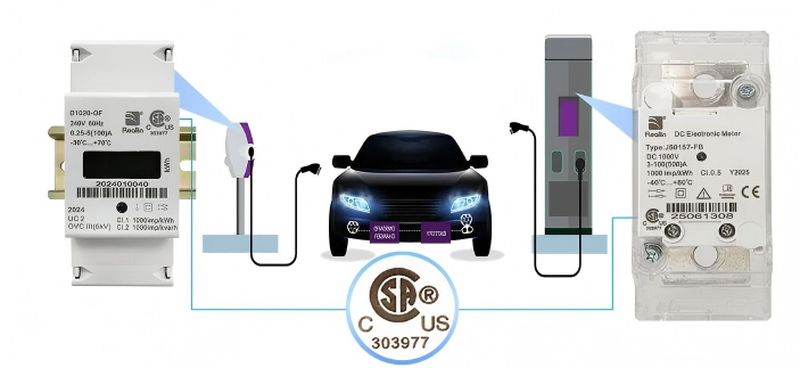
| Test Category | Specific Items |
|---|---|
| Insulation Performance | Dielectric strength, insulation resistance, impulse voltage |
| Temperature Rise Test | Temperature rise limit at maximum current |
| Fire Protection | Material flame retardant grade V-0/V-1, glow-wire test |
| Mechanical Strength | Impact test, vibration test, spring hammer test |
| Structure Inspection | Creepage distance, electrical clearance, electric shock protection |
The items included in the metrological accuracy certification testing are:
| Test Category | Specific Items |
|---|---|
| Basic Error | Error values under different currents, voltages and frequencies |
| Starting Current | Minimum starting current threshold |
| No-load Test | Creep when the current circuit is open |
| Repeatability | Consistency of errors in multiple measurements under the same load |
| Environmental Impact | Impact of temperature, voltage and frequency changes on errors |
It is clear that the two technologies are completely parallel and have no overlap.
IV. Which certifications can test the accuracy class of an electricity meter?
To prove the metering accuracy class (e.g., Class C or 0.5), the following certifications should be obtained:
- MID Certification Report (EU market)
- CPA Type Approval Certificate (China market)
- IEC 62053 Series Test Report (International Electrotechnical Commission standard)
- Measurement Canada Approval Certificate (Canada market)
UBS Electronics may conduct different certifications for different products for overseas electricity meters depending on the sales strategy of different regions and markets, as well as certification costs.
Summary
CSA certification is an acknowledgment of the electrical safety of an electricity meter, not an endorsement of its metering accuracy. These two certifications serve different regulatory purposes, follow different standard systems, and are implemented by different organizations.
When purchasing UBS electricity meters, it is crucial to accurately understand the boundaries of various certifications to ensure compliance and avoid misunderstandings.