



Introduction
Since the 21st century, electricity has become a key factor supporting my country's national economic development and plays an irreplaceable role in human survival and development. Smart grids leverage modern technologies to fully utilize renewable energy while providing power to end devices, enabling flexible scheduling and intelligent management of electricity. As smart grids continue to expand, the number of high-energy-consuming devices on the user side is increasing, leading to increasingly stringent requirements for refined electricity services. User load identification is crucial for designing energy-saving strategies for smart grids. Load identification primarily involves sampling and analyzing user-side electricity usage data to identify high-energy-consuming devices, thereby helping users improve their existing electricity usage patterns. Currently, most smart grids in my country use intrusive load identification technology, deploying a sensor for each user-side load to collect power usage information. However, this identification technology is not only time-consuming and labor-intensive, but also struggles to ensure efficient power information collection, hindering the healthy development of smart grids. Therefore, this paper uses smart meter technology to study a non-invasive smart grid load identification method to promote the development of smart grid load identification work in the direction of intelligence.
Smart Grid Load Identification Design Based on Smart Meter Technology
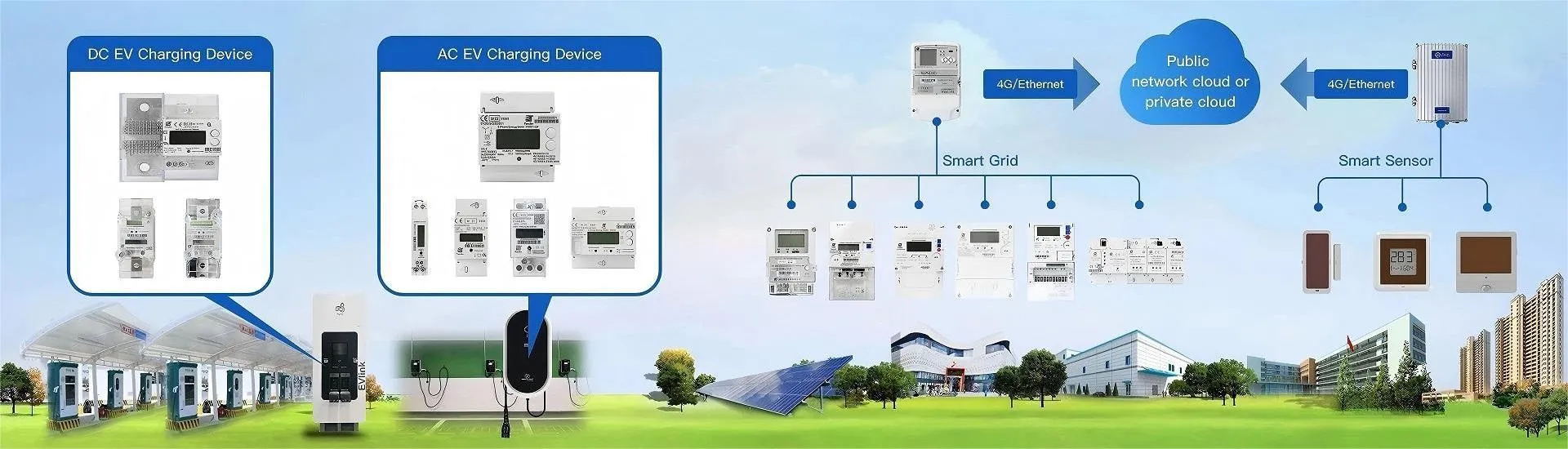
Collecting smart grid data based on smart meters
Currently, a growing number of high-energy-consuming electrical devices that meet people's diverse lifestyle needs are attracting widespread attention. On the user side of a smart grid, each household may own several or even dozens of electrical devices. Due to the diverse operating principles and electrical characteristics of these devices, load identification requires significant time and effort to collect power data from these devices, which, to a certain extent, limits the development of smart grids. To this end, this paper introduces smart meter technology to design a non-invasive load identification technique. First, smart meters are used to collect power consumption data on the user side of the smart grid. Smart meters do not need to be installed in the user's home; they can simply be installed on the smart grid user-side bus. The metering chip in the smart meter collects power data, such as voltage, current, and power, from the user's home devices and transmits this data via the SPI interface. When using smart meters to collect power consumption data on the user side of the smart grid, steady-state characteristics are observed in these devices during stable operation. Therefore, it is necessary to determine the effective values of the voltage and current of these devices, representing these steady-state characteristics:

In the formula, I0 is the effective value of the current on the user side of the smart grid; U0 is the effective value of the voltage on the user side of the smart grid; N is the sampling period of the smart meter; I(t) is the user-side current signal collected by the smart meter; U(t) is the user-side voltage signal collected by the smart meter.
The power of the electrical equipment on the user side of the smart grid cannot be directly collected by the smart meter. It needs to be calculated according to formula (1) and formula (2). The calculation formula is:

In the formula, P0 is the effective value of active power on the smart grid user side; f is the sampling frequency of the smart meter; and M is the sampling frequency of the smart meter. During the operation of smart grid user-side electrical equipment, the power characteristics of various electrical equipment have different forms and vary significantly from one another. Therefore, this paper uses the effective value of power obtained by formula (3) as one of the valid data for smart grid load identification.
Smart meters can adapt to the different electrical devices in different user households. The collected power load has high accuracy and stability, making them suitable for smart grid load identification.
Preprocessing smart grid data
When using smart meters to collect user-side electricity data for smart grids, interference from external environmental factors is unavoidable, resulting in noise and anomalies in the collected data. Therefore, preprocessing of the collected data is necessary before load identification to improve its effectiveness. Furthermore, to ensure the generalizability of smart grid load identification technology, the load dataset used for identification should ideally consist of different types of electrical devices, originating from two or more user households. This ensures that the load dataset used for identification encompasses a more comprehensive set of load data, facilitating identification.
First, an S-G filter is used to denoise the user-side power data of the smart grid. The S-G filter is a low-pass filter that fits the power data signal in the time domain through a sliding window, thereby achieving smoothing and denoising of the power data signal. Assuming that the user-side power data set collected by the smart meter is X = (x1, x2, …, xi, …, xn), this paper constructs a k-1-order polynomial to fit the collected data set. The S-G filter denoising expression is:

In the formula, Yi is the user-side power data of the smart grid after filtering and smoothing; a0, a1, a2, …, ak-1 are polynomial coefficients. After being processed by formula (4), the load data pulse is smoothed to a certain extent, thereby effectively reducing noise interference. Then the data is filtered and processed. When the smart meter collects user-side load data, sudden equipment failures and other factors will cause abnormal values in the collected data. These abnormal values will affect the load identification effect to a certain extent. Therefore, before performing smart grid load identification, it is necessary to delete the abnormal values in the collected sample data. This paper uses the threshold method to delete abnormal data. Simply put, a reasonable threshold is set in advance, and the collected load data is traversed. During the traversal process, the load that exceeds the set threshold is retained, and the load that does not exceed the threshold is deleted, and the retained data is standardized. The standardization calculation formula is:

Where Y′ is the standardized smart grid user-side power data; Y is the mean of the original smart grid user-side power data; and Y0 is the standard deviation of the original smart grid user-side power data. Finally, the smart grid user-side power data preprocessed by the above process is combined to form a high-quality load dataset for subsequent load identification.
Constructing a Temporal Convolutional Network Model for Load Identification
Generally speaking, smart grid user-side power data collected by smart meters exhibits strong temporal correlation. Therefore, this paper constructs a temporal convolutional network model for smart grid load identification. The temporal convolutional network is an improvement on the basic convolutional network, primarily consisting of two components: causal dilated convolution and residual connections. Causal dilated convolution is a unidirectional structure. Simply put, a time signal in the next layer can only be obtained by relying on the time signal in the previous layer, without leaking load data at other times. Therefore, the recognition model constructed using the temporal convolutional network is also an information-constrained model. Furthermore, the output of the model's convolutional layers is affected by the network depth. Therefore, in practical load identification, it is necessary to reduce the number of causal convolution layers or increase the sampling step size of the dilated convolution to avoid gradient explosion caused by deeper networks. Regarding the residual connections in the model, this paper uses skip connections to prevent poor model training performance. Assuming that the input of the temporal convolutional network model is a and the output of the first layer is f(a), the forward neural network of the residual block of the temporal convolutional network model can be described as:

Where ω1 and ω2 are the weights of the first and second convolutional layers in the temporal convolutional network recognition model, respectively; δ is the activation function. Then, according to formula (6), the output of the second convolutional layer of the model can be obtained:

Where g(a) is the output of the second convolutional layer of the temporal convolutional network recognition model. The process for achieving smart grid load identification using a temporal convolutional network model in this paper is as follows: First, the smart grid user-side data collected by smart meters is input into the model, and the model feature extraction module extracts the features of the electricity usage data. Then, the model training phase begins, setting parameters such as weights and biases. Simultaneously, forward and backward propagation of data is performed using a loss function to output the identification label of the target load. In summary, this paper achieves non-intrusive identification of smart grid user-side loads using smart meter technology.
Experimental Analysis
Experimental Preparation
To verify the effectiveness of smart meter technology in smart grids, a simulation experiment was conducted using the REDDD dataset. Because the electricity usage statistics of each user in the dataset vary, the dataset was screened and partitioned to obtain the experimental dataset shown in Table 1.
Table 1 Experimental dataset
| Appliance Type | Training Dataset | Test Dataset | ||
|---|---|---|---|---|
| User ID | Sample Size | User ID | Sample Size | |
| Refrigerator | 1, 6, 7 | 128 | 5, 8 | 52 |
| Washing Machine | 2, 5, 9 | 131 | 4, 10 | 56 |
| Microwave Oven | 1, 3, 4, 10, 12 | 157 | 5, 11 | 83 |
| Air Conditioner | 2, 3, 5, 6, 10 | 109 | 6, 12 | 43 |
| Water Heater | 4, 9, 11, 12 | 113 | 7, 10 | 44 |
| Computer | 2, 4, 10, 12 | 102 | 8, 9 | 46 |
As shown in Table 1, this load identification experiment uses six types of electrical equipment loads in the REDD dataset as experimental data, with a total of 1064 samples. The transient current waveforms of various experimental electrical loads are shown in Figure 1.

图1 实验电器负荷暂态电流波形
In this experiment, the transient current of each electrical equipment load was extracted by multi-dimensional waveform features, and then the load identification method designed in this paper was used for classification and identification. At the same time, the smart grid load identification technology based on LSTM and the smart grid load identification technology based on neural network were selected as control groups to conduct identification tests on the same data set, and the identification results were obtained and then compared and analyzed.
Results Analysis
To compare the load classification and identification performance of each technology, the mean absolute error (MAE) was used as the evaluation metric, and its expression is:

Where MAE is the mean absolute error (MAE) of the load identification results for smart grids; T is the detection time; yi is the actual load value at time i; and x is the load identification result at time i. This metric primarily reflects the error between the identification result and the actual load at a specific moment within a specific detection period and can be used to measure the accuracy of smart grid load identification technology.
Table 2 shows that compared to the control group load identification technology, the proposed technology achieves a certain degree of improvement in the identification of the loads of all six types of electrical equipment. The proposed load identification technology achieves a mean absolute error of 1.135 kWh, which is a reduction of 0.793 kWh and 1.435 kWh, respectively, compared to the control group technology. This demonstrates that the smart meter technology studied in this paper is suitable for non-intrusive load identification in smart grids and possesses superior information collection and application capabilities. Compared with other load identification technologies, the technology studied in this paper can efficiently extract power data from the user side of the smart grid and retain detailed information such as transient current in the power data. It is finally applied to the temporal convolutional network model for classification, thereby improving the load identification capability.