



The promotion and use of smart meter are of benefit to the people's livelihood. It has greatly improved the elec- tricity utilization conditions of rural residents,and improved the automation level of power distribution network. It is of great sig- nificance to reduce the electricity energy consumption. It uses the microcontroller as the core, and adds power metering chips, LCD displays, Wi-Fi communication circuits, SD memory cards and other chips to realize power metering and display, wireless communication, data storage and other functions. Users can select the buttons on the meter to show their electricity consumption at present or in any period.
Keywords:smart meter;single chip microcomputer;electric energy metering;wireless communication
Introduction
With the advancement of computer and communication technologies, buildings are becoming increasingly intelligent. Intelligent residential meter reading systems are essential for building intelligence. In my country, users' electricity meters are still read manually. This primitive method not only wastes manpower and material resources and disrupts residents' daily lives, but also suffers from poor accuracy. The electricity consumption data requires manual reading and cannot be transmitted in real time. To fundamentally address this problem, a smart meter based on a single-chip microcomputer has been designed. By replacing the conventional mechanical and electronic circuitry of traditional instruments with a single-chip microcomputer, the meter can easily integrate computing and measurement and control technologies to form an intelligent measuring instrument. This instrument consists of a metering circuit, a microprocessor, an LCD display, a real-time clock, a communication interface, and a power supply. It provides functions such as energy measurement, information storage and processing, real-time monitoring, automatic control, and information exchange.
Working Principle of a Smart Meter
An electric energy meter consists primarily of seven components: metering, power management, storage, display, key processing, pulse output, and communication unit. The smart meter described in this article uses a single-chip microcontroller as its core processor. Additionally, it incorporates an energy metering chip and an LCD display chip to measure and display user electricity usage. The use of WiFi communication circuitry enables wireless communication within the smart meter. This eliminates the need for meter operators to visit households and instead directly receive WiFi signals to understand user electricity usage, which is convenient and time-saving. For the storage module, this article uses a small, high-capacity SD card. Compared to conventional storage modules, SD cards can be removed and replaced at any time, making them both convenient and practical. For the power module, this article uses an external power supply.
Smart meter hardware design
Energy Metering Circuit Design
The energy metering chip features the following: a special automatic pin mode function enables independent chip operation and automatic initialization upon power-up; an on-chip watchdog timer and internal power monitor; accurate measurement of instantaneous voltage and current, RMS voltage and current, as well as power and energy in both positive and negative directions; an external reset pin; a bidirectional serial interface and internal register array for convenient microprocessor connection; an external clock frequency of up to 20 MHz; and a power direction output indicator.

WiFi Communication Module Design
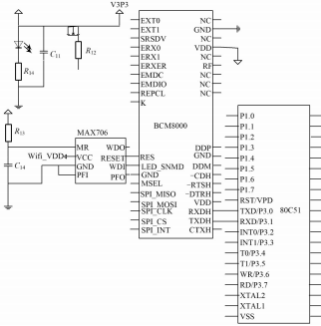
The meter utilizes WiFi wireless communication. WiFi communication technology offers advantages such as high data transmission rates, flexible networking, and excellent mobility. WiFi communication utilizes a wireless network, making installation of smart meters easier than with conventional communication lines.
Smart Meter Software Design
The smart meter software design includes the following components: data transmission for the energy metering chip, a subroutine for the LCD display, a key function processing program, a WiFi wireless communication program, a read/write program for the clock chip, and software design for the SD card storage module.
Why choose us
Choosing Reallin as your energy metering and IoT solutions provider provides comprehensive support in technology, products, services, and a global presence. As a high-tech enterprise focused on innovation in the power industry, Reallin adheres to the principle of "Based in China, Serving the World." With R&D and production bases across Europe and Asia, Reallin has provided high-quality products and services to power customers in over 40 countries, demonstrating its deep industry expertise and global service capabilities.
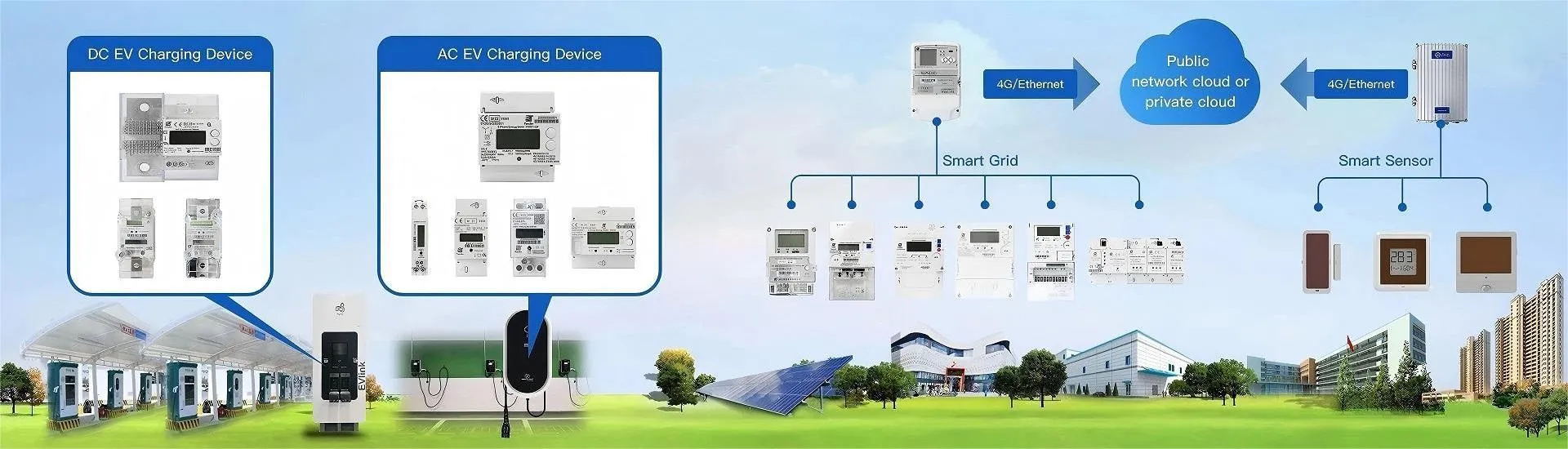
In terms of core products, we boast a mature and comprehensive product line, including smart meters (such as the three-phase, four-wire E3040 and D3001, which comply with international standards such as EN 50470-1/3 and operate in a wide operating temperature range of -30°C to +70°C), data concentrators (C3001-JB), smart sensors, DC/AC charging stations, and other hardware devices, meeting diverse metering needs from home to industrial applications. All products undergo rigorous testing and feature high accuracy (1000 imp/kWh) and high stability, ensuring accurate and reliable data collection.
Technological innovation is our core competitiveness. The Reallin IoT platform enables "perceiving the world, connecting intelligently." It supports multi-protocol access, including NB-IoT, LoRa, GPRS, 4G, and Ethernet. Integrating with mainstream cloud platforms like Alibaba Cloud and Huawei Cloud, it provides fast device onboarding and private deployment options. The platform boasts high security, high availability, and multi-tenant automated management capabilities, enabling one-stop services such as remote meter reading, energy consumption monitoring, fault warnings, and smart prepayment, helping customers achieve refined energy management.
Conclusion
This designed smart meter integrates multiple functions, including metering and displaying electricity consumption, data storage, and data communication. Experimental verification confirmed the meter's stable performance, accurate calculations, minimal errors, and wireless communication capabilities.
Related products