



Have you noticed a strange phenomenon: we can detect odd-order harmonics like the 3rd, 5th, and 7th harmonics in the power grid, but we almost never see even-order harmonics like the 2nd, 4th, and 6th harmonics? Why is this? Are even-order harmonics inherently impossible to detect?

What are power grid harmonics?
To understand why even-order harmonics are rare, we must first understand what "harmonics" actually are. The alternating current we use is ideally a standard sine wave with a fixed frequency of 50Hz, which is called the "fundamental wave," much like the "main melody" in music.
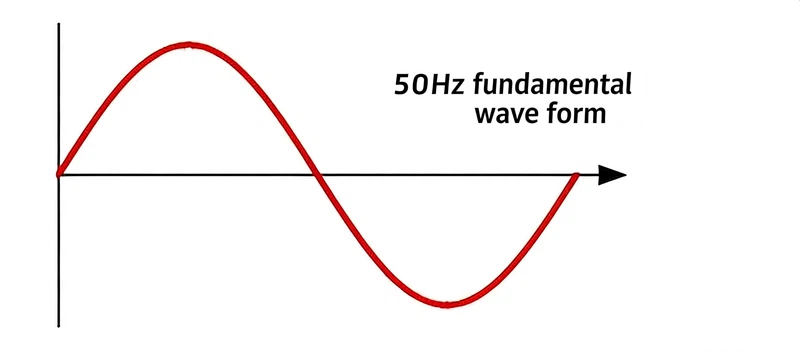
In reality, many electrical appliances do not "obediently follow orders"-such as LED lights, mobile phone chargers, laptop power supplies, and air conditioners. They are "non-linear devices" and do not work in accordance with the rhythm of the fundamental wave. Instead, they "interfere" with the fundamental wave, "bending" the smooth sine wave into strange waveforms.
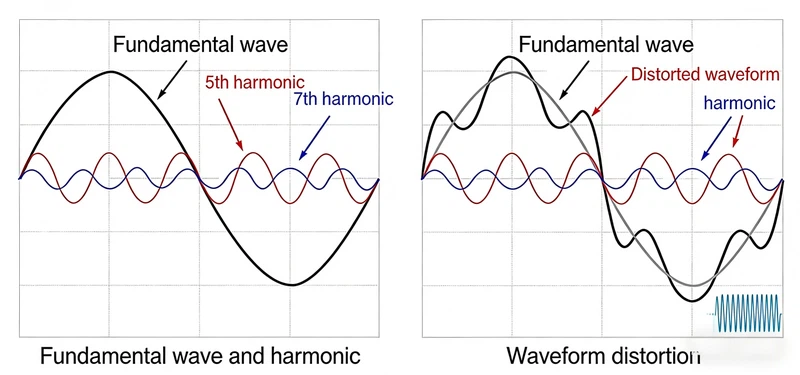
These distorted waveforms, when broken down using the mathematical method of "Fourier decomposition," reveal that they are actually composed of a fundamental frequency (50Hz) and a series of "harmonics" whose frequencies are integer multiples of the fundamental frequency. For example, the 3rd harmonic is 150Hz (50×3), the 5th harmonic is 250Hz (50×5), and even-order harmonics are waveforms with frequencies that are even multiples of the fundamental frequency, such as 100Hz (2nd) and 200Hz (4th).


Full-bridge rectifier technology "eliminates" even-order harmonics.
Why do we almost never see even-order harmonics? The key lies in the fact that most nonlinear devices on the market today use a core technology called "full-bridge rectification"-this is the "hidden operation" of the electrical appliances around us, and an important reason why even-order harmonics are rare.

What is full-bridge rectification? We can understand it with a simple analogy: the alternating current in the power grid is like a wave that rises and falls, with the positive half-cycle going up and the negative half-cycle going down, and the direction is constantly changing; while full-bridge rectification is like a "waveform converter", which can "correct" the direction of the current, regardless of whether the current is in the positive or negative half-cycle, and turn it into direct current (or pulsating direct current) in the same direction, just like flattening the undulating waves into a unidirectional flow of water.

The LED lights, mobile phone chargers, computer power supplies, and even the air conditioners and washing machines in our homes almost all use full-bridge rectification technology, so the harmonics they generate are all odd-order, and even-order harmonics are naturally hard to see.
Even-order harmonics only occur when the waveform is asymmetrical
Of course, even-order harmonics are not entirely nonexistent, but they are extremely rare in modern power grids. Even-order harmonics only appear when the waveform in the power grid is "asymmetrical," and there are two common scenarios:
- The first type involves equipment using "half-wave rectification" technology. Unlike full-bridge rectification, half-wave rectification utilizes only the positive (or negative) half-cycle of the alternating current, discarding the other half of the waveform. This results in an asymmetrical waveform, leading to even-order harmonics after Fourier decomposition. However, half-wave rectification is extremely inefficient, wasting a significant amount of energy. It has been completely phased out by full-bridge rectification and is only used in some very old, almost obsolete equipment (such as chargers from decades ago), making it difficult to detect in the power grid.
The second type is equipment failure. For example, a damaged rectifier diode in an appliance can prevent the normal conversion between the positive and negative half-cycles, resulting in an asymmetrical waveform and generating even-order harmonics. However, this is a fault condition; once it occurs, the appliance usually malfunctions or triggers a protection mechanism, and it doesn't have a long-term impact on the power grid, making it difficult to detect.

Harmonics can cause serious interference and damage to power systems, and in severe cases, can even lead to power system paralysis.
Why are even-order harmonics "rare"?
In simple terms, even-order harmonics are almost invisible in the power grid, mainly due to the widespread adoption of "full-bridge rectification technology": it keeps the waveform generated by electrical appliances symmetrical, and symmetrical waveforms cannot be decomposed into even-order harmonics, meaning that normal equipment does not generate even-order harmonics; in addition, transformers in the power system themselves have a certain ability to suppress even-order harmonics.
Are there any electricity meters that can eliminate harmonics?
Strictly speaking, no electricity meter can "eliminate" harmonics. The function of an electricity meter is to "meter," not "manage." While electricity meters do not eliminate harmonics, there are indeed devices in the power system specifically designed to "eliminate" harmonics; these are called filters.
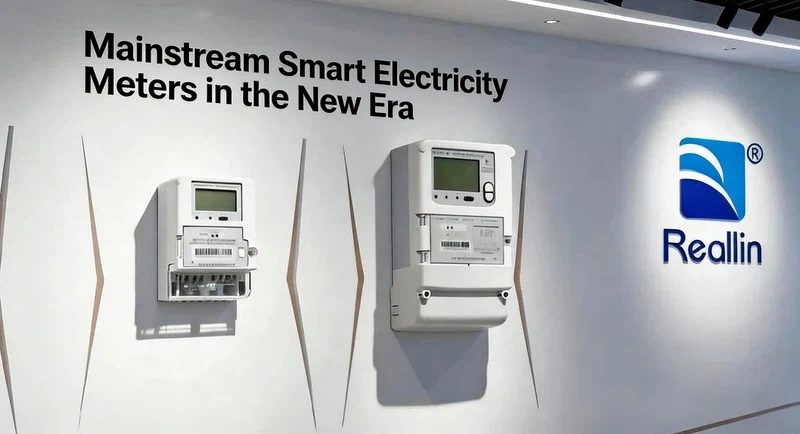
Recent research indicates that installing appropriate filters at the front end of electricity meters can effectively reduce the impact of harmonics on metering accuracy.