

In modern industrial production and daily life, there is a device with high energy that is playing an increasingly important role, that is, the multi-function instrument. It can help enterprises achieve efficient energy management and even provide security for our travel safety. So, what exactly is a multi-function instrument?
Content:
1.Definition and basic parameter measurement
2.Core function: control and protection
3.Advantages of data recording and storage
4.Communication function realizes remote management
Definition and basic parameter measurement
In simple terms, a multi-function instrument is an intelligent instrument that integrates multiple functions. It can measure many electrical parameters, such as voltage, current, active power, reactive power, apparent power, power factor, frequency, etc. These parameters are crucial to understanding the operating status of the power system. Just as doctors use various indicators to judge the health of patients, engineers use the data measured by multi-function instruments to understand whether the power system is "healthy".
Core function: control and protection
In terms of function, the multi-function instrument performs even better. In addition to accurate measurement, it also has powerful control capabilities. It is equipped with relay output or digital input/output (DI/DO) interface to control external devices. For example, users can set upper and lower thresholds for it. Once the measured value exceeds the set range, the meter will immediately trigger the relay action, and then control the switch, alarm and other equipment to achieve overcurrent protection, overvoltage protection, undervoltage protection and other functions, ensuring the smooth and reliable operation of the power system, just like a loyal guard, always guarding the safety of the power system.
Advantages of data recording and storage
The data recording and storage function is also a highlight of the multi-function meter. It can record and store historical data, whether it is measurement data or event records such as alarm events and switch action events, which can be saved clearly. Some meters also have large-capacity storage functions, and data can be stored in both internal memory and external memory cards. This provides great convenience for analyzing the operation trend of the power system, querying historical faults, etc., and helps engineers better understand the long-term operation of the power system, discover potential problems in advance and solve them in time.
Communication function realizes remote management
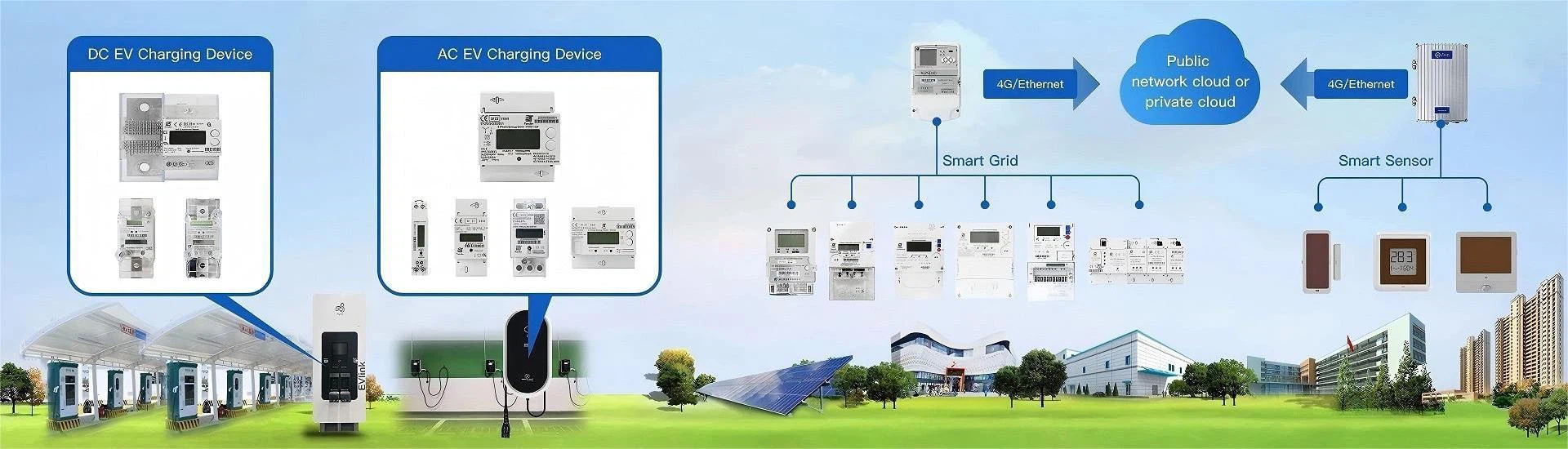
In addition, the communication function allows the multi-function meter to "communicate with the outside world". It has multiple communication interfaces such as RS485, RS232, Ethernet, Bluetooth, ZigBee, etc., and can "communicate" with other devices or systems. Through these interfaces, it transmits measurement data and status information to the host computer monitoring system, PLC (programmable logic controller) or other intelligent devices, thereby realizing remote monitoring and automatic management. At the same time, it can also receive control commands from the host computer to realize remote parameter setting and control, which greatly improves work efficiency and allows people to easily control the operation of the power system even if they are thousands of miles away.
The application field of multi-function instruments is extremely wide, and they play an indispensable role in many fields such as industrial automation, power systems, and energy management.
In the field of industrial automation, it is used to monitor and control the power parameters of various industrial equipment, such as motors, frequency converters, and distribution cabinets. By monitoring these parameters, staff can timely understand the operating status of the equipment, diagnose faults, and perform energy management to improve the efficiency and reliability of industrial production.
In the power system, multi-function instruments play an even more important role. In power plants, substations, distribution rooms and other places, it is responsible for measuring and monitoring the operating parameters of the power system, providing key data support for the dispatching, control and protection of the power system.
In terms of energy management systems, multifunctional instruments are also an important component. It collects and transmits various energy data, including electrical energy, water energy, thermal energy, etc., providing an accurate data basis for the energy management system. By analyzing these data, enterprises can formulate reasonable energy use plans, optimize energy distribution, reduce energy consumption, and achieve the goal of energy conservation and emission reduction.
Although multifunctional instruments seem ordinary, they play a huge role in all aspects of modern society. With the continuous innovation of technology, multifunctional instruments will show their unique charm in more fields and contribute more to promoting the development and progress of society.