

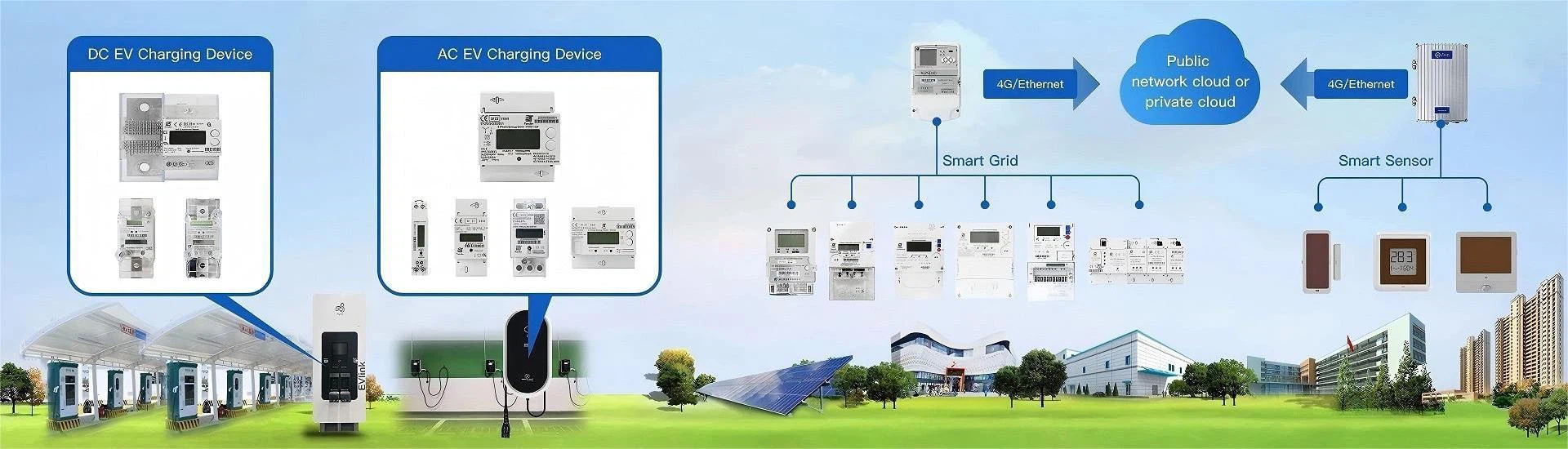
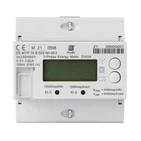
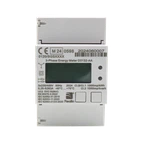
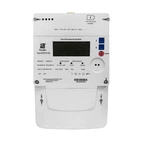
A 3-phase meter, also known as a polyphase meter, is a device used to measure electrical consumption in systems that operate with three alternating currents, commonly found in industrial, commercial, and some residential settings.
Electricity is the flow of electrical charge, typically carried by electrons through a conductor. In alternating current (AC) systems, the direction of the current reverses periodically, resulting in a sinusoidal waveform. This contrasts with direct current (DC), where the flow of charge is unidirectional.
Single-phase power systems have a single alternating current, commonly used in households for lighting and small appliances. However, for heavier industrial machinery and large-scale operations, three-phase power systems are more efficient.
A three-phase power system consists of three conductors, each carrying an AC current, with phases spaced 120 degrees apart. The combination of these phases creates a smoother, more constant power supply compared to single-phase systems. This setup allows for better power transmission, efficiency, and the ability to run larger machinery.
A 3-phase meter is crucial in accurately measuring the consumption of electricity in systems that use three-phase power. These meters are designed to monitor the usage of each phase independently, providing more detailed insights into energy consumption patterns.
Current Transformers (CTs): These devices step down the current to a level that can be safely measured by the meter.
Voltage Transformers (VTs): They reduce the voltage to a measurable level.
Registers or Displays: These show the energy consumption readings.
Processor and Communication Module: Some modern meters may include processors for data processing and communication modules for transmitting data remotely.
The functioning of a 3-phase meter involves complex metering technology. It measures the voltage and current across all three phases, calculating the active power (kW), reactive power (kVAR), and apparent power (kVA). The metering technology within these devices may vary, utilizing electromechanical, electronic, or smart metering mechanisms.
Electromechanical Meters: These traditional meters use rotating discs and mechanical components to measure energy consumption.
Electronic Meters: Utilize electronic components for measurement and often have digital displays.
Smart Meters: Equipped with advanced features such as remote monitoring, two-way communication, and data analytics for more efficient energy management.
Industrial and Commercial Settings: Three-phase meters are predominantly used in industries with heavy machinery and large commercial complexes due to their ability to handle higher power demands.
Accurate Billing: By monitoring each phase separately, these meters ensure accurate billing for electricity consumption, especially in scenarios where imbalances between phases occur.
Efficiency and Load Management: Provides insights into energy usage patterns, facilitating better load management and energy efficiency strategies.