

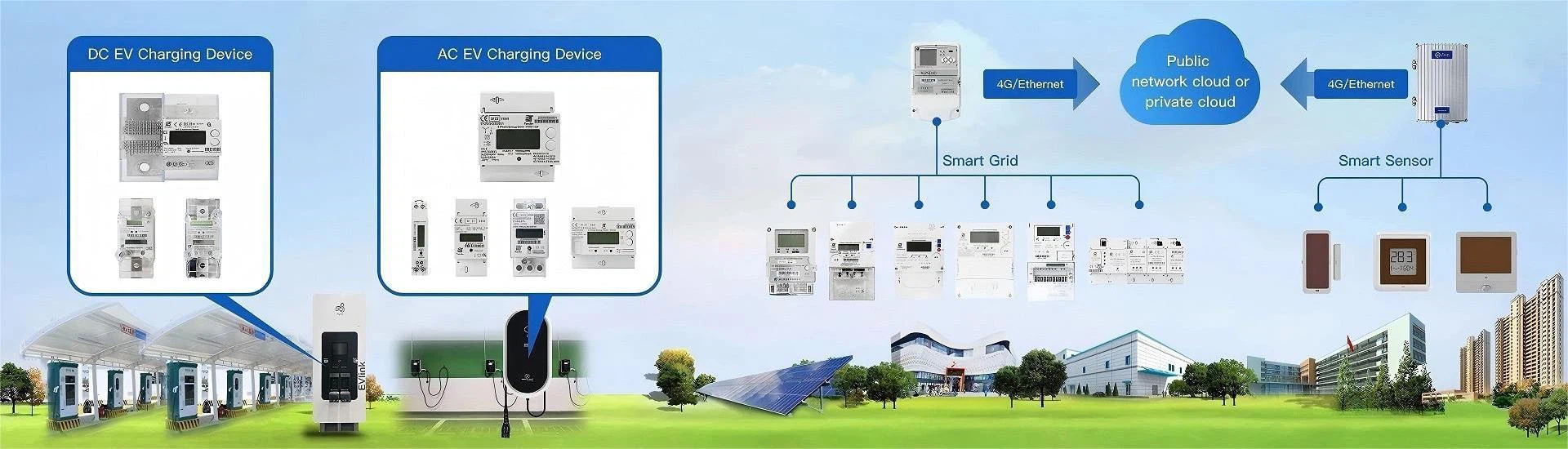
Electricity meter is the abbreviation of electric energy meter. It is an instrument used to measure electric energy. It is also called watt-hour meter, fire meter, electric energy meter, kilowatt hour meter, and refers to an instrument that measures various electrical quantities.
One, the identification of electric energy meters.
According to the national standard GB/T15283-94 and the international standard IEC521-1988, the electric energy meter is marked with two current values, such as 10 (20) A. The 10A marked here is the basic current, which is the current value to determine the relevant characteristics of the instrument, and it is also called the calibration current. The 20A in the brackets is the rated maximum current, which is the maximum current value that the instrument can meet the accuracy specified by the standard.
Second, the basic understanding of the accuracy of the electric energy meter.
The current passing through the electric energy meter can be as high as 2 to 8 times the basic current, which is less than twice the basic current value marked on the meter. In other words, if the electric energy meter installed by a user is only marked with a current value, such as 5A, this is only the basic current value, not the maximum current allowed to pass. For this kind of electric energy meter, it can generally be overloaded to 120% without problems, and it can satisfy the accurate measurement of the electric energy meter. On the other hand, due to the large resistance of the rotating mechanism of the induction electric energy meter, according to the standard, the starting current cannot be lower than 0.5% of the basic current (the accuracy of the electric energy meter). It can be seen that the electric energy meter is lightly loaded to the basic current. It may not start when it is less than 0.5%.
In China, the power supply line voltage of the family residence is 220V and the frequency is 50Hz. The rated voltage and applicable frequency of the selected electric energy meter should be consistent with the line voltage and frequency, and it should also be 220V, 50Hz.
Third, the choice of electric energy meter: When choosing an electric energy meter, the current value selection is the most important and the most complicated.
One is the starting current, which is the minimum current that can make the turntable rotate continuously; the other is the multiple of the maximum rated current relative to the basic current. In addition, there are differences in performance between old-style watches and new-style watches. Old-style watt-hour meters still in use in old houses have a relatively large starting current, generally (5%-10%); the maximum rated current is small, generally ≤2, only one current value is marked on the dial surface, and it is generally called Rated current. Therefore, it is pointed out in the old electrician manual that the current of the load circuit should be greater than 10% of the rated current, less than 120% or less than 125%. According to the electric energy meter produced according to the national standard GB/T15283-94 and the international standard IEC521-1988, the starting current of the electric energy meter used in the new house is small, 0.5% for the grade meter; the maximum rated current is large, and the maximum rated current is generally It is (2~4), and some can reach (6~8).
Two current values are marked on the dial of the new electric energy meter, such as 5 (20A). When selecting this electric energy meter, pay attention to the minimum load current not lower than the starting current, that is, 0.5%×≥5A=0.025A; On the other hand, the value of the ammeter used for a long time cannot be higher than the maximum rated current value of 20A. When choosing an electric energy meter, it should be considered that the number of electrical appliances entering the home is increasing, and a margin should be left, and it should be reasonable and moderate, because the larger the multiple, the higher the price.
The current value 10 before the brackets is called the calibration current, which is used to calculate the base current value of the load. The current 20 in the brackets is the rated maximum current, which can make the electric energy meter work normally for a long time, and the error and temperature rise fully meet the specified requirements. value. According to the requirements of the regulations, the calibrated current of the directly connected electric energy meter should be determined according to the rated maximum current and the overload multiple. Among them, the rated maximum current should be determined according to the approved load capacity reported by the customer; the overload multiple is for normal operation If the actual load current of the electric energy meter in the meter reaches more than 30% of the maximum rated current, a double meter should be used; if the actual load current is less than 30%, a 4 times meter should be used. Residents are generally relaxed when they allocate meters to meet the needs of residents for the natural increase in electricity consumption within a certain period of time. If they apply for 10 years, they will be equipped with a meter with a maximum rated current of 20 years. Considering that the residential electricity load varies greatly with the seasonal changes, in order to ensure accurate measurement Choose 4 times table that is 5(20)a.
The above means that the 5(10)a table is twice as small as the maximum allowable current of 10(20)a and 5(20)a. The maximum allowable current of the table 5(20)a and 10(20)a is The same, but the 5⒇a meter measures more accurately when the load is light.
Fourth, if you suspect that the energy meter is going fast, you can check this way.
If you suspect that your home appliance meter is fast, the easiest way is to connect a national standard meter with the same amperage behind your home appliance meter for comparison. Electric meters are also electronic products that may be damaged, especially when lightning strikes.
The reliability of the electronic watch is not as good as the previous mechanical watch. The disadvantage of the mechanical watch is that the measurement error in the minimum starting current is large and the measurement is not sensitive enough. That is to say, the 5 (20) a meter, your household appliances within 1000 watts, use the same amount For electricity, old-fashioned watches may have smaller readings, creating the illusion that they will go faster after replacing them.
There is another problem that the meter will go if the user does not turn on the high-power electrical appliances. Many electrical appliances nowadays are electronic switches, not mechanical switches. They are not completely turned off when shutting down. Electronic switches will have standby current when the home appliances are not working. For example, when the air conditioner is turned off, it will have 1-5 watts without unplugging the plug. Standby power, the mobile phone charger will consume electricity when it is not charging. Make a good habit of unplugging the electrical appliance or turning off the power strip switch when the electricity is not used, which will save some electricity.