

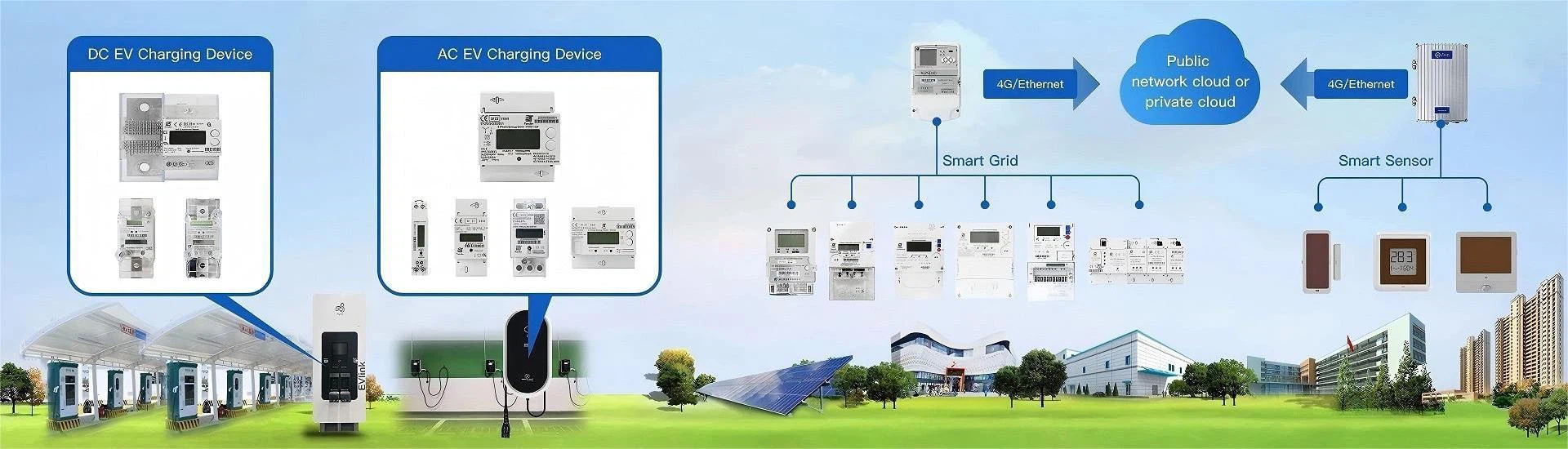
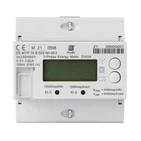
Electric energy meters are commonly known as "watt-hour meters", also referred to as "electric meters" for short, and are used to measure the value of active energy used in electricity. According to the number of meterable AC power phases, there are two categories: single-phase and three-phase. Let me talk about the single-phase electric energy meter first.
Selection of low-voltage single-phase electric energy meter
Mantra:
The use of electric energy must be counted, and the electric energy meter is indispensable.
It displays the value of kilowatt-hour, which is commonly known as degree by the people.
To calculate the total current consumption, multiply the total number of kilowatts by five.
Choose the current value of the electric meter, three times of kilowatts can be satisfied.
There are two marked currents, one number inside and outside the brackets.
The outer small and the inner large are multiples, and there will be twice or four times.
The calibration value is outside the brackets, and the overcurrent number is inside the brackets.
Normal use of the calibration value, the use of overcurrent should be moderate.
(1) Introduction to electric energy meter
Single-phase electric energy meter is the most widely used electricity consumption meter, used to measure the value of active energy of electricity. In our country, there are probably more than hundreds of millions in use. This meter is commonly referred to as the "watt-hour meter", also referred to as the "electric meter" for short.
There are two types of electric energy meters, the traditional electromagnetic turntable type and the new electronic digital display type. In addition, there are many types such as plug-in card and prepaid type. Figure 1 shows examples of the appearance of single-phase and three-phase energy meters.
The unit of electricity consumption displayed by the electric energy meter is kilowatt-hour, which is referred to as "kW•h" by the symbol "kWh", commonly known as "degree", that is, 1 kilowatt-hour is 1 degree. 1 kilowatt-hour is the electrical energy consumed for 1 hour (h) of electrical equipment with a power of 1 kilowatt (kW).
When the power-consuming component of the electrical equipment is pure resistance, the electric energy A (kW•h) consumed in a period of time t (h) is equal to the voltage U (V) at both ends and the current I (A) flowing through it. And the product of the power-on time t(h), namely
A=Uit(W•h)=Uit/1000(kW•h)
(2) Basis for choosing electric energy meter
There are two basis for choosing an electric energy meter: one is the rated voltage and the other is the rated current (usually called the calibration current). my country's single-phase power supply voltage is generally 220V, so the rated voltage of the electric energy meter should also be 220V.
The selection of rated current should be based on the total current value of the electrical equipment. The calibrated rated current of the electric energy meter should not be less than the total current value, but in order to ensure the accuracy of the meter, it should not be greater than 4 times the total current value of electricity.
When the electrical equipment is all resistive loads, the total current value of the electrical equipment can be obtained by dividing the total power (active power) of the electrical appliances used by the rated voltage. When the rated voltage UN is 220V and the unit of power PN is kW, the total current value IN (A) should be
IZ=1000PZ/UZ=1000PN/220≈4.4545PN≈5PN
For simple calculations, IZ≈5PN can be used.
In modern life, most of the single-phase electrical equipment is no longer a pure resistance load. At this time, the total current is equal to the total power divided by the rated voltage and then divided by the total power factor cosφ (0.8~0.9) of the electrical load, so The current is larger than the result calculated by the above formula, generally 10% to 20% larger.
Therefore, it should be more reasonable to calculate the total current value of electricity by 5 times the total power. This is the origin of the formula "calculate the total current consumption, multiply the total number of kilowatts by five".
However, considering the fact that all electrical appliances will not be used at the same time, and the “overload” capability of the electric energy meter 4 (or 2) times the rated current value, in order to save the investment in purchasing an electric energy meter, the value of the rated current of the electric energy meter should not be calculated according to the above The calculated total current value.
Practice has proved that 3 times the total power kilowatts can meet the requirements. This is the origin of the formula "Choose the current value of the meter, three times the kilowatt can be satisfied".
The last few sentences of the formula are about the current problem marked by the electric energy meter. There are two current values marked on the dial of the meter, one of which is in parentheses, for example 5 (20) A.
Both values are in multiples, generally 2 times or 4 times. The smaller value outside the brackets is called the calibration value or rated value, which is the main basis for selecting the current of the supporting circuit, and also the current value to ensure the accuracy and normal operation of the instrument; the larger value in the brackets is called the allowable overcurrent The meter can work within its range, but its accuracy cannot be guaranteed, and it is not suitable for long-term use.
Direct wiring method of low-voltage single-phase electric energy meter
Mantra:
Single-phase meter has four ports, one, two, three, four left to right.
One and two are connected to three and four zeros, and the singular number means the double number out.
The small connecting piece next to the No. 1 end should not be removed as it is.