

The appearance and development of watt-hour meters in the world has a history of more than 100 years. The earliest watt-hour meters were made according to the principle of electrolysis in 1881. Although these watt-hour meters each weighed tens of kilograms, they were very bulky, Assurance of accuracy, however, it was still regarded as a major invention in the scientific and technological circles at the time, and it was quickly valued and praised by people. With the development of science and technology, in 1888, the discovery and application of alternating current The inductive energy meter was born. Because the inductive energy meter has a series of advantages such as simple structure, safe operation, low price, durable, convenient maintenance and mass production.
China's AC inductive energy meters were produced from imitations of foreign energy meters in the 1950s. After more than two decades of efforts, China's energy meter manufacturing has reached a considerable level and scale. Long-life energy meter, mechatronic energy meter (semi-electronic energy meter), all-electronic energy meter, multi-function all-electronic energy meter, pre-paid energy meter, multi-rate energy meter, maximum demand meter, loss energy The development and production of watches, etc., have begun to use.
In the 1990s, some electronic watt-hour meters came out one after another, which pushed the development of watt-hour meters forward. The advantages of electronic watt-hour meters are small size, light weight, high sensitivity, high accuracy, easy verification and installation, and strong overload capacity, and pulse signal output, which provides favorable conditions for automatic meter reading.
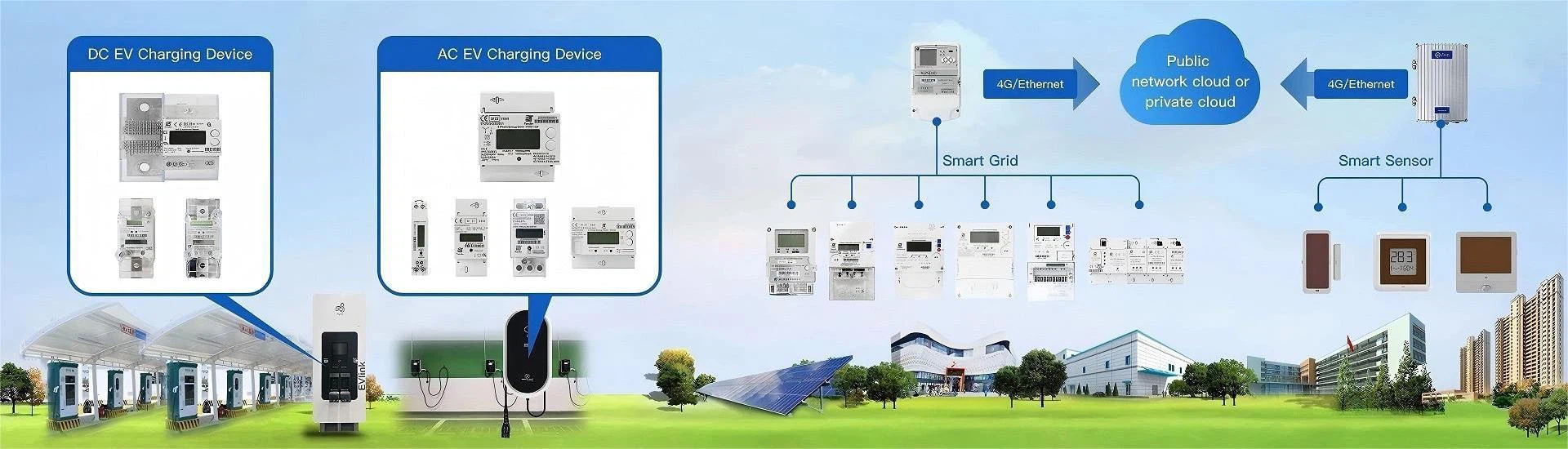
Beginning in 2000, I began to vigorously develop smart energy meters. Smart meters are a new type of fully electronic energy meters that have functions such as energy measurement, information storage and processing, real-time monitoring, automatic control, and information interaction. The actual needs such as time-of-use electricity prices and peak-to-valley electricity prices are also the technical basis for realizing distributed power metering, two-way interactive services, smart homes, and smart communities. It can also automatically warn residents of the power load to avoid serious accidents such as short circuits and fires caused by overload. In addition, residents can use the recharge card or online recharge to pay electricity bills, which is convenient and quick.