



Contents
1. Basic Concepts of DC Meter and AC Meter
2. Differences in Types of Current Measured
3. Differences in Internal Mechanisms
4. Differences in Calibration Methods
5. Features of Construction and Design
6. Comparison of Application Scenarios
7. Summary
1. Basic Concepts of DC Meter and AC Meter
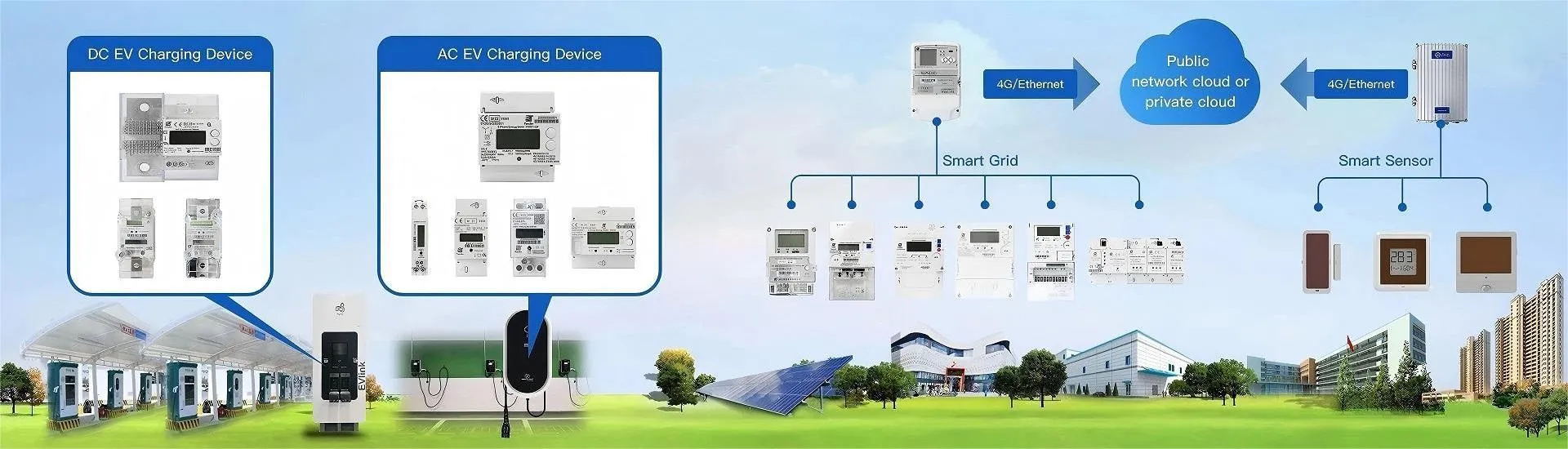
DC Meter and AC Meter are two basic instruments used in electrical engineering to measure current in circuits. Although their core function is to measure current, there are significant differences in the functions, mechanisms and applications of these two meters due to the different characteristics of direct current (DC) and alternating current (AC).
2. Differences in Types of Current Measured
DC Meter: used to measure direct current, that is, current flows in only one direction, such as the current in a battery, solar panel or electronic circuit.
AC Meter: used to measure alternating current, that is, the direction and magnitude of the current changes periodically over time, such as the current in a household power supply or power grid.
This fundamental difference determines the design and working principle of the two meters.
3. Differences in Internal Mechanisms
DC Meter: usually uses a moving coil mechanism. When current passes through the coil, a magnetic field is generated, which deflects the pointer on the dial, indicating the current size.
AC meter: usually uses a moving iron mechanism or an electromagnetic mechanism. The alternating current induces a changing magnetic field in the fixed coil, causing the pointer to move to indicate the current.
Since the direction and magnitude of the alternating current are constantly changing, the AC meter requires a more complex mechanism to measure accurately.
4. Differences in calibration methods
DC meter: calibrated to measure the average value of the current (i.e., the root mean square value, RMS), which reflects the actual power transmitted by the DC.
AC meter: calibrated to measure the effective value of the current, which takes into account the direction and magnitude of the current changing over time, thereby more accurately representing the actual power of the AC.
The difference in calibration methods enables the two meters to adapt to different types of current measurement needs.
5. Features of construction and design
DC meter: Due to the unidirectional nature of DC, its construction is usually simpler and more rugged, suitable for a stable current environment.
AC meter: In order to adapt to the complex characteristics of AC, its construction is more complex and usually contains additional components such as rectifiers and filters to ensure the accuracy of measurement.
6. Comparison of application scenarios
DC meter:
Used in application scenarios that require stable current, such as automotive electrical systems, battery charging, electronic circuit testing, etc.
Commonly used in laboratories, electronic manufacturing and renewable energy fields.
AC meter:
Widely used in residential, commercial and industrial environments to measure AC current from power grids to various electrical equipment.
Commonly used in power system monitoring, household appliance testing and industrial equipment maintenance.
7. Summary
DC meters and AC meters have significant differences in the type of current measured, internal mechanism, calibration method, construction design and application scenarios. DC meters are suitable for stable, unidirectional current measurement, while AC meters can handle AC currents that change direction and size at any time. Understanding these differences is crucial for electrical engineers and technicians to choose the right meter to ensure the accuracy of current measurement and the reliability of the system.
Whether it is used for laboratory research, industrial equipment monitoring or daily power management, choosing the right electricity meter is a key step in achieving efficient energy management and equipment maintenance.