

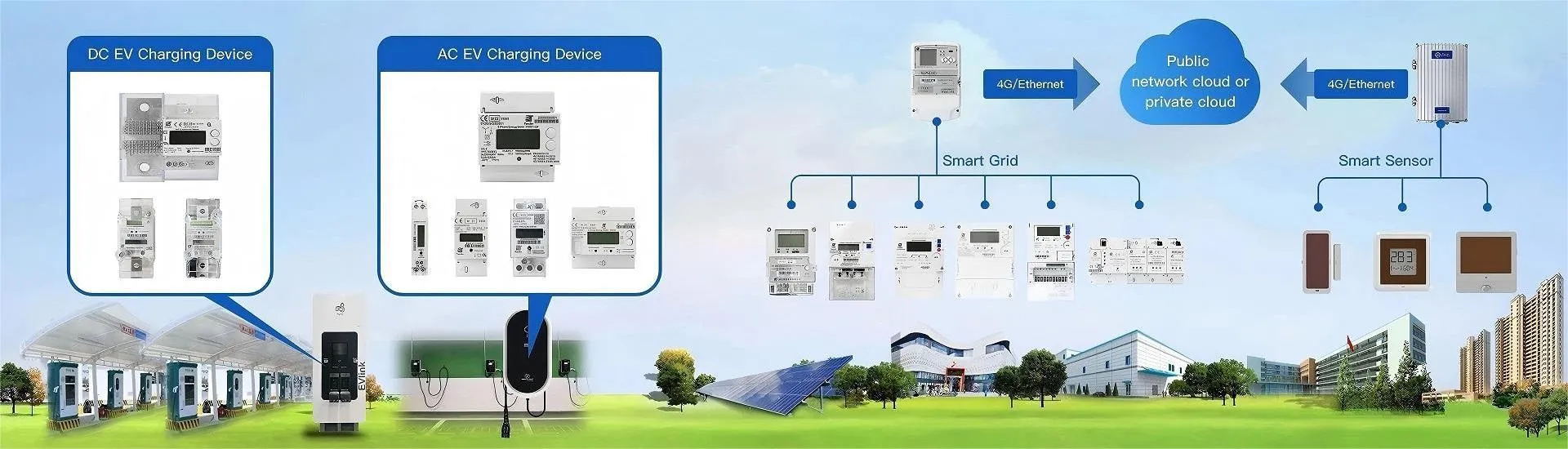




Advanced metering infrastructure (AMI) is an integrated fixed network system that enables two-way communication between utility companies and customers. By collecting, storing, analyzing and presenting energy usage data, AMI enables utility companies to monitor electricity, gas and water usage in real time. As the global demand for efficient, economical and environmentally sustainable energy continues to grow, AMI has become a key technology in smart energy management.
AMI not only provides detailed energy consumption data, but also detects tampering, records power outages and assesses power supply quality. For example, water companies can monitor water consumption through AMI meters, detect leaks in time and notify customers for repairs. Unlike traditional automatic meter reading systems, AMI's two-way communication capabilities enable utility companies to remotely manage meters, thereby greatly improving operational efficiency.
2. Core components of AMI
The AMI system consists of the following key components:
Smart meters: These digital electricity, gas and water meters can record energy consumption data at hourly or shorter intervals and transmit the data to the utility company at regular intervals.
Communication network: As a bridge between smart meters and AMI front-end systems, the communication network can be wireless (such as radio frequency signals, cellular networks) or wired (such as power line communication), ensuring two-way data transmission.
Data management system: This is the core of the AMI system, responsible for storing, processing and analyzing the data collected by smart meters and converting it into actionable insights to help utility companies optimize operations.
3. AMI workflow
The AMI workflow is divided into the following stages:
Data collection and transmission: Smart meters automatically read energy consumption data and transmit the data to utility companies through the communication network.
Data reception and management: The AMI front-end system receives and verifies the data, performs preliminary processing and forwards it to the meter data management system (MDMS).
Data processing and analysis: MDMS converts raw data into meaningful information for decision-making such as load forecasting, demand response, and distribution automation.
Customer interface: Through the customer portal or home display, users can access detailed energy usage information to better manage energy consumption.
Power outage notification and management: AMI systems can send a "last gasp" signal before a power outage, helping utilities quickly locate and resolve problems.
4. Main application scenarios of AMI
AMI technology shows great potential in many areas:
Demand response program: By monitoring energy usage in real time, AMI helps utilities balance loads during peak demand periods and prevent power outages.
Power outage detection and management: AMI can automatically detect and report power outages, shorten repair time and improve service reliability.
Remote connection and disconnection: Utilities can remotely manage customers' energy supply through AMI, reducing manual intervention.
Theft detection: By analyzing energy usage patterns, AMI can identify abnormal behavior and help detect energy theft.
Distributed generation management: With the popularity of renewable energy such as solar energy, AMI can monitor new energy production in real time and effectively integrate it into the power grid.
5. Advantages and challenges of AMI
Advantages
Improve operational efficiency: Automated data collection and remote management functions reduce labor costs.
Enhance customer service: Customers can view energy usage in real time to better manage energy consumption.
Support sustainable development: AMI helps reduce carbon emissions by optimizing energy use.
Challenges
High initial cost: The installation of smart meters and communication networks requires a large investment.
Data privacy issues: Customers may be concerned about the security of their energy usage data.
Technical complexity: Integrating AMI with existing infrastructure may face technical difficulties.
6. Future prospects
With the continuous advancement of technology, the application prospects of AMI are very broad:
Combined with artificial intelligence: AI technology can further enhance data analysis capabilities and optimize energy management.
Smart home integration: AMI will seamlessly connect with smart home devices to achieve automated energy management.
Global promotion: With the increase in demand for energy management, the global penetration rate of AMI will increase significantly.
Summary
Advanced metering infrastructure (AMI) is redefining the way energy is managed. Through real-time data collection and two-way communication, AMI not only improves the operational efficiency of utility companies, but also provides customers with more transparent information about their energy usage. Despite some challenges, as the technology matures and applications expand, AMI will become a key driver in realizing a smart energy future.