



Currently, infrared communication and Bluetooth communication are two commonly used methods for local short-range communication in electricity meters. Based on different technical principles, they differ significantly in terms of functional characteristics, application scenarios, and operation and maintenance costs, and are suitable for different power operation and maintenance needs.

I. Core Technical Principles of the Two Communication Methods
01 Infrared communication principle

Infrared communication for electricity meters is based on infrared transmission technology and is a point-to-point optical signal communication method. Its core relies on an infrared transmitter and receiver to complete data exchange. It transmits electricity metering data, equipment status, and other information by loading a 37.9kHz modulated signal onto infrared light. The receiving end filters and demodulates the data to restore it, achieving bidirectional transmission. This method complies with power industry standards such as DL645, employs a master-slave half-duplex mode, requires alternating data transmission, and necessitates that both the transmitter and receiver be exposed on the electricity meter's LCD side to ensure unobstructed optical signal transmission.
02 Bluetooth Communication Principles
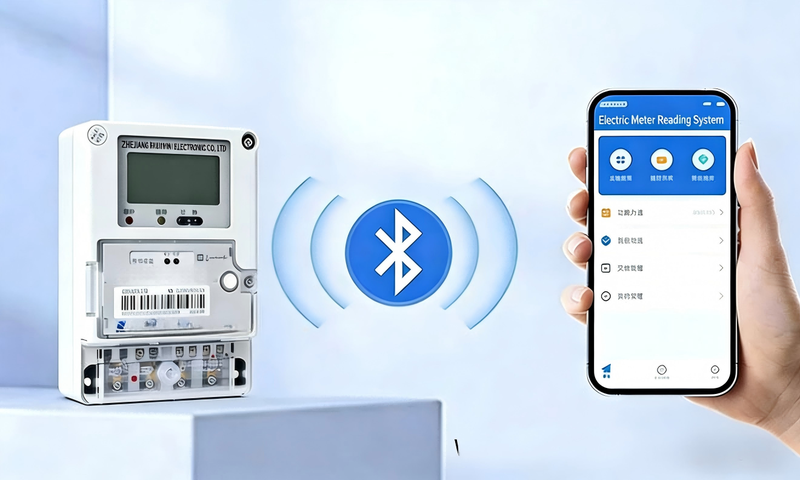
Bluetooth communication is based on 2.4GHz ISM band wireless radio frequency technology. It achieves wireless transmission through an integrated Bluetooth module and supports point-to-point and point-to-multipoint connections. As a slave device, the electricity meter can establish independent communication channels with multiple master devices. The module is connected to the meter interface through surface mount or through-hole mounting, without being exposed and without affecting the appearance integrity of the electricity meter.
II. Comparison of Core Features of Infrared Communication and Bluetooth Communication
- Ease of Operation: Infrared communication relies on light signals, requiring precise alignment with the infrared window without obstructions for meter reading, making operation cumbersome. Bluetooth communication eliminates the need for alignment, automatically connecting within range and allowing for data collection via mobile app or Bluetooth handheld device, significantly reducing operational difficulty and improving efficiency.
- Transmission Speed and Message Length: Infrared communication serial port speed is only 1200bps, and the link layer message length supports only 200 bytes, insufficient for transmitting large amounts of data at once. Bluetooth communication serial port speed reaches 115200bps (96 times that of infrared), supports 512-byte messages, and can be flexibly expanded to meet the diverse data transmission needs of smart meters.
- Transmission Distance and Penetration Capability: Infrared communication transmission distance is typically no more than 2 meters, lacks penetration capability, and is interrupted by obstructions. Bluetooth communication has an actual transmission distance of 10-20 meters, penetrating thin obstructions such as meter boxes, eliminating the need to open the meter box for reading and reducing maintenance safety risks.
- Master-Slave Functionality and Connectivity: Infrared communication lacks a master-slave concept, allowing only one-to-one sequential communication and preventing simultaneous interaction between multiple devices. Bluetooth communication can connect two hosts simultaneously and can be extended to connect Bluetooth micro-blocks, sensors, and other devices, enabling multi-device linkage.
- Interference Resistance: Infrared communication is susceptible to interference from simultaneous communication by multiple devices, but ambient light interference can be avoided through bandpass filtering. Bluetooth communication features link-layer connection logic and independent channel transmission, offering superior interference resistance and suitability for densely populated electricity meter scenarios.
- Cost and Cost-Effectiveness Infrared communication has low hardware costs, mature technology, and negligible maintenance costs, making it suitable for mass applications. Bluetooth communication has higher initial hardware costs, but module prices decrease year by year, and efficient operation and maintenance can reduce hidden labor costs, making it more advantageous for long-term applications.
- Structural Design and Appearance: Exposed infrared transmitters and receivers affect the neat appearance of the electricity meter. Built-in Bluetooth modules do not damage the meter structure, resulting in a more aesthetically pleasing appearance, improved sealing, and extended device lifespan.
Verification and Expansion Capabilities: Bluetooth communication can be switched to pure 2.4G mode, supporting efficient verification. The module is detachable and easy to upgrade. Infrared communication has no verification expansion function, is difficult to upgrade, and requires an additional wired connection for verification.
III. Application Scenarios Adaptation Analysis of the Two Communication Methods
(a) Adaptation scenarios for infrared communication
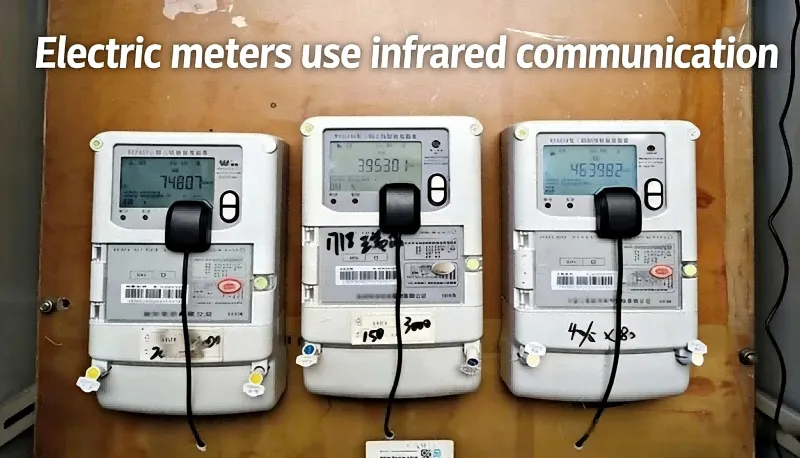
Infrared communication, with its low cost and high compatibility, is suitable for scenarios with low meter reading efficiency requirements, dispersed meters, and limited budgets: maintenance of old residential areas and rural areas (few meters, scattered distribution, and low meter reading frequency); temporary meter reading and equipment debugging (no need for prior network setup, emergency meter reading is possible); low-cost batch deployment (controlling hardware costs and good compatibility).
(B) Bluetooth Communication Adaptation Scenarios
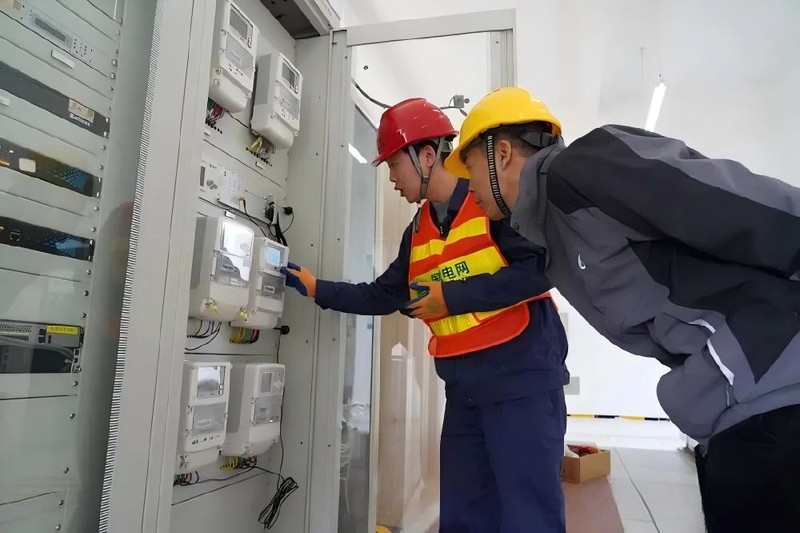
Bluetooth communication, with its convenience, efficiency, and scalability, is suitable for scenarios with high requirements for smart grid upgrades and operation and maintenance efficiency: centralized operation and maintenance in urban communities and industrial parks (dense meter network, improving meter reading efficiency); smart electricity management (can be linked with mobile APP and smart home to realize load monitoring); high-precision verification and upgrade (simplifies the verification process and facilitates later upgrades).
IV. Development Trends and Selection Recommendations
01 Development Trends

As smart grids develop towards digitalization and intelligence, infrared communication will gradually be phased out due to its cumbersome operation and poor scalability, remaining only in low-cost and emergency scenarios. Bluetooth communication, with its cost reduction advantage, will become the mainstream and will be combined with remote communication technologies such as NB-IoT to achieve "local interaction + remote control".
02 Selection Recommendations
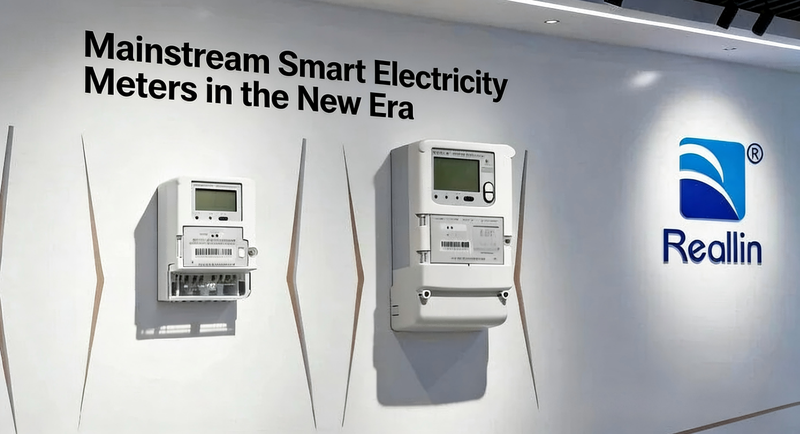
Power companies need to comprehensively select equipment based on their operation and maintenance needs, budget, and scenarios: for those with limited budgets, scattered meters, and low meter reading frequency, infrared communication should be prioritized; for those seeking high operation and maintenance efficiency and requiring multi-device linkage, Bluetooth communication should be prioritized; and for areas with dense meters and smart grid upgrades, a "Bluetooth as the primary and infrared as the secondary" mode can be adopted to ensure reliable data collection.
V. Conclusion
There is no absolute superiority or inferiority between infrared and Bluetooth communication; each has its own suitable scenarios: infrared is based on basic scenarios with its low cost and high compatibility, while Bluetooth leads the upgrade with its high efficiency and scalability.

With the development of smart grids, Bluetooth will gradually become mainstream, requiring continuous technology optimization and cost reduction. Scientific selection by power companies can improve the intelligence level of power metering and operation and maintenance, laying the foundation for smart grid construction.