

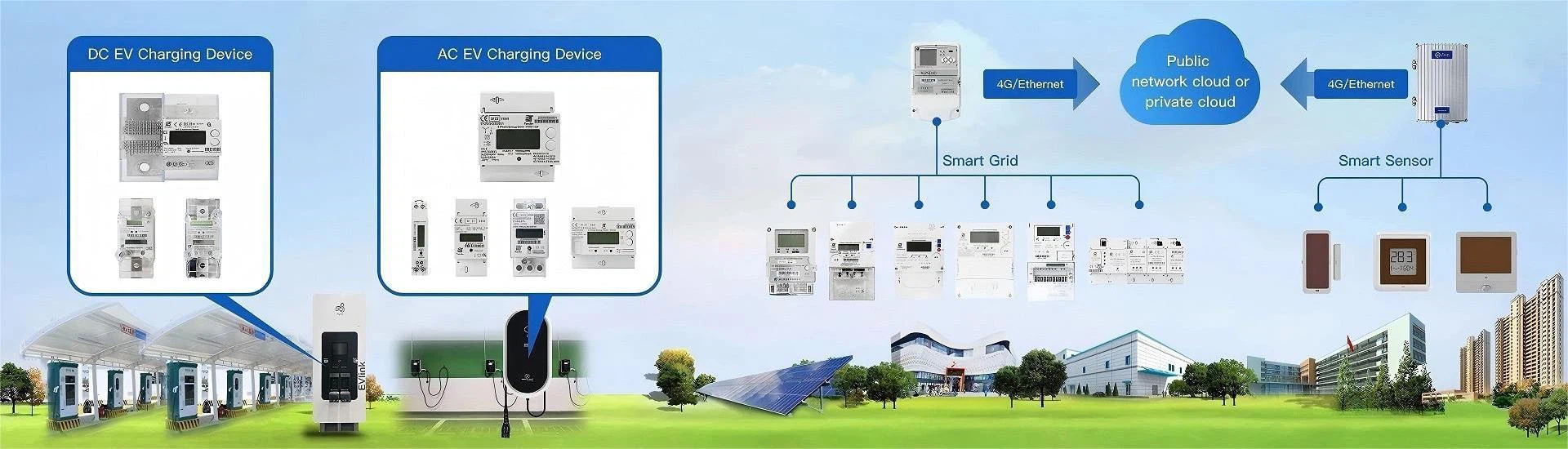
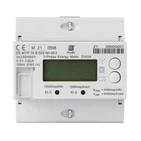
Electric energy meters are called watt-hour meters in our engineering field. The main function is to record how much electricity is used? To be more honest, it is how much electricity is charged.
What are the specific factors to consider when choosing an electric energy meter?
1. Environmental and climatic characteristics. Our country has a vast territory and the climatic conditions in the south, east, and northwest are very different. Therefore, when we purchase an electric energy meter, we must first consider its use location and use environment, the highest temperature, lowest temperature, relative humidity, altitude, etc., beyond the scope of use, the meter will not work normally, or measure The accuracy will be greatly compromised.
2. The working voltage and working current are generally used for household electricity, the voltage is AC 220V, the frequency is 50Hz, and the current should be determined according to the specific conditions of use. If it is a centralized air conditioner, the power is 5kW, and the current is about 22.5A, then the minimum current of the electric energy meter we choose is 25A. If it is a residence, it can be estimated according to 60-80W/square meter. For a house of 100 square meters, the power is about 6-8kW and the current is about 27A-36A.
Single Phase Multi-Function Electricity Meter
Single Phase Two Wire Multi-Function Electricity Meter (Type: E1013)
The Single Phase Meter with Multi-Function which is approval by IEC Standard.

3. The main functions of the electric energy meter. At present, in addition to remote areas and old factories, there are old inductive watt-hour meters. In new residential quarters and new projects, electronic watt-hour meters have gradually replaced the old-fashioned watt-hour meters such as inductive ones with more and more functions. Dazzled. -Prepayment function, smart meter reading function;-Fee control function, step metering, billing, tripping on arrears, closing on payment;-Line voltage, current, power, power factor and other measurement functions;-Communication function;-Data display , Fault display and fault alarm.
4. For the display of electric energy meters, the commonly used display screens include LED (light emitting diode) and LCD (liquid crystal display). The displayed content must first be the watt-hour display, then the fault display, and then the voltage, current, power, power factor and other displays.
5. The accuracy of the electric energy meter is generally 0.2, 0.5, 1.0, and 2.0. The smaller the number, the higher the accuracy.
6. Power consumption. The smaller the power consumption, the more energy-saving the energy meter.
7. The minimum time between failures and the design life. The longer the mean time between failures and the design life, the better the quality of the electric energy meter.
8. Dimensions. For ordinary residential buildings, there are not too many requirements for the external dimensions of the electric energy meter, but for places where there are more metering users, the external dimensions of the electric energy meter are hoped to be smaller and convenient for centralized installation.
9. A very important one, the certificate of conformity, the guarantee of quality.
10. After-sales service represents the ability and credibility of the manufacturer.