

China has emerged as a global leader in smart communication technology, with numerous companies offering a range of innovative products and solutions. Among these, Zhejiang Reallin Electron Co., LTD stands out for its advanced smart communication series.
Website: reallin.com
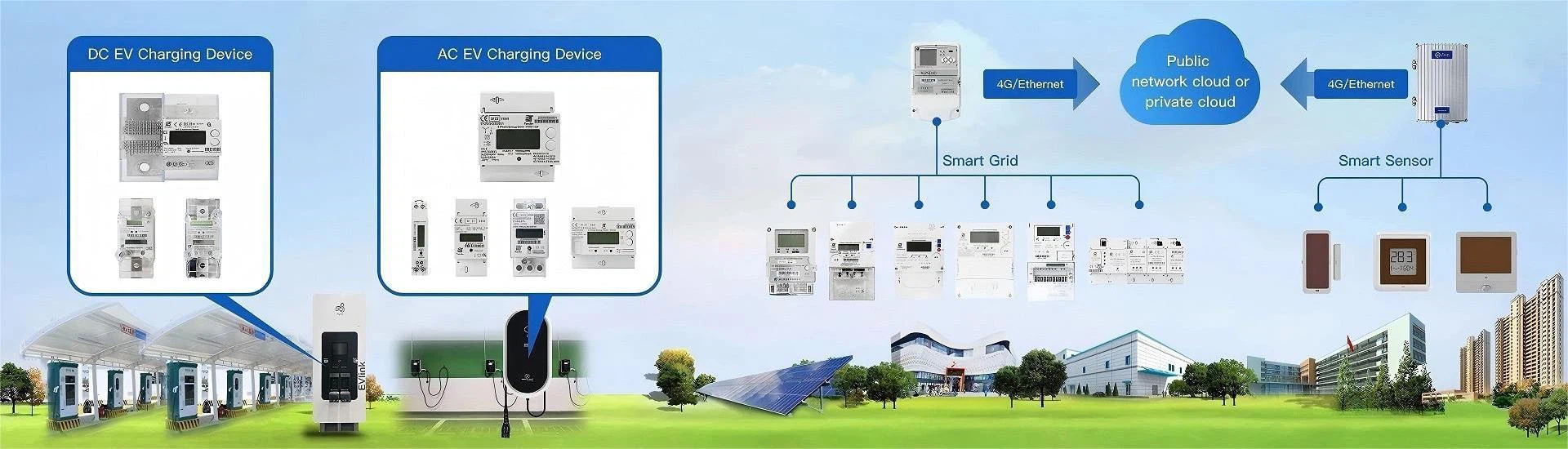
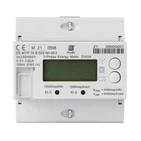
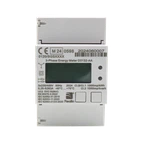
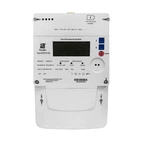
Overview: Zhejiang Reallin Electron Co., LTD is a prominent player in the smart communication market. They specialize in various smart communication products, including Grid Electronic Meter Series, EV Charging Electronic Meter Series, and Intellisense Series. Their commitment to innovation and quality has positioned them as a trusted supplier both domestically and internationally.

What are the common wired communication methods for smart meters? What are their characteristics?
Common wired communication methods include RS-485, Ethernet, and RS-232.
RS-485: It is a commonly used serial communication standard. It uses differential signal transmission, has strong anti-interference ability, and can realize multi-node communication. Up to 32 nodes can be connected on one bus. The transmission distance can reach about 1200 meters. The transmission rate is between a few kbps and tens of Mbps. It is often used in scenarios where meters are installed centrally.
Ethernet: Based on the IEEE802.3 standard, it has the characteristics of high speed and stability. It can realize large-capacity data transmission. It can be connected through optical fiber or twisted pair. The common transmission rates are 10Mbps, 100Mbps, 1000Mbps, etc. Optical fiber can transmit for several kilometers or even farther, which is suitable for scenarios with high requirements for data transmission speed and stability.
RS-232: It is mainly used for point-to-point communication between local devices. It does not have network functions, has a low transmission rate, and a limited transmission distance. It is suitable for communication between meters and devices at close distances.
What are the commonly used wireless communication methods for smart meters? What scenarios are they suitable for?
Common wireless communication methods include cellular networks (4G/5G), NB-IoT, Wi-Fi, Bluetooth, LoRa, and Zigbee.
Cellular networks (4G/5G): Provide wide-area coverage and high-speed data transmission capabilities, suitable for remote monitoring and data transmission, and can achieve cross-regional centralized management of meters. It is suitable for supermarkets, convenience stores and other places where decentralized installations are required but unified electricity supervision is required.
NB-IoT: Built on cellular networks, it is a low-power wide area network technology with the characteristics of wide coverage, multiple connections, low cost, and low power consumption. It is suitable for meters that do not require high data transmission frequency and require long-term stable operation.
Wi-Fi: Suitable for data transmission within a small range, with fast transmission speed, but limited coverage. It is usually used for communication between meters and smart devices in small places such as homes and offices.
Bluetooth: Mainly used for local communication of meters, with the characteristics of low power consumption and short-distance transmission, it is used for users to interact with meters at close range.
LoRa: It has a strong ability to penetrate obstacles and is suitable for long-distance transmission scenarios, but its spectrum utilization is low and it is not suitable for high-density network environments. The rate is generally between hundreds of bps and thousands of bps.
Zigbee: It is a short-distance, low-power wireless communication technology with high security. The transmission distance is generally 10-100 meters indoors, which is suitable for the interconnection between smart meters and smart home devices.
What are the commonly used communication protocols for smart meters?
Commonly used communication protocols include Modbus-RTU, DL/T 645, Modbus-TCP, etc. Modbus-RTU is commonly used for RS-485 communication; DL/T 645 is a commonly used communication protocol for domestic meters, which specifies the data transmission format and content between meters and external devices; Modbus-TCP is used for smart meters with Ethernet or Wi-Fi communication.
What are the differences between different communication protocols?
Modbus-RTU is a protocol based on serial communication such as RS-485. It adopts a master-slave response mode and has a simple data transmission format. It is suitable for local small-scale communication between electric meters and equipment. DL/T 645 is a protocol designed specifically for electric meters. It has detailed regulations on various data formats and function codes of electric meters. It is more in line with domestic electric meter application scenarios and supports multiple communication methods. Modbus-TCP is an Ethernet-based protocol that encapsulates the Modbus protocol in the TCP/IP protocol. It has a fast transmission speed and is suitable for remote large data transmission. It is often used for communication between smart meters connected to the network and servers.
How to choose the communication method of smart meters according to the application scenario?
For places where electric meters are installed in a centralized manner, such as communities and factories, RS-485 communication can be selected, which has low cost and high stability; large commercial buildings and power data centers that require high data transmission speed and stability can use Ethernet communication. For places with dispersed installation and remote monitoring, such as supermarkets and convenience stores, 4G/5G communication can be selected; for meters with low data transmission frequency and long-term stable operation, such as smart water meters, NB-IoT is more suitable; for meters in small places such as homes and offices to communicate with smart devices, Wi-Fi or Bluetooth can be used.
How to troubleshoot a fault in the communication module of a smart meter?
First check the hardware connection to see if the connection between the communication module and the meter is loose or damaged, and if the antenna is installed correctly. Secondly, check the power supply to ensure that the communication module is powered normally and the voltage is within the specified range. Then check whether the communication parameter settings, such as baud rate, IP address, gateway, etc., are correctly configured. You can also check the network signal. For wireless communication modules, check whether the signal strength is normal; for wired communication, check whether the network cable is damaged and whether the network interface is working properly. If all of the above are normal, it may be a fault in the communication module itself. You can try to replace the module or contact the manufacturer for repair.