

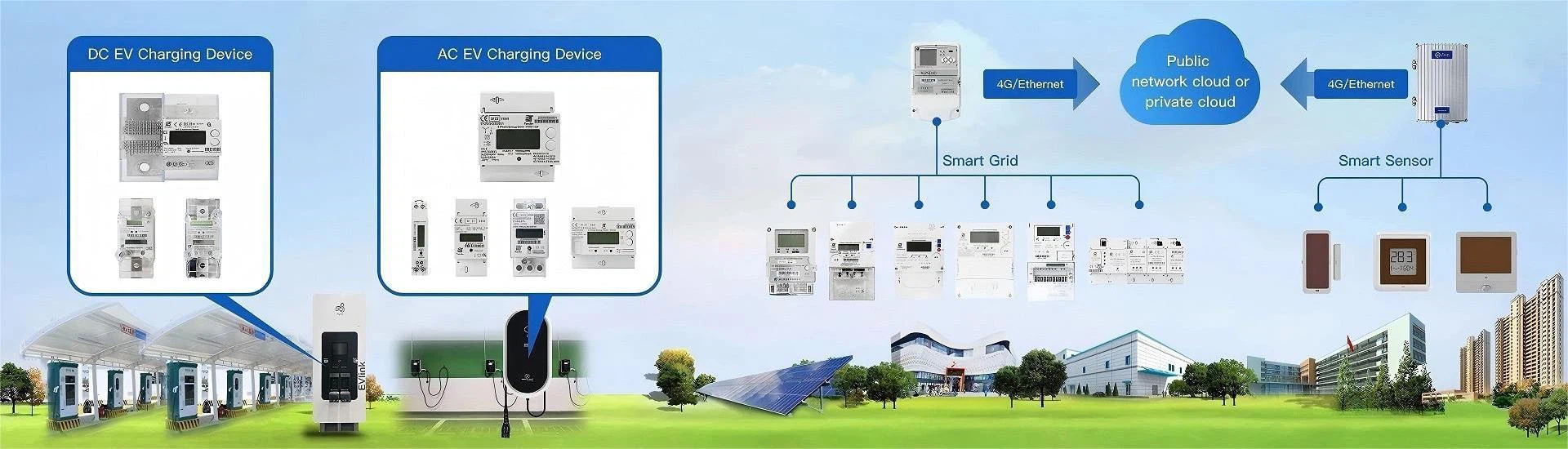
As the terminal equipment for smart grid marketing business, electricity consumption information and energy distribution, smart electric meters have a wide coverage. New missions and tasks have been given to the construction of the energy Internet. The new generation of smart electric meters is meeting basic metering requirements. In addition to functions, it is also necessary to meet the flexible access of smart devices, realize the perception, collection and control of device data, and continuously adapt to the construction needs of the energy Internet and the increasingly diverse service needs of the people.
Smart power meters are an important part of the smart grid. The non-metering functions of smart power meters have provided strong data support in various aspects such as distribution network operation and maintenance management, customer experience improvement, and serving the national energy strategy transformation and upgrading.
With the higher requirements of the energy Internet for the depth, breadth and density of information perception, the problems of smart energy meters have gradually emerged.
In addition, the "R46 Active Energy Meter International Recommendations" promulgated by the International Organization for Legal Metrology (OIML) puts forward new requirements and ideas for the technology and performance of energy meters. Electric energy meters are given new missions and tasks now and in the future. The development of a new generation of smart energy meters needs to fully consider the advanced ideas of international standards. In addition to satisfying the basic metering functions, it also needs to rely on its multi-faceted and wide-ranging connections to connect with users. The tight application features and the expansion of the characteristic attributes of the meter energy Internet provide help for the friendly interaction between the power company and the user, assisting the user in effective energy management, and improving the status perception of the station equipment and the comprehensive load.
Smart meter structure design
The new generation of smart energy meters is mainly composed of three parts: metering module, management module and expansion module.
The metering module is the core of the new generation of smart electric energy meters. It is responsible for the basic functions of legal metering. It saves all the original data related to the legal system such as electric energy and time. It not only provides legal basis for national value traceability and measurement data traceability, but also other The data application and business realization of the module provide basic data.
The management module is the management center of a new generation of smart energy meters. It adopts a pluggable design and establishes connections with metering modules and expansion modules through standardized interfaces. In addition to the basic functions required by the marketing business, it is also responsible for other modules. Data distribution and management. At the same time, a lightweight operating system is loaded on the management module, and diversified application APPs are deployed, which can realize flexible configuration of functions and meet upgrade requirements.
Expansion modules are the main manifestation of the new generation of smart energy meters that are flexible and expandable. Users can choose different functional expansion modules on the energy meters according to different business scenarios, and further expand the communication, control, and control of the meter through the modules. Calculation, monitoring and other functions.
Features of Smart Meter
The new generation of smart electric energy meters takes into account safety, reliability, scalability and economy in the top-level design, and has the following functional characteristics:
1 Distributed, large-capacity storage
Each independent module of the new generation of smart electric energy meters allocates corresponding storage space to save key legal measurement data; in addition, the meter can store up to 1 year of minute-level electricity, which can meet the traceability of legal measurement data and other The business's differentiated demand for data collection frequency of electric energy meters supports the flexible electricity price mechanism of spot transactions in the electricity market.
2 Diversified and efficient communication
The new generation of smart energy meter management module comes standard with low-power Bluetooth, which can simultaneously interact with external devices such as collectors, handheld devices, and user mobile phones to meet the needs of different business applications such as operation and maintenance, testing, cost control, human-computer interaction, etc. . The expansion module is equipped with HPLC communication as standard, and can meet the access of mainstream Internet of Things communication methods such as RS485, LoRa, M-Bus, NB-IoT, CAN, etc. through standardized interfaces.
3Intelligent display
The new generation of smart energy meters uses dot-matrix liquid crystals, which can customize the size of display fonts and display content, and can easily generate QR codes for operation and maintenance personnel and users to scan and query information to meet the development of energy Internet human-computer interaction need.
4Wide range accurate measurement
The new generation of smart electric energy meters can accurately measure within the load current range of 20mA to 100A, meeting the measurement requirements of high-power and wide-range loads such as electric vehicles. At the same time, the meter is equipped with harmonic power measurement and monitoring functions to provide a measurement basis for future grid harmonic control and power quality participation in trade settlement.
5 Abnormal perception monitoring
The new generation of smart electric energy meters can realize online monitoring of the terminal temperature of the meters in transit by placing thermistors inside the wiring terminals, avoiding fire accidents caused by electric energy meter failures and man-made causes. In addition, the meter can realize the active reporting of a variety of grid abnormalities, meter abnormalities, and abnormal electricity consumption events to meet the needs of fault location, operation and maintenance, and emergency repairs.
6 operating system applications
The management module of the new generation of smart energy meters is equipped with a unified operating system, and the decoupling of meter software and hardware is realized through a standardized drive interface. The application of the operating system can more efficiently use the hardware resources of the smart energy meter, manage the functional software more conveniently, and realize the extended application of the function more reasonably.
7 functional applications can be extended
The hardware of the new generation of smart energy meters is equipped with 3 function expansion modules, and standardized hardware interfaces are used to support the selection of modules in different business scenarios; the operating system has deployed multiple application APPs, which can be flexibly expanded through APP software. Meet the rapid iteration and upgrade requirements of products, and better deal with the challenges brought by future business expansion.
8 Flexible load control
The new generation of smart energy meters can not directly cut off the power when the power user is in arrears, but through the limitation of the load current, in the case of only meeting the user's most basic needs such as lighting, mobile phone charging, etc., sufficient reserve for users to pay and charge The time reflects the concept of high-quality service of State Grid Corporation.
9Improved reliability
The new generation of smart energy meters adopts a replaceable battery design, and cooperates with the newly added super capacitor in the meter to effectively ensure the reliability of the clock power supply; through the optimization of product design and the improvement of manufacturing technology, the life of the meter is extended to 15 years , Improve the reliability of on-site operation.
Smart meter application scenarios
The design concept of the new generation of smart energy meters is highly compatible with the construction ideas of the energy Internet, and can be coordinated with other professional equipment to support the following application scenarios:
1 Residents' households use smart energy
The new generation of smart electric energy meters are equipped with non-intrusive load identification modules to collect data such as voltage, current, and time at the user's total incoming line, and cooperate with new products such as smart home appliances and smart sockets with random metering functions, and rely on big data algorithms Realize the analysis of the load type and status of household appliances, provide residents with value-added services such as energy consumption statistical analysis, household appliances demand response, electrical fault warning, etc., and improve the energy consumption level of households.
2 Electric vehicles and distributed energy services
The new generation of smart energy meters can be equipped with orderly charging modules to collect, sense and control the real-time status of various energy facilities, energy-using equipment and electric vehicles in the station area. The new generation of smart electric energy meters, together with the station management unit and the system master station, realize the orderly charging of large-scale electric vehicles and the consumption of distributed energy, realize the load dispatch of the whole network, and meet the needs of the coordinated service of the station side source network and load storage. , To provide customers with high-quality energy services.
3 Community services
The new generation of smart electric energy meters can not only realize the collection of electrical information, but also realize the data collection of heat, water and gas meters by adding different types of communication modules, so as to realize the interaction coupling and coordinated control of electricity, heat, water and gas in the community. , On the premise of ensuring the comfort of energy use in the community, achieve the optimal economic energy use, and at the same time promote the clean energy consumption of the community.