

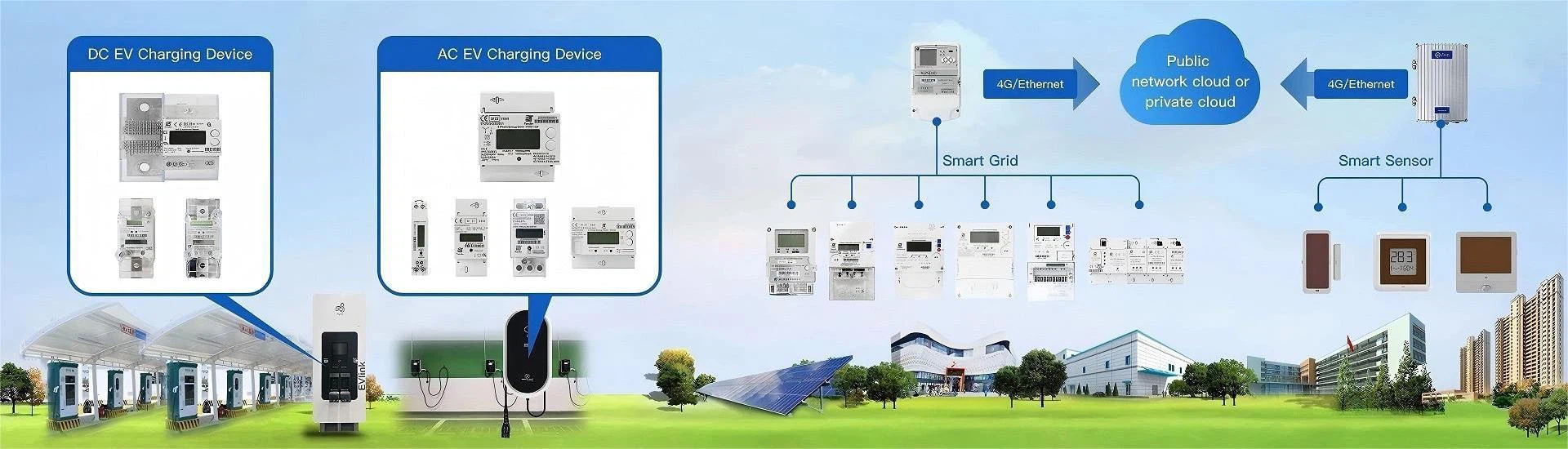
How to choose the electric energy meter for ordinary users
The rating of the electric energy meter The capacity should be selected according to the user's load. Generally, the upper limit of the load current shall not exceed the rated current of the electric energy meter, and the lower limit shall not be lower than the specified load current within the allowable error range of the electric energy meter.
The principle of choosing electric energy meter. The electric load should be used within 20%-120% of the rated current of the electric energy meter, and the appropriate electric energy meter must be selected according to the load current and voltage values so that the rated voltage and rated current of the electric energy meter are equal to or greater than the voltage and current of the load .
Calculation of actual consumption of electric energy meter
The electric energy meter without transformer is directly connected to the line, and the actual electric power can be directly read from the electric energy meter.
For example, when the electric energy meter has a multiplier, the actual electricity consumption of this month is the actual consumption of the month (kW·h) = (Reading this month-reading last month) × magnification.
Electric energy meter measurement when connected via transformer:
When the watt-hour meter is used in conjunction with a current transformer, the actual electricity consumption this month is the actual consumption of the month (kW·h) = (this month's reading-last month's reading) × converter ratio. When there is a magnification on the electric energy meter panel, the actual electricity consumption of this month is the actual consumption of this month (kW·h) = (this month's reading-last month's reading) × magnification.
When the watt-hour meter is used in conjunction with voltage and current transformers, the actual electricity consumption of this month is the actual consumption of this month (kW·h) = (this month's reading-last month's reading) × conversion ratio × conversion ratio. When the power meter panel is marked with a magnification and voltage and current transformers, the actual electricity consumption of this month is the actual consumption of the month (kW·h) = (this month's reading-last month's reading) × conversion ratio × conversion ratio ×Magnification.
The current ratio and voltage ratio are indicated on the electric energy meter. This is a complete meter. If it is indicated that the conversion ratio is 100A/5A and the conversion ratio is 10000V/100V, it means that the current transformer of the electric energy meter should be 100A/5A, and the voltage transformer should be 10000V/100V, so the complete set of electric energy The reading of the meter is the actual electricity consumption, and there is no need to multiply the transformer ratio and transformer ratio.
If the transformation ratio marked on the electric energy meter panel does not match the changes of voltage and current transformers, the actual electricity consumption this month is the actual consumption of the month (kW·h) = (this month's reading-last month's reading) × (matched mutual inductance) Transformer transformation ratio × transformation ratio × magnification / transformation ratio marked on the dial × transformation ratio).
Technical requirements for electric energy metering devices Wiring mode of electric energy meter and transformer:
The metering device connected to the high-voltage line with the neutral point effectively grounded should adopt a three-phase four-wire active and reactive energy meter.
The metering device connected to the high-voltage line whose neutral point is not effectively grounded should adopt three-phase three-wire active and reactive energy meters. For low-voltage power supply lines, when the load current is 50A and below, it is advisable to use a direct-connected electric energy meter;
when the load current is above 50A, it is advisable to use a current transformer-connected electric energy meter. The three transformers connected to the high-voltage line with the neutral point effectively grounded should be wired according to Y0/y.
The metering device connected to the high-voltage line whose neutral point is not effectively grounded should use two voltage transformers and be connected according to the V/V method. For a three-phase three-wire connection electric energy metering device, the two current transformer secondary windings and the electric energy meter should adopt a four-wire connection.
For a three-phase four-wire connection metering device, its three current transformer secondary A six-wire connection can be used between the winding and the electric energy meter.
Accuracy: all kinds of electric energy meter devices should be equipped with the accuracy grades of electric energy meters and transformers, the accuracy grades of electric energy metering devices, active energy meters, reactive energy meters, and voltage transformers.
The voltage drop of the secondary circuit of the voltage transformer: For class I cost metering devices, it should not exceed 0.20% of the rated secondary voltage; for other devices, it should not exceed 0.5% of the rated secondary voltage.
For users who supply power from three-phase lines of 10kV and below, a nationally unified standard electric energy metering cabinet should be equipped.
Technical transformation should be gradually carried out for the original electric energy meters and transformers that are separately installed and there is no guarantee of measuring safety measures;
users with 35kV power supply should be equipped with special transformers or electric energy metering cabinets;
users with power supply above 35kV should have The dedicated secondary winding of the current transformer and the dedicated secondary circuit of the voltage transformer shall not be shared with the protection and measurement circuits.
Fourth, the composition of the electric energy metering device Including active and reactive energy meters, voltage and current transformers for measurement and secondary circuits, metering cabinets, etc.