

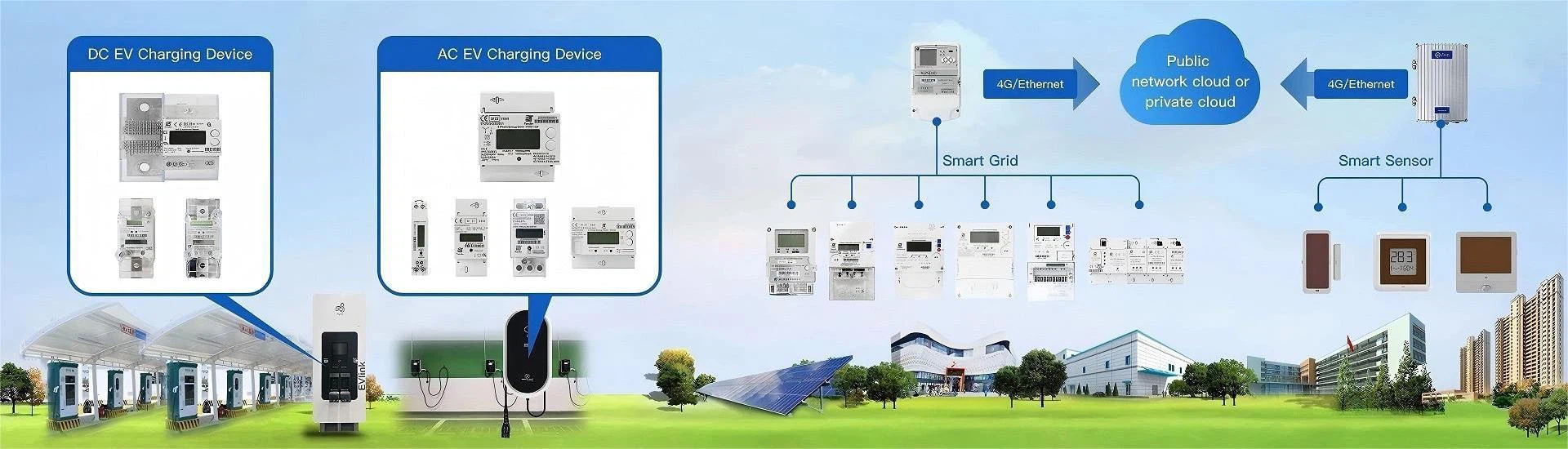
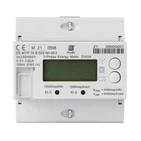
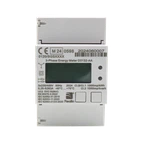
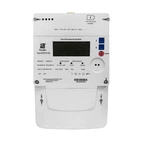
Mechanical energy meter
Mechanical energy meters (also called inductive energy meters), although many types and models, are basically similar in structure, consisting of measuring mechanisms, compensation adjustment devices and auxiliary components (housing, frame, end button box, nameplate). . The following are several commonly used mechanical energy meters.
(1) Long-life electric energy meter. The life of a mechanical watt-hour meter that is normally used depends mainly on the degree of wear of its lower bearing. Then, from the time of putting into use, the basic error of the electric energy meter is out of tolerance due to the wear of the lower bearing, and the duration of the electric meter is the life of the electric energy meter. The lower bearing of the electric energy meter has a great influence on the service life of the electric energy meter.
The bearing structure of modern electric energy meter mainly includes: steel jewel stone bearing, graphite bearing and magnetic bearing. Gemstone bearings can be divided into single gemstone bearings and double gemstone bearings. Double gemstone bearings have less friction and better wear resistance. The magnetic bearing mainly suspends the rotating element in the space by the repulsive force between the magnets of the same polarity. Magnetic bearings extend the life of the energy meter by reducing mechanical wear. At present, the long-life electric energy meter that is gradually applied and applied mostly uses a magnetic structure on the bearing.
The ordinary mechanical electric energy meter adopts a single gemstone bearing, and the service life is generally 5 years. Long-life electric energy meter bearings can be extended to about 10 years due to the use of new materials or new technologies such as magnetic bearings or graphite bearings or double gemstone bearings.
(2) Wide-range electric energy meter. In recent years, due to the improvement of the living standards of residents, the installed household appliances are increasing and the capacity is large, but the possibility of using them at the same time is small. If the old single-range electric energy meter is used, the rated current selection is too large. When the actual load is very small, the running current may be lower than 10% of the rated current of the electric energy meter, so the metering is not accurate; otherwise, if the rated current of the electric energy meter is too small, once When household appliances are used at the same time, the energy meter may be burnt due to overload. The wide-range electric energy meter can overcome the above problems, as long as the sum of the currents of the household appliances used is within the rated current range of the electric energy meter.
Both can be safely and accurately measured. Therefore, the electric energy meter installed by residents in the rural network and urban network reconstruction is generally a long-life, wide-range electric energy meter. The wide-range electric energy meter is also called a high-overload multiple electric energy meter, and its overload capacity can reach 2 to 4 times. That is, the rated current of such an electric energy meter is not a fixed value, but an elastic range. For example, if the single-phase nameplate is marked with: 2.0, 220V, 10(40)A, the overload capacity of the meter is 4 times; when the rated current of the energy meter is within 10~40A, the accuracy can still meet the requirements of 2.0. . The 2.0, 220V, 10A ordinary electric energy meter, its overload capacity is generally only 1.5 to 2 times. [4]
Electronic energy meter
The mechanical energy meter with single energy metering function is difficult to simultaneously perform various functions such as time-sharing measurement, load control, parameter preset, measurement data acquisition, storage and real-time transmission. Therefore, all-electronic new measuring instruments have emerged.
Multi-function electric energy meter. Regardless of the electric energy meter, at least two functions must be performed to complete the measurement of electric energy. One is to generate a power signal that matches the actual power; the other is to accumulate the power signal to obtain the electric energy value.
Electronic energy meters are no exception. It first samples the voltage and current of the actual line and generates a power signal through the UI multiplier. Secondly, the U/f (voltage/frequency) converter is used to convert the power signal into a pulse signal with a certain frequency, and the pulse is pulsed by the counter. The signal is accumulated to obtain electrical energy. The structure of the multi-function electric energy meter is as shown in the figure.
The metering chip W in the figure is a highly integrated dedicated three-phase metering chip which performs the generation of the power signal P (i.e., the UI product) and the frequency conversion of the P-f. Pulse tired
Electronic multi-function electric energy meter structure diagram
Electronic multi-function electric energy meter structure diagram
Functions such as metering, time-sharing, phase loss processing, liquid crystal display, and RS485 communication are controlled by the microprocessor CPU.
Multi-function energy meters generally have the following functions:
1) Measurement and storage functions. It can measure single, two-way active and reactive energy in various time periods; it can complete the measurement and display of current power, demand, power factor and other parameters. Can store at least the data of the last meter reading cycle.
2) Monitoring function. It monitors customer power and maximum demand and prevents theft of electricity by analyzing customer power load curves.
3) Control function. Time control and load control can be implemented for customers. The former is used for multi-rate time-sharing billing; the latter refers to receiving remote control commands through the communication interface or controlling the load through internal programming of the meter (taking into account the time period and load rating). The electronic energy meter with IC card interface not only can complete the prepaid function, but also has the control function of alarm delay and power failure when the purchased power is exhausted.
4) Management functions. The electronic energy meter is connected to the communication network of the power system or the meter reading system through the communication interface to realize remote data exchange with the outside world. The client server with authority in the power network uses the address code of the energy meter (usually 12 decimal digits), which can accurately complete the time period, time rate, time limit power limit, remaining power alarm limit, representative day, and freeze date. , the method of demand, time and slip, etc.; call and view the real-time power of the customer; read the relevant power consumption, and transmit the energy measurement information to the corresponding department as needed for system scheduling, power control, Use of power exchange and business billing
Zhejiang Reallin Electron. Co., Ltd
Add:No.8 Shuangyang Rd, Jiulong Village, Renhe Town, Yuhang District, Hangzhou City, Zhejiang Province, 311107, China.
Tel86-0571-89029103-826
Mobile:86-15924175278
Fax:86-0571-88262207
Email:catherine@reallin.com