

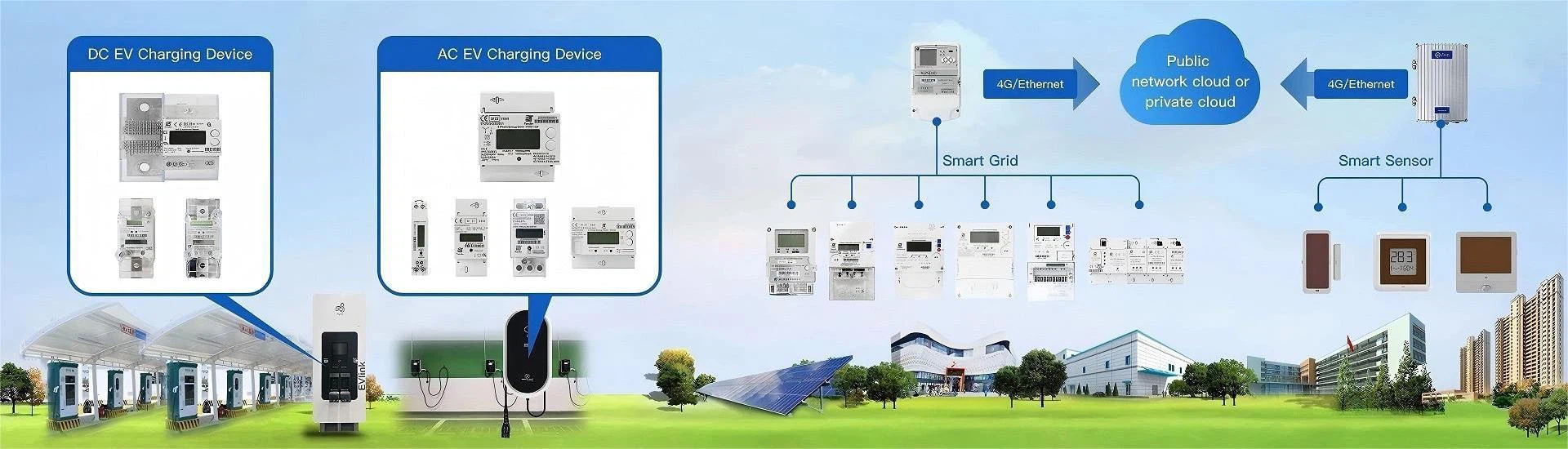
With the explosive growth of new energy vehicles, charging stations, as core supporting facilities, are receiving increasing attention for their safety and quality. In the past, the industry suffered from inconsistent product quality; some charging stations failed to meet even basic electrical safety standards, let alone accurate metering.
To address this issue at its root, the State Administration for Market Regulation has officially included electric vehicle power supply equipment in the mandatory product certification (3C certification) system.
Implementation Timeline
The core purpose of 3C certification is to eliminate substandard products, unify technical standards, and ensure consumer confidence.
Mandatory Implementation Date: August 1, 2026. From this day forward, the unified national regulations will take effect nationwide. Regardless of local subsidies, all charging piles must obtain CCC certification before they can be manufactured, sold, or used.
Benefits of obtaining 3C certification for charging pile companies
- Compliance Passport: Avoids policy penalties, ensures normal product circulation, and meets stringent requirements such as subsidy applications, project completion acceptance, and platform access.
- Enhanced Trust: Distributors, operators, and end-users trust certified products more, making it easier to gain a competitive edge during industry reshuffling.
- Driven Product Upgrades: High certification requirements force companies to improve R&D and production, reducing quality disputes and maintenance costs in the long run.
- Opens Market Barriers: In fields such as public charging piles and automaker parts, 3C certification has become a minimum requirement for cooperation, making it easier for certified companies to secure orders.
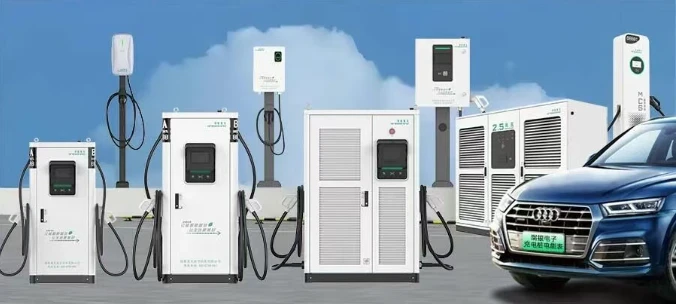
What aspects of the electricity meter are examined during the 3C certification of charging piles?
It's important to clarify here: 3C certification applies to the entire charging station, not just the electricity meter. However, as a core metering component, the performance of the electricity meter directly determines whether the charging station can pass certification. Furthermore, the electricity meter itself must first obtain CPA certification (type approval for metering instruments); otherwise, the charging station's 3C certification is simply impossible.
In the 3C certification testing of charging piles, the electricity meter is mainly examined in four aspects:
- Metering Accuracy: According to standards such as GB/T33708-2017 and GB/T29318-2012, the error range and positive/negative consistency are tested. DC charging piles generally require an accuracy of 0.5 class or higher.
- Electrical Safety: Insulation resistance (≥10MΩ), withstand voltage performance, grounding continuity (≤0.1Ω), and leakage protection are measured to prevent leakage and short circuits.
- Electromagnetic Compatibility (EMC): Charging piles contain strong interference sources such as frequency converters and rectifiers. The electricity meter must operate stably in this environment without inaccurate metering or erratic data fluctuations.
- Environmental Adaptability: It must withstand extreme temperatures, humidity, salt spray, etc., and be suitable for various installation scenarios such as outdoor and underground parking garages.
Why do many charging stations fail due to "external dual-circuit electricity meters connected to the shunt"?
Currently, some charging stations on the market use external dual-circuit electricity meters connected to the shunt to save money. This structure seems cheap, but it is actually a major pitfall for 3C certification.

Fatal Disadvantages
- Additive Errors: Total error = meter's own error + external shunt error + wiring process error. Even with a 1.0-class meter and a 0.5-class shunt, the total error can still reach ±1.5%, far exceeding the standard.
- Extremely Poor Interference Resistance: The shunt and meter are separate, requiring a sampling line approximately 1 meter long to transmit weak voltage signals. In the strong electromagnetic environment of a charging station, this line acts like an "antenna." With interference noise, voltage sampling fluctuations of 5-10mV can occur, leading to an electrical error of ±2% over time.
- Safety and Tampering Risks: The external shunt cannot be sealed together, making it easy for its resistance value to be maliciously altered. Furthermore, the soldering process can lead to solder separation and resistance drift over time.
- Complex Wiring and Multiple Fault Points: Unclear terminal markings make incorrect wiring easy. Aging and loosening of external cables can cause poor contact or even short circuits, resulting in significant maintenance headaches.
Conclusion: This structure is almost a "life-or-death" problem for 3C certification. If you want to pass the certification on the first try, it is best to change the solution.
Optimal Solution Tailored for 3C Certification
Zhejiang Reallin Electron Co.,Ltd. (established in 2005 with a registered capital of 100 million RMB) is a national high-tech enterprise and one of the earliest domestic manufacturers to explore overseas electricity meter markets.
Reallin Electron' DJZ1226 DC smart electricity meter, specifically developed for charging piles, adopts an integrated design, combining the shunt and meter into one unit, fundamentally solving the problems associated with external connections.
Core Advantages
| Item | Features |
|---|---|
| High Precision | Class 0.5 (typically Class 0.2 at factory delivery), error controlled within ±0.5%, fully compliant with 3C metering requirements |
| Strong Anti-interference | Layered circuit + electromagnetic shielding, no long sampling lines, eliminating EMC issues at the source |
| Compliance & Safety | CPA certified; dual protection with electronic lead seal + physical lead seal, overall sealing against tampering |
| Compact Size | 54.9×125.9×65.5mm, weight approx. 280g, easy to embed in various cabinets |
| Wide Specifications | Max voltage 1000V, current range 250A~1000A, dozens of sub-models to match different power chargers |
| Cost-effective | Some models priced at around 100+ RMB, factory direct sales with volume discounts |
In summary, 3C certification for charging piles is not just a formality; it forces industry upgrades. As the "heart" of metering, choosing the wrong electricity meter can result in anything from retesting to outright failure.
Reallin DJZ1226 DC smart electricity meter, with its robust hardware and certification preparation, provides charging pile companies with a worry-free and reliable path to certification. If you are a charging pile manufacturer, consider filling this gap before the 2026 deadline.