

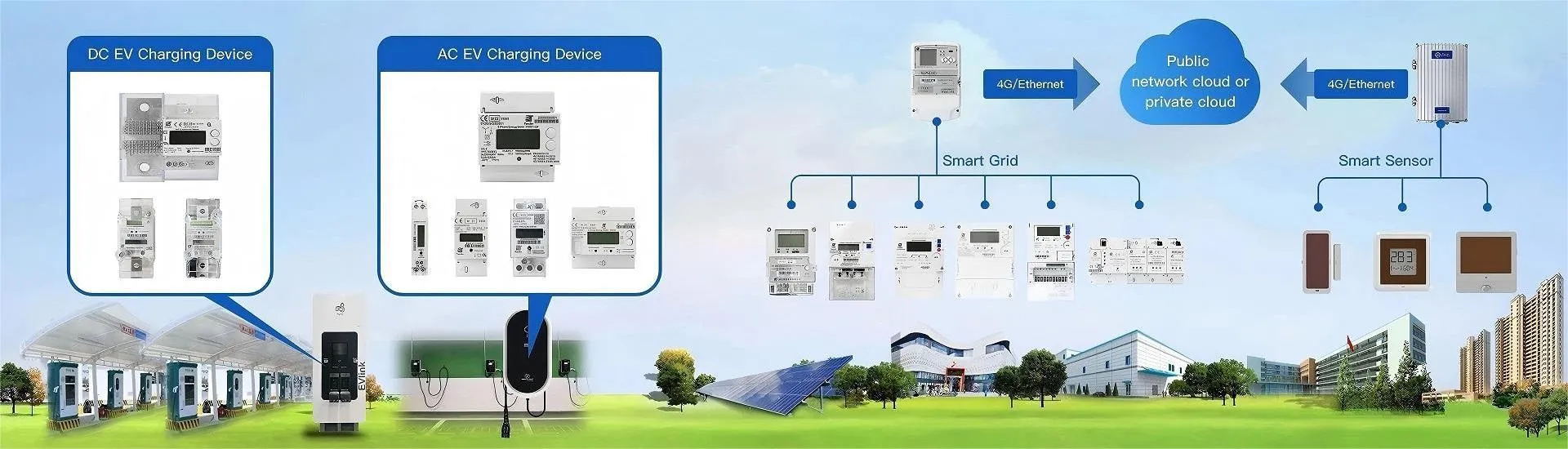


Abstract: With the development of smart grid, smart meters are becoming more and more popular as its smart terminals. This paper studies the measurement method of single-phase smart meters. The voltage and current analog signals are converted into digital signals using a high-precision analog-to-digital converter. After passing through a high-pass filter and a sampling filter, the DC gain and high-frequency noise are filtered out to obtain the required voltage and current sampling data. The instantaneous active power is obtained by multiplying the voltage and current data, and the average active power output is output through a low-pass filter.
Keywords : single phase intelligent electric meter ; electric energy measurement ; active energy
Content:
2. Electric energy measurement
2.1 Front-end waveform calculation
2.2 Effective value calculation
2.3 Active power calculation
2.4 Energy calculation
2.5 Apparent power and energy calculation
3. Conclusion
1. Introduction
Electric energy measurement is the most important and core technology of single-phase smart meters. Its accuracy and reliability have received widespread attention, directly affecting the operation of the power grid, power sales and other links, and related to the economic interests of customers and power suppliers.
2. Electric energy measurement
2.1 Front-end waveform calculation
The single-phase current (two channels A and B) and single-phase voltage waveforms first pass through a low noise amplifier (LNA), which can effectively prevent noise from interfering with the chip and reasonably amplify the voltage value at the input end, and then pass through an analog-to-digital converter (ADC), with a small error range, to achieve the conversion of analog quantity to digital quantity, and then reduce the signal phase error (PHASE), and then change the signal gain through a downsampling filter (SINC4), a high-pass filter (HPF) and other links.

2.2 Effective value calculation
The effective values of two-channel current and single-phase voltage can be obtained by first performing a square operation (X2) on the waveform data of the two-channel current and single-phase voltage, then passing through a low-pass filter (LPF) and finally performing a square root operation (ROOT) to obtain the effective values of voltage and current.

2.3 Active power calculation
The instantaneous active power can be obtained by multiplying the waveform of the single-phase voltage through the current channels A and B, and the average value of the active power can be obtained through low-pass filtering (LPF).

2.4 Energy calculation
By integrating the active power, the active energy can be obtained. The power signal is superimposed in the integrator and stored in the active energy register. In addition, the process also provides a line energy register, a forward active energy register, and a reverse active energy register.

2.5 Apparent power and energy calculation
The apparent power is calculated by multiplying the current of the two channels by the effective value of the single-phase voltage, and the ratio of the active power to the apparent power is calculated to obtain the power factor. The gain of the apparent power can be adjusted through the gain register to adjust the range of the active power, and then through the apparent power deviation register, and finally stored in the energy register.

This paper analyzes the electric energy metering algorithm and realizes the accurate measurement of various electric quantities of the electric meter, including positive and negative active power, fast output of active energy and effective value of sampling voltage and current. By processing the current and voltage, the current sampling data and voltage sampling data that meet the requirements are obtained, the active power is calculated, and then the average active power is output. After integrating it for a certain period of time, the positive and negative active energy can be obtained and displayed on the electric meter.